
From Dr. Thomas E. Woods, Jr., via LewRockwell.com: “On Independence Day weekend Georgetown University law professor Randy Barnett and I appeared on Freedom Watch, Judge Napolitano’s new program on the FOX Business Network. In the first segment, the Judge and I discussed my new book, Nullification: How to Resist Federal Tyranny in the 21st Century, which argues that the states have the right to prevent the enforcement of unconstitutional federal laws within their borders. In the second, we were joined by Monica Crowley and Professor Randy Barnett, the latter of whom was skeptical of nullification as a valid constitutional doctrine or a plausible strategy against the growth of federal power….”
Articles tagged as
Constitution
The Return of Nullification…and not a moment too soon
On November 7, 2009 the Republican Liberty Caucus of New Hampshire (RLCNH) hosted Tom Woods, author of "Meltdown: A Free-Market Look at Why the Stock Market Collapsed, the Economy Tanked, and Government Bailouts Will Make Things Worse." The RLCNH Forum was a smash hit. I personally bought two copies of the book. Now Woods is … Read more
These kids do have a point…(the sequel)
A Blue Hampshire followup to this saga…
While I agree that Bob should have stopped digging, and should have extended the lessons I explain below, the BlueHampshire comment-squad goes off the rails (again), taking this story away from it’s main point.
Some of the commentators try to paint the Tea Party as "holding itself together", as long as we can "identify enemies". And, as "soon as one of them comes up with a proactive plan to close the deficit, they will incur the wrath of 75% of them who will disagree with the plan." – this is such an invalid, emotional statement, typical of liberals these days who will ridicule anything they can get their hands on, realizing they are in for a pending ballot-beatdown.
I was at the John Burt Gubernatorial debate last night, in Manchester, where 4 very different (Republican) candidates spoke, disagreed, and even acknowledged agreement, in front of an audience that was as disparate as they were.
In the end, the entire audience came together, on their feet, cheering, to send Gov. Lynch this message: "regardless of which candidate here wins the Republican primary, we are looking at the next governor of New Hampshire." And this is so, so true.
I wish I could build a composite candidate, using their best qualities. Each has a distinct set of skills that differentiate them from the others, and all are qualified to lead the Conservative revolution next year. One is bombastic, another inspiring, another compassionate and another deliberate. All have proven to be superb thinkers and doers. Yet, despite the candidate-aligned factions within the audience, and in the Conservative community, we WILL be together on September 15th, coming with great fervor, to right this State and our Country.
Criticisms of Giuda, Bass, or any other candidate are our internal filtration process, ensuring that the best people come out of the Primary, to deliver said beat-down on November 2nd.
The Tea Party/912/Conservative community is passionate, patriotic and as diverse as the 4 candidates last night. We argue, debate and posit.
Consider how Steel is made: You start with Iron, an ore consisting mainly of carbon, found commonly on the planet (an American). You add other, diverse elements, such as Magnesium, Chromium, and Tungsten (Morality, Constitutional awareness, Patriotism). These diverse elements cause the core carbon to strengthen its form, a lattice, all stronger together than alone. Varying the quantities of the elements control the qualities of the steel, such as hardness, and strength (experimenting, filtering).
The component elements are combined, heated, then cooled. Cooling creates a "re-crystalization" process, yielding Steel. The Political Primary process (now), is the heating, filtering, and combining phase. Once the primary ends, the cooling and re-crystalization will take place, yielding steel, which will not be easily broken.
“Bork!” Kagen
Republicans need to take the advice of democrats, and “Bork” Elena Kagen. That’s what they would do. They’d ignore anything even remotely moderate, turn a giant lens on everything else, and burn a hole in her soul. They would fashion a narrative, go on television, phone, write, blog, call, march, and shout until veins popped … Read more
WHEN JUDGES LEGISLATE FROM THE BENCH…
Watch the video of New Jersey Chris Christie below. He’s speaking about a common problem, that of judges “legislating from the bench.” But if they want to be legislators, Christie points out, they should run for the legislature and get elected. Christie could just as well be talking about the New Hampshire state supreme court, … Read more
Federalism: The Founders’ Formula for Freedom
Great article by Rep Rob Bishop (R-UT), passed on to me, that takes only 5 minutes to read.
Federalism – "A system of government in which power is divided between a central authority and constituent political units."
Inside the House chamber in Washington D.C., the upper wall is surrounded by the cameos of all the world’s great lawgivers. Moses, as the greatest lawgiver, is the only one with a full face. The others are all side views. The only Americans included are Thomas Jefferson and George Mason, and, ironically, neither signed the Constitution. Mason was actually one of three men who stayed for the entire Constitutional Convention and then refused his assent to the finished product.
When I taught high school, I insisted my kids know why Mason refused to sign. He objected to the document because it did not contain a Bill of Rights. I always hoped, in vain, that some bright student would ask the more pertinent question. The better question would have been not why Mason refused to sign, but why such patriots as Washington, Franklin, Hamilton, Madison, Dickinson, Wilson, etc., objected to Mason’s request?
Federalism: Structured Freedom
While George Mason insisted on a written list of prohibited practices (a Bill of Rights) to protect citizens, the rest of the Constitutional Convention chose the structural concept of federalism and separation of powers as the means to ensure citizens’ liberty was protected.
The U.S. style of federalism and balance of power were two complementary strands of power separation—one horizontal and one vertical. The purpose of both horizontal and vertical power balance was to protect individual liberty, the goal the Founding Fathers had in mind when they wrote the Constitution. They believed the only way to preserve individual liberty was to check government power. Each branch would check the other branch of the new national government. However, since a national government might not check itself, the national government must also be checked by the states. The 50 states were to be a counterbalance to the national government.
Federalism/separation of powers was the vehicle designed to protect people. Madison, in Federalist 45, envisioned how the vertical separation of powers (federalism) was to operate. He wrote, “The powers delegated by the proposed Constitution …are few and defined. Those which are to remain in the state governments are numerous and indefinite….The Powers reserved to the several States will extend to all the objects which…concern the lives, liberties, and properties of the people…”
While largely a new political concept, American-style federalism had roots in the Old Testament. Moses developed the concept of federalism in Exodus 18:13-26. As Moses worked to exhaustion dealing with all the issues brought by the children of Israel,…
One Nation Under God
"I believe that our Constitution was inspired"…
Three Steps To Freedom
Now that the democrat congressional majority has finally found a way to convince members of their own party to vote for the Leaderships agenda, you may be wondering what to do next. Fair question. It seems obvious that the federal system could take years to repeal this nightmare, and there is no guarantee they ever … Read more
We Still Hold These Truths
Matthew Spalding from the Heritage Foundation is an expert on the Founding Fathers, the Constitution, Political Institutions, Political History and Citizenship and it is evident on every page of his book, ‘We Still Hold These Truths.’ This thing is crack for liberty lovers, and if you don’t already own a copy order one now, or stop … Read more

Introducing RU-IR8 – The Electoral Abortifacient
Introducing RU-IR8, the new electoral abortifacient specifically designed to provide political relief for voters exposed to left-wing rhetoric without proper protection.
Who Do You Trust?
CACR 26 would have allowed you to vote on whether to amend the NH Constitution. The change would have prohibited the legislature from passing laws to creat broadbased sales or income taxes, or taxes on capital gains. The bill came out of committee as inexpedient to legislate, and the House voted to ITL it by … Read more
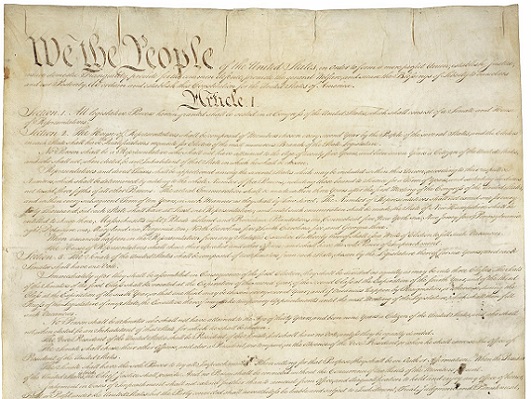
Constitutional Gut Check
This Wednesday, the New Hampshire House may get the opportunity to vote on HB 1343, AN ACT establishing a joint committee on the constitutionality of acts, orders, laws, statutes, regulations, and rules of the government of the United States of America in order to protect state sovereignty.
Thoughts on the US Supreme Court decision on Citizens United
It is not clear to me that most people understand just what a game-changer the Supreme Court’s just-issued opinion in Citizens United v. Federal Election Commission really is. It upholds the Constitution and eviscerates the unconstitutional McCain-Feingold law that was proposed and pushed by the most recent Republican Presidential candidate, John McCain, and signed by … Read more