

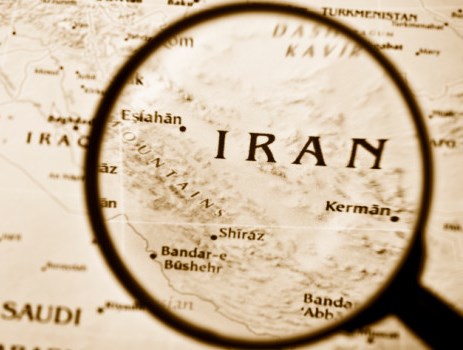
On April 24, 2026, Jeffrey Sachs sat down with Tucker Carlson for just over two hours to explain what he called the real origins of the Iran war and the economic catastrophe he believes is coming if the United States does not take what he repeatedly calls the “off ramp.” It is a remarkable piece of talk. Sachs is lucid on the 1953 CIA coup against Mosaddegh, on the 1996 Clean Break document, on the mechanics of a Strait of Hormuz closure, and on the way a war that began on February 28 has already exposed the vulnerability of Gulf hydrocarbon infrastructure to Iranian missile fire. His history is better than anything you will hear in the American mainstream. His warnings about the economic consequences of escalation are technically sound and underpriced by nearly everyone else. If you want to understand what might happen in the next four weeks, watch the interview.
If you want to understand why it is happening, you need a different set of tools than the ones Sachs uses. And that is what I want to do here: read Sachs through three twentieth-century European thinkers, Vilfredo Pareto, Bertrand de Jouvenel, and Carl Schmitt, who each spent their lives on the question Sachs keeps brushing past. Why do governing classes pursue policies that visibly fail? Why do the institutions meant to restrain power so often extend it instead? And why does the language of “miscalculation” and “delusion” keep failing to explain conflicts that everyone involved seems to be pursuing on purpose?
Before the critique, the theorists. I will keep this brief.
Three tools
Vilfredo Pareto (1848-1923) was an Italian engineer turned economist turned sociologist, best known to most readers for the “80/20 rule” about income distribution. His larger project, laid out in the Treatise on General Sociology (1916), was a theory of how governing classes rotate. Pareto thought every society is ruled by an elite, and that elites can be sorted by psychological temperament into two ideal types he borrowed from Machiavelli: “foxes,” who govern by cunning, innovation, persuasion, finance, and manipulation of opinion, and “lions,” who govern by force, tradition, religious or patriotic solidarity, and the willingness to use direct coercion. Healthy regimes balance the two. Decadent regimes concentrate one type at the expense of the other, usually an accumulation of foxes at the top who can no longer command lions when force is needed. The remedy, in Pareto’s rather grim sociology, is not reform. It is replacement, what he called the “circulation of elites,” sometimes through gradual incorporation from below, sometimes through revolution, sometimes through conquest. Crucially, Pareto also held that elites produce what he called “derivations,” elaborate rational-sounding justifications for decisions actually made on other grounds. The critic’s job, for Pareto, is to look past the derivation to the interest.
Bertrand de Jouvenel (1903-1987) was a French journalist and political theorist whose On Power (1945) argued that the history of the modern state is the history of the central power expanding itself at the expense of intermediate bodies, the aristocracy, the church, the guilds, the provinces, the professional associations, and the family. Jouvenel’s great insight was that this expansion almost always advances under liberationist banners. The central state grows by promising to protect citizens from local tyrannies, feudal lords, employers, patriarchs, and racists, and it uses the resulting legitimacy to dissolve the intermediate bodies that once stood between the citizen and the center. Each resistance the center meets becomes a further justification for centralization. Wars and crises accelerate the process because they provide the emergency conditions under which the center acquires new capacities, which it never relinquishes. The modern national security state, for Jouvenel, is the signature form taken by this growth in the twentieth century.
Carl Schmitt (1888-1985) is the most compromised of the three, a German jurist who joined the Nazi Party in 1933 and spent most of the regime’s early years trying to supply it with legal theory, though he was eventually shoved aside by more committed ideologues. His name is radioactive for good reason. His ideas are unavoidable. In The Concept of the Political (1932), Schmitt argued that the political is constituted by the distinction between friend and enemy. Politics is not fundamentally about justice, or welfare, or rights, or procedure. It is about the identification of those with whom one’s own group is prepared, if pressed, to fight. Liberalism, in Schmitt’s sharp reading, is the characteristic modern attempt to dissolve the political by replacing it with economics and ethics, to convert conflict into exchange and disagreement into moral error. Schmitt’s claim was that this dissolution does not abolish the friend-enemy distinction. It only blinds liberal societies to their own enemies and to the sovereign decisions their own leaders are taking. The sovereign, for Schmitt, is the one who decides the exception, the one who acts when the rules run out, which is most of the time in foreign policy.
You do not have to agree with any of these thinkers to find them useful. I happen to think Pareto is largely right about elites and somewhat wrong about why. I think Jouvenel is right about the mechanism and sometimes too nostalgic about what the intermediate bodies actually were. I think Schmitt’s description of the political is devastatingly accurate, and his politics were a catastrophe. The value of holding all three at once is that they force a particular set of questions on any political narrative, and those questions cut hard into Sachs’s.
The Paretian question: where is the counter-elite?
Sachs’s story, reduced to its skeleton, is this. For roughly thirty years, a coalition of American and Israeli actors has pursued a project of regime change across seven states in the Middle East, at a cost he estimates at five to ten trillion dollars. The project was laid out in a 1996 document called “A Clean Break: A New Strategy for Securing the Realm,” authored by a study group led by Richard Perle for the incoming first Netanyahu government. Six of the seven targeted states have been destroyed or destabilized. The seventh is Iran. The war that began on February 28 is the execution of the seventh step. The project has bankrupted the American fisc, hollowed out domestic public provision, destroyed the diplomatic standing of the United States, and now threatens a physical destruction of Gulf infrastructure that would send the world economy into a tailspin comparable to the 1970s stagflation but worse, because this time the damage would be to productive capacity rather than to flows.
Sachs names the actors clearly. He calls Treasury Secretary Scott Bessent “a thug.” He calls Netanyahu “a killer.” He describes the American president as operating without interagency review, without National Security Council deliberation, without congressional consultation, on the basis of what he calls “gut” and “whim.” He describes a Congress that has formally surrendered its Article I war power by voting, Republicans and Democrats alike, with a handful of exceptions, against any oversight of the war. He describes a media ecosystem in the grip of what he calls “the Zionist lobby” and “the oil lobby.” He describes a project that has failed on its own terms and that the American public, he insists, overwhelmingly opposes.
This is, at minimum, a description of a governing class in extremis. In Paretian terms, Sachs has described the textbook case of an elite whose derivations have become transparently disconnected from any achievable objective, whose instruments no longer work, and whose continued rule depends on the exhaustion and disorganization of everyone below them. Pareto would recognize this immediately. He would also ask the question Sachs never asks: where is the counter-elite?
This is the absence at the center of Sachs’s argument. He names two dissenting senators, Rand Paul on the right and, ambivalently, John Fetterman on the left, though he calls Fetterman “weird.” He praises the Kennedy-era executive process, fifty years gone, and the Chinese Communist Party’s economic planning, which is a foreign government. He addresses his plea to Donald Trump, the person he has just finished describing as operating on gut delusion, and to congressional leaders he has just finished describing as having abdicated their constitutional role. He does not identify a domestic political formation capable of dislodging the coalition he has just spent two hours indicting.
Here is where Pareto becomes diagnostic. An analyst who believes a failing elite can be argued into reform has, without noticing it, assumed that the elite’s power still rests on something like rational legitimacy, which means it can be revoked by rational delegitimation. But if the coalition Sachs is describing has sustained its project through four administrations of both parties across thirty years, its power clearly does not rest on rational legitimacy. It rests on something more durable, money, institutional control, the path dependence of alliance structures, and the absence of any organized force capable of displacing it. An accurate reader of such a situation would ask what political formation could take the coalition’s place. Sachs instead asks the coalition to reconsider. That substitution, political analysis replaced by moral appeal, is the characteristic move of a displaced fox faction. Elites do not reform themselves. They are replaced. If the clean-break coalition has held American foreign policy for thirty years through four administrations of both parties, the question is not whether they will listen to Jeffrey Sachs. The question is what combination of domestic political forces and external material shocks would force their retirement. Sachs does not address this question, which is the only question that matters.
There is something more to say here, and it is uncomfortable. Sachs is himself a creature of the very elite formation whose displacement he is watching. He tells Carlson that he has been a professor at universities for forty-six years and has advised “well over a hundred governments.” He invokes Kennedy’s ExCom as the model of prudent statecraft. He praises the deliberative norms of the post-1945 international order, the interagency reviews, the National Security Council procedures, the intelligence community’s role in policy formation, and the congressional committee system as he remembers it from his 1970s internship days. These are the institutions and procedures that formed Sachs professionally. They are the infrastructure of what historians increasingly call the transnational liberal technocracy, the class of economists, diplomats, central bankers, and development specialists whose prestige and authority rested on the claim that technical expertise could manage the major problems of the twentieth century.
That class is being displaced, and not by the clean-break coalition, which is itself an older formation, but by a cruder and more directly political form of rule that has dispensed with the deliberative procedures because it finds them an obstacle to action. Sachs’s complaint that Trump operates without interagency review is, in Paretian terms, the complaint of a fox who has watched his tools be taken from him by lions. This does not make Sachs wrong about the facts. It reframes what he is doing. He is not offering a view from nowhere. He is offering the perspective of one fraction of the old governing class on its own displacement, described in the moral register of civilizational decline. Every displaced elite in history has described its displacement in those terms. That is Pareto’s point.
The Jouvenelian question: can the beast undo itself?
Sachs wants the American national security apparatus restored to its mid-twentieth-century form. He wants the National Security Council to do its interagency reviews. He wants the Director of National Intelligence to weigh in. He wants the Joint Chiefs to express their doubts. He wants congressional leaders consulted, as he remembers them being in the Cuban Missile Crisis. He wants the executive branch constrained by deliberative procedures so that wars are not launched on a president’s gut feeling.
Here is where Jouvenel matters. His core claim was that institutions cannot be abstracted from the interests and the historical moment that produced them. An instrument built to project power cannot be redeployed to constrain power, because its personnel, its procedures, its budget lines, its relationships with outside contractors, and its accumulated habits all orient it toward its original purpose. The instrument is the purpose, materialized. You do not reform it into something else. You either dismantle it or you live with what it does. Every one of those institutions is a product of the mid-twentieth-century expansion of American central power. The National Security Council was created by the National Security Act of 1947. The Central Intelligence Agency, whose 1953 coup against Mosaddegh Sachs correctly identifies as the originating crime of the US-Iran relationship, was created by the same statute. The Director of National Intelligence position was created by the Intelligence Reform and Terrorism Prevention Act of 2004, in the wake of the 9/11 Commission’s demand for tighter central coordination of spy agencies. These are not restraints on the imperial presidency. They are the imperial presidency, its characteristic form, its growth rings.
The Kennedy ExCom that Sachs holds up as the model of prudent decision making during the Cuban Missile Crisis was a presidentially appointed circle operating outside both congressional oversight and any formal constitutional locus. It is the prototype of the NSC-centered national-security process that has produced every American military intervention since 1945, none of which were declared wars under Article I. The “cool rationality” Sachs attributes to Kennedy in October 1962 coexisted in the same administration with the Bay of Pigs, Operation Mongoose, the early escalation in Vietnam, and the authorization of assassination programs against foreign leaders. The ExCom is not an alternative to the current degradation. It is the ancestor.
Jouvenel’s point was that the central power grows by crisis, and that the instruments of that growth cannot then be deployed to undo it. The thirty-year clean-break project Sachs describes, which he estimates cost five to ten trillion dollars and destroyed six countries, was not an aberration from the post-1945 American national security order. It was that order operating on its own logic. It was conducted with vague or no congressional authorization, funded through supplemental appropriations that bypassed normal budget scrutiny, justified by the permanent-emergency framework of the 2001 Authorization for Use of Military Force, and executed through intelligence authorities that treat the entire globe as a legitimate field of covert action. These are the accumulated capacities that a century of Jouvenelian expansion has placed at the disposal of whoever happens to occupy the White House.
Sachs’s proposal is, in effect, to use the instruments of American empire to dismantle American empire. He wants the NSC to stop the wars that the NSC was built to fight. He wants Congress to reclaim a war power that Congress has systematically divested itself of for seventy years. He wants the intelligence community to provide the sober assessments that would prevent the covert interventions the intelligence community was explicitly created to carry out. Jouvenel would say that this is asking the fire department to explain why the building is burning, when the fire department has been the one setting the fires.
There is one moment in the interview where the Jouvenelian point becomes almost painful. Toward the end, Sachs proposes that the American system could be repaired through “digital age” upgrades to public deliberation. “We can get people involved much more,” he says. “We can have public deliberations in different ways.” This is Jouvenel’s nightmare scenario. Plebiscitary democracy administered by a technical center, in which the intermediate bodies, states, municipalities, churches, professional associations, families, unions, have been so thoroughly reduced that the citizen addresses the central power directly through a screen. It is centralization described as decentralization, which is the rhetorical move Jouvenel spent his entire career diagnosing. The American citizenry does not need more direct access to the central power. It needs stronger intermediate bodies capable of resisting the central power. Sachs does not see this because the intermediate bodies are not where his professional life has been spent.
The Schmittian question, as a conditional
Here I need to tread carefully, because Schmitt’s own politics were monstrous and because his most penetrating concept is also the one most liable to abuse. So let me put the point as a conditional, as I should have done from the start.
If Schmitt is right that politics is constituted by the friend-enemy distinction and cannot be dissolved into economics or ethics without producing characteristic forms of blindness, then Sachs’s entire interpretive framework misdescribes what he is looking at. The conditional matters because if Schmitt is wrong, the critique collapses. But the conditional is also worth taking seriously, because Sachs himself keeps producing evidence for it even as he denies the premise.
Consider how Sachs characterizes the actors. Iran is not an enemy; it is a civilized people with very nice diplomats who have wanted an agreement for fifteen years. Israel’s war aims are not a political project but a “delusion,” a “pathology,” a “fanaticism.” The Clean Break authors are not strategists pursuing an avowed objective but “extremists” and “zealots.” Netanyahu’s thirty-year pursuit of the seven-war program is not a political choice sustained over decades but a “mistake” repeated for reasons Sachs cannot quite specify. War is not the continuation of policy by other means but an “error” in “calculation.” He says so almost verbatim when Carlson asks him whether any of this might be preordained: “Terrible things happen because individual leaders and governments make miscalculations. They don’t talk to each other. They don’t understand the ramifications.”
If Schmitt is right, this is precisely the blindness he predicted. The Iranian Islamic Republic has identified its enemies for forty-six years and has organized its politics accordingly. Netanyahu, as Sachs himself recounts, tweeted on February 28 that this war was his “dream come true for forty years.” The Likud party’s 1977 founding charter explicitly foreclosed any Palestinian state. The clean-break authors named seven states by name and pursued their destruction for three decades. Ben-Gvir’s political vehicle is literally named Jewish Power. Trump has publicly advocated the overthrow of the Iranian government since 1980. These are not miscalculations. They are political decisions, sustained over decades, by actors who have clearly identified their enemies and acted accordingly. Every piece of evidence Sachs himself presents points in this direction.
This is the move Schmitt’s concept was designed to name. What Sachs calls fanaticism and pathology, Schmitt would call politics. Openly avowed. Unmistakable. And the moralistic vocabulary Sachs reaches for, “delusion,” “killer,” “thug,” is itself a mode of enemy-marking, not a departure from it. Sachs is not standing outside the conflict describing it neutrally. He is taking a side in it while adopting the rhetorical posture of someone who transcends it. This is Schmitt’s whole argument about liberal politics. It does not abolish the friend-enemy distinction. It obscures the speaker’s own participation in it, which disarms the liberal against opponents who have no such compunction.
The practical stakes of this are high, and they are exactly what Pareto and Jouvenel have already shown us. If the problem is error, then the prescription is better information, better process, better people, and the addressees are the existing elite. If the problem is the political as Schmitt understood it, then the only relevant question is which coalition prevails, and moralistic appeals to the current governing class are worse than useless. They preserve the fiction that the matter could be settled by argument if only the right people were in the room, when the matter can only be settled by the displacement of the people who are currently in the room.
The conditional is real. Maybe Schmitt is wrong, and Sachs is right, and what we are watching is a collection of rational actors making avoidable mistakes that could be corrected by a return to deliberative procedure. But the evidence Sachs himself lays out, forty-six years of continuous American hostility to Iran through Republican and Democratic administrations, thirty years of Israeli coalition politics organized around a single strategic doctrine, trillions of dollars spent on a regime-change program pursued through failure after failure, weighs heavily against the proposition. Something is sustaining these policies, and whatever it is, it is not error. If Schmitt is right, the sustaining element is the political itself, and the persistent misrecognition of it as something else is the characteristic vulnerability of the class that cannot see what it is looking at.
The generous reading
I have been hard on Sachs, and I want to close with the more generous reading, because it matters and because it may well be correct.
Sachs may know all of this. He is far too intelligent to be genuinely unaware of the tradition of thought I have just sketched, and he has spent enough decades inside American and international policy circles to understand perfectly well how governing coalitions actually behave. The moralistic frame he deploys on Carlson’s program may not be his analysis. It may be his rhetoric, consciously deployed because it is the only frame in which a mass American audience can be mobilized against the war project.
On this reading, Sachs is not a naive liberal failing to see the political. He is a rhetorician in the service of a restrainer counter-elite, one who knows perfectly well that the clean-break coalition will not be argued out of its position and who is trying to build the public sentiment required to displace it. His willingness to appear on Carlson, whose audience is precisely the right-populist formation that might anchor such a counter-elite, is consistent with this reading. So is his praise for Rand Paul, his contemptuous dismissal of Treasury Secretary Bessent, his refusal to soften his language about Netanyahu, and his direct addresses to Trump. These are the moves of a man who understands that he is participating in the construction of a political coalition, not the moves of a man who believes better briefings will solve the problem.
If this is what Sachs is doing, then the Paretian, Jouvenelian, and Schmittian critique I have developed above applies to the public speech and not to the speaker. Sachs is not the liberal technocrat who fails to see the political. He is the former liberal technocrat who has switched sides and is speaking in the vocabulary his new audience can hear. That is itself, incidentally, the kind of elite behavior Pareto spent the most time analyzing. The defection of individuals from the ruling class to the rising counter-elite is, in his account, one of the principal mechanisms by which circulation actually occurs.
The distinction between what an elite actor says in public and what the analytic situation actually requires is itself one of Pareto’s core themes. A careful reader of the Carlson interview should therefore watch Sachs on two levels at once. At the level of stated argument, his framework is liberal and inadequate. At the level of political act, his appearance is a move in a contest over which coalition will govern American foreign policy after the clean-break project finally collapses. The first reading is the one his explicit words invite. The second is the one that the three theorists would ask us to look for.
Which Sachs is the real one is not a question I can answer from a transcript. But it is the question worth asking, and the fact that there is a question at all tells you most of what you need to know about the moment we are in. When a lifelong UN-system economist shows up on Tucker Carlson’s program to denounce the Treasury Secretary as a thug and the Israeli prime minister as a killer, the old coalitions are breaking apart, and new ones are forming. That is what the circulation of elites looks like, in the early stages, before anyone can be sure which way it will go.
Sources. The transcript of the Sachs-Carlson interview of April 24, 2026, from which all quotations and paraphrases of Sachs’s remarks are drawn. Vilfredo Pareto, Trattato di sociologia generale (1916), especially the sections on residues, derivations, and the circulation of elites. Bertrand de Jouvenel, On Power: The Natural History of Its Growth (1945; English translation, Beacon Press, 1948). Carl Schmitt, Der Begriff des Politischen (1932; George Schwab’s translation, University of Chicago Press, 1996 edition). The Clean Break document is “A Clean Break: A New Strategy for Securing the Realm,” Institute for Advanced Strategic and Political Studies, Jerusalem, 1996, authored by a study group led by Richard Perle and including Douglas Feith and David Wurmser among others. The 1977 Likud platform language on Palestinian statehood is widely documented in standard histories of Israeli politics. The National Security Act of 1947 and the Intelligence Reform and Terrorism Prevention Act of 2004 are the statutory origins of the institutions Sachs treats as normative. Factual claims made by Sachs about events unfolding at the moment of the interview, including the 160 schoolgirls attributed to a Palantir AI targeting error, the Chinese naval deployment toward the Gulf, and the Emirati request for Federal Reserve swap lines, are presented in this essay as Sachs’s claims and have not been independently verified.
Authors’ and Speakers’ opinions are their own and may not represent those of Grok Media, LLC, GraniteGrok.com, its sponsors, readers, authors, or advertisers.
Disagree, agree, Got Something to Say, We Want to Hear It. Comment or submit Op-Eds to steve@granitegrok.com
