qurstions question marks image by qimono pixaby

TYSON: Five Questions in Search of a Gaffe

A Democrat education questionnaire now circulating in New Hampshire is built to manufacture quotes, not to inform voters. Here is how Republican candidates should answer it, and the five questions to hand back. Post summary: A five-question education “voter guide” is making the rounds on New Hampshire Democratic social media. It presents itself as neutral … Read more

Juneteenth Flag

TYSON: Juneteenth, Minus the Catechism

Every June 19, the same paragraph gets read aloud. Granger, Galveston, General Order No. 3, freedom at last. All true. On that morning in 1865, Major General Gordon Granger landed on Galveston Island with more than two thousand troops and declared the enslaved free. He also voided every act of the Texas legislature since secession, … Read more

Iran-Map-22-620x350

TYSON: The Economist and the Enemy

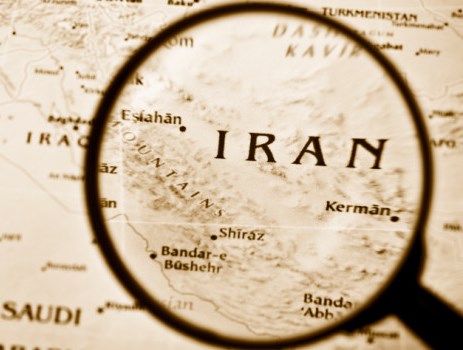
On April 24, 2026, Jeffrey Sachs sat down with Tucker Carlson for just over two hours to explain what he called the real origins of the Iran war and the economic catastrophe he believes is coming if the United States does not take what he repeatedly calls the “off ramp.” It is a remarkable piece of talk. … Read more

Tank war

TYSON: World War 2.718281828459…

WWe, for those who eschew both Arabic numerals and Roman numerals A modest proposal: since reading the Roman numeral II has apparently become a load-bearing skill our political class can no longer be trusted to perform, let us retire the old notation entirely. Henceforth, the present conflict shall be denoted by Euler’s number, taken to … Read more

Claremont AI Image mushroom cloud

TYSON: When Sports Became a Spectator Sport in Claremont

Last August, the Claremont school district stared into a five-million-dollar hole, and the community did what communities do. People wrote checks. People ran fundraisers. People rallied for the kids. The athletic department, in particular, became a cause celebre. Cut the sports? Unthinkable. Sports build character. Sports keep kids off the streets. One of the loudest … Read more

Sorting labeling

TYSON: Blackwashing The Word “Segregation” Won’t Fix The Segregation We Actually Have

New Hampshire House Democrats reacted to the leaked “segregated schools” chat the way modern politics trains people to react: treat a sloppy phrase as a full confession of racial intent, denounce it as a moral abomination, and then declare the conversation over. Democratic leader Alexis Simpson called segregation “a living scar,” “built through violence,” and … Read more

Orval Faubus and Tim Walz

TYSON: Faubus, Walz, and the Old American Sport of “Federalism When Convenient”

America has a charming habit: we rediscover “states’ rights” every time the federal government starts doing something our faction hates. The principle stays in the closet until it matches the outfit. In 1957, Arkansas Governor Orval Faubus staged the classic: state power deployed to frustrate federal authority, wrapped in the language of “public order.” When … Read more

Hope Damon

TYSON: Fighting Parental Rights Via Local Control

There is a particular kind of political jiu-jitsu that shows up every session in Concord: take a word conservatives like, twist it 15 degrees, and use it to do something conservatives should hate. HB1512 is that move. The bill would let a town hold a referendum to decide whether families in that town may access … Read more

Alien predator outside a public school AI generated

TYSON: Home for The Holidays

One privilege bestowed on me as an accident of birth that I share with few others is that I am the child of genuine, unrepentant Stalinists. And you thought being raised by wolves was tough. I started consuming the Marxist canon at the age of thirteen, and I was, and remain, a quick study. As … Read more

House of cards It’s the deposits. Bankers never used to worry about the money customers left in their banks. When deposited, the money was lent out while depositors could come and get their money anytime if it was a demand deposit. Thus, the depositor and the borrower had the use of the same money at the same time. Murray Rothbard called it fraud. Now it’s 2023 and Scott Hildenbrand, the chief balance sheet strategist at Piper Sandler, tells Joe Weisenthal and Tracy Alloway on Bloomberg’s Odd Lots podcast, And so if you had told me, Joe, or Tracy five years ago, you had me on here and you said, “There’s a bank and all they’re going to do is buy treasuries and all of their deposits are in checking accounts. And by the way, they’re going to fail,” I would’ve laughed at both of you. I wouldn’t have come back. I would have been like, “You all are crazy.” Rothbard wasn’t so crazy after all. Hildenbrand was on Odd Lots to explain how tough things are for small community banks. Jamie Dimon’s JPMorgan has all sorts of revenue streams, but the community bank has to take deposits, lend them out, and live on the difference in interest rates. Silicon Valley Bank was “not like the WAMU days or not It’s a Wonderful Life. It was three hours and $42 billion. That’s what happened.” Hildenbrand made a point that’s never mentioned: banks don’t make money lending; banks make money because “they don’t pay at market rates on the deposit side.” Banks don’t typically pay anything on checking account deposits. That is where banks earn their spread. It didn’t matter because it used to be that bank customers were very loyal. Bankers could count on that checking account money staying in place. Not so much anymore. Money moves fast for two reasons according to Hildenbrand: technology and demographics. Back in the day customers were very loyal but had very little trust. Today, “there’s a ton of trust. They’ll move money around on phones. They don’t even know the name of the bank they’re banking at,” Hildenbrand said. “They’ll move it so quickly. But there’s very little loyalty. And therein lies the difference in why we’re struggling with how to determine how to manage and hedge a balance sheet from a deposit perspective.” Bankers didn’t realize the effects on deposits of technology, social media, and demographic changes from a liquidity perspective in a higher rate environment. A decade or two ago a community bank had almost half of its deposits in CDs. And, as Hildebrand says, “That gave banks time.” Now bankers won’t get that kind of time due to demographics. Hildebrand interviews lots of young people for Piper Sandler who come to New York to learn about community banking. As smart as these young people are, he quipped, “I always have a question they can’t answer. Do you know what a CD is? And they’ve never heard of it, whether it was banking or music.” A certificate of deposit (CD) is a savings product that earns interest on a lump sum for a fixed period of time. The money must remain untouched for the entirety of their term or penalties or lost interest may apply. As an incentive for lost liquidity, CDs usually have higher interest rates than savings accounts. Nowadays, “people want CD rates with money market flexibility and operational flexibility,” Hildebrand told Alloway and Weisenthal. “We have no contractual liabilities on most bank balance sheets anymore.” Since the spring spate of regional bank failures, only one bank has failed—the $139 million Heartland Tri-State Bank in Elkhart, Kansas. But more failures and consolidations are coming. Hildebrand said half the banks in the country are trading at less than book value (assets-liabilities/shares). That means investors don’t trust the loan and investment values on bank balance sheets. He believes from the four thousand banks the United States has now, the number of banks will shrink to two hundred over the next ten to fifteen years. Rothbard wrote in Making Economic Sense, “The banking system, in short, is a house of cards.” The house of fraud will have fewer cards going forward. Author: Doug French Douglas French is President Emeritus of the Mises Institute, author of Early Speculative Bubbles & Increases in the Money Supply, and author of Walk Away: The Rise and Fall of the Home-Ownership Myth. He received his master's degree in economics from UNLV, studying under both Professor Murray Rothbard and Professor Hans-Hermann Hoppe.

TYSON: Break the Cycle or Change the System

TLDR: The people who could be punished have been. Chasing more scalps won’t bring the money back and will burn cash we don’t have. The real failure is structural: the board slid into oligarchy. Everyone who played along shares responsibility, and recovery starts when we admit that, take a moral inventory, and rebuild the machinery … Read more

dumbest meme ever

TYSON: The Dumbest Meme Ever

There are very few memes that are as dumb and insulting as this one.  It works because people conflate Antifa with being antifascist and therefore being pro-democracy, albeit while having a very hazy notion of what the term democracy means.  An old friend, whom I have known for more than half a century, posted this … Read more

dust motes window sun original Photo by Mika Baumeister on Unsplash

TYSON: Transparency First, Then Reform

Claremont’s fix starts with sunlight, not another check I was born long ago and far away in the East Tremont neighborhood of The Bronx, which, in the early-to-mid 1950s was a dense, modestly priced, prewar landscape of five- and six-story walk-ups organized around a lively Tremont Avenue retail spine; bakeries, kosher butchers, candy stores, and … Read more

Share to...