

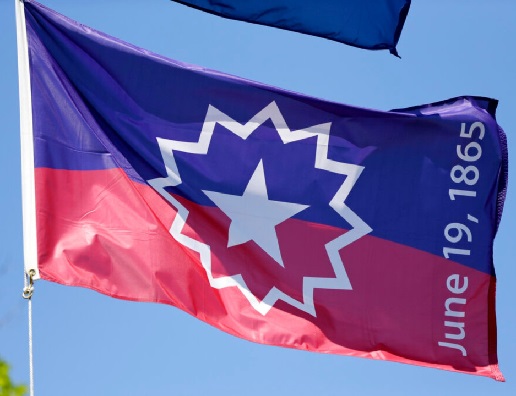
Every June 19, the same paragraph gets read aloud. Granger, Galveston, General Order No. 3, freedom at last. All true. On that morning in 1865, Major General Gordon Granger landed on Galveston Island with more than two thousand troops and declared the enslaved free. He also voided every act of the Texas legislature since secession, which nobody reads aloud.
Here is what else stays out of the ceremony.
The last Confederate general to surrender was not a Virginian. He was Stand Watie, a Cherokee and a slaveholder. He held out until June 23, 1865, four days after Juneteenth. He was not unusual in his arrangements. The Five Civilized Tribes, the Cherokee, Chickasaw, Choctaw, Creek, and Seminole, owned thousands of black slaves, close to ten thousand people across Indian Territory by 1861. Tribal slavery outlived the Thirteenth Amendment and ended only with the federal treaties of 1866. File that under things never said at a Land Acknowledgment.
Now the part that should interest anyone who respects a costly moral act. The hinge of this story is not Washington. It is London. Britain banned its slave trade in 1807 and then spent the next sixty years hunting slavers at sea with the Royal Navy’s West Africa Squadron. Kaufmann and Pape estimate the bill at roughly 1.8 percent of national income for six decades and about five thousand British lives. No empire before or since paid anything close to end the trade. Britain had made fortunes from slaving first. It remains the only power that then paid in blood and treasure to shut it down.
The reach of that decision is long and strange. When Britain abolished slavery across the empire in 1834, planters replaced the freed with indentured Indians, two million over time, sent to the Caribbean and East Africa. That migration is why New York now has a self-described socialist mayor born in Kampala to an Indo-Ugandan family. The Royal Navy freed the slaves, and a few generations later you get Zohran Mamdani. History does not run in straight partisan lines.
It does not flatter the British either. After the First World War, the same anti-slavery zeal kept landing on countries London wanted leverage over. Britain pushed for a foreign trusteeship over Liberia while indigenous Liberians were being shipped as forced labor to Spanish Fernando Po by the Americo-Liberian elite, themselves descendants of freed American slaves. It opposed Ethiopia’s entry into the League of Nations on the high ground of slavery, and not at all on account of the 1906 treaty by which Britain, France, and Italy had already split Ethiopia into spheres of influence.
So when the holiday comes around, ask what it does for each camp. For the hawk who likes a muscular central state, it celebrates a government that will cross an ocean to impose its will. For the America First conservative, it confirms he stands where Lincoln stood. For the progressive, it reruns the creation myth in which every Democrat slaveholder and Klansman was laundered clean the day Lyndon Johnson signed the Civil Rights Act and all the racists conveniently switched parties.
Two things are true at once. Slavery was a moral evil everywhere it existed, including in the tribes and in black-ruled Liberia. And the men who did the most to end it sailed under a British flag, off the coast of Africa, with a sense of timing I happen to be grateful for.
Authors’ and Speakers’ opinions are their own and may not represent those of Grok Media, LLC, GraniteGrok.com, its sponsors, readers, authors, or advertisers.
Disagree, agree, Got Something to say? We Want to Hear It. Comment or submit Op-Eds to steve@granitegrok.com
