Six-Figure Salaries, Rising SPED Costs, and the Questions We’re Not Asking
Across our state, SAU superintendents and administrators are paid six-figure salaries to lead public school systems that are supposed to serve all students well. Yet year after year, public confidence erodes, student outcomes stagnate, and special education (SPED) budgets continue to climb. At some point, taxpayers deserve more than reassurances—we deserve answers.
We are repeatedly told that SPED costs are rising and that there is little that can be done. But a more important question is rarely asked: why?
When students leave public schools for private options, many no longer require an IEP or 504 plan. These plans exist to support students who struggle to access academic content. If those same students succeed without such plans elsewhere, we should be asking what changed—and what that says about our public school systems.
This is not an argument against special education. There are students who genuinely need specialized services, and we must ensure they receive them. Those students are not the issue. The concern is the growing number of students identified for SPED services not because of true disabilities, but because the system itself is failing to meet their learning needs.
The Multi-Tiered System of Support (MTSS) was designed to help struggling learners early, before special education becomes necessary. Yet despite MTSS frameworks and increasing taxpayer investment, SPED identification continues to rise. Meanwhile, parents report that when their children move to private schools—with different curricula and instructional models—the need for special education services often disappears.
That should give us pause.
Poor-quality curriculum, instructional models that emphasize “facilitation” over direct teaching, and one-size-fits-all approaches can leave students confused and behind. When children struggle under these conditions, the system too often responds by labeling the child rather than examining the instruction. The result is an ever-expanding SPED budget that masks deeper problems.
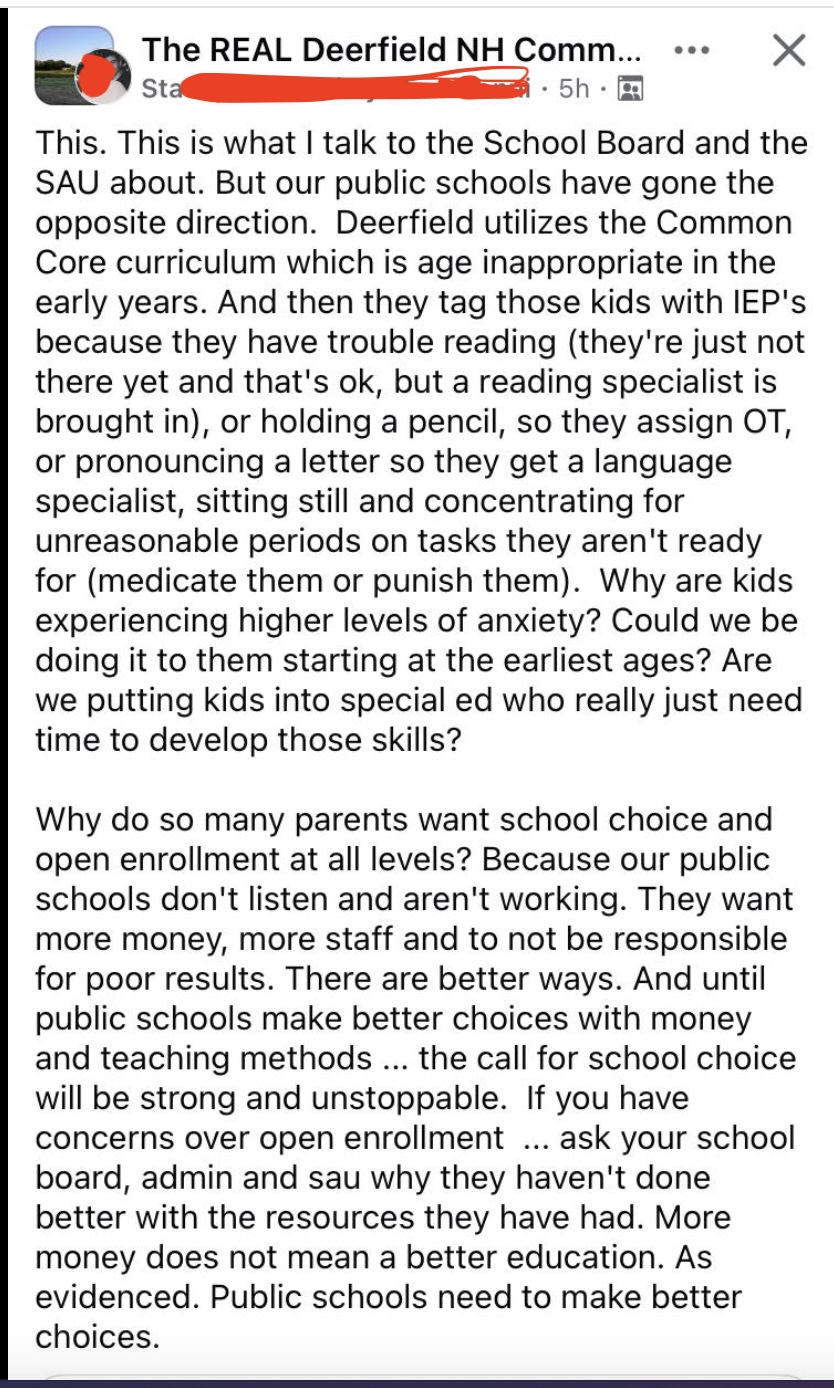
Parents are noticing. Recent discussions on social media highlight why families are choosing to leave public schools—not because they oppose public education, but because their children are not being well served by it.
There is a straightforward place to start: curriculum quality. Choosing effective, evidence-based curriculum would help more students succeed in general education classrooms, reduce unnecessary referrals to special education, and keep students—and their families—engaged in public schools. That alone could significantly slow the growth of SPED costs.
As communities head into Deliberative Sessions, voters should ask their school boards and superintendents a simple but telling question: How much of the SPED budget is spent supporting students who are struggling primarily due to curriculum or instructional issues?
Administrators earning six-figure salaries should be able to answer that question clearly and precisely. If they cannot, taxpayers are justified in asking why—not only about the budget, but about leadership, priorities, and accountability.
Public education can work. But it will not improve unless we are willing to confront uncomfortable truths and demand better—from the system and from those paid to run it.