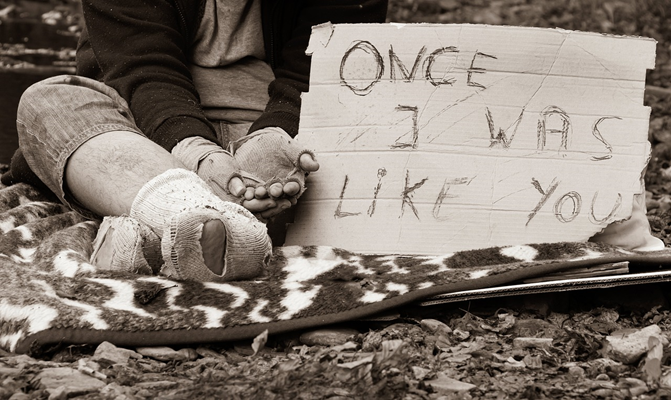
Last year I did what I like to do. When everyone on both sides of the aisle was ranting about New Hampshire’s homeless rate rising 52.1%, I dragged out the numbers because context matters. Yes, it “doubled.” From 1172 to 2441, people who reported or self-reported as “unhoused” for at least one night. One night. In the same year, California’s “problem” rose by only 12%, an increase of 22,000 homeless people from the previous year.
Context matters, and as I wrote then, we don’t want anyone to be homeless unless that’s how they choose to live, which no one ever measures. We must also be aware that the need rises to meet the amount of taxpayer-funded money made available to address it. San Francisco, for example, spends 700 million a year on a fixed homeless population of about 8000. That’s 87,000.00 per year per person. If you add everyone who claims to be unhoused for even just one day, the city still spends over 25K/person, most of which goes into NGOs’ pockets.
Stories about statewide homeless funding fraud are legion. Homelessness is a revenue stream and job creator that exists to ensure there are more homeless people. In New England, New Hampshire is surrounded by states that are emulating that model, and the Granite State is leaning into it and needs to stop.
If you want to end homelessness, end taxpayer-funded support, at least at the state level. Stop giving money to non-profits/NGOs now, or we’ll end up with the same problem other states have or will, as exemplified by the San Francisco model. “[T]he city has become dependent on its increasingly important homeless service NGOs. To shut them down would be to suddenly have a giant dependent population but no one to deal with them.”
The homelessness problem evolves from a situation of temporary homelessness, prompting concerned citizens to lift people up, into a deep-pocketed lobby that petitions the government to increase spending on a problem it has to exacerbate to stay in business.
California spent ~$24 billion+ on homelessness/housing programs from ~2019 onward (part of broader billions over the decade), yet homelessness rose by tens of thousands.
Nationally, since ~2013, taxpayer-funded beds increased ~151% and CoC spending ~111%, but overall homelessness rose ~27% (with unsheltered and chronic homelessness up more), though there was a modest national dip in the 2025 Point-in-Time count.
That’s not to say there’s no role for government at any level. It can offer incentives to private actors or interests that demonstrate results, rather than saying it will make money available for special interests to chase.
Taxpayer funding will only result in more homelessness as the state spends more. Ending funding in the next budget will almost immediately reduce homelessness as vagrants and others who have no intention of letting anyone help them “solve their problems” migrate to neighboring states that are all in on the same failed blue-state model that resulted in the San Francisco situation.
700 million annually, resulting in 87K in taxpayer-funded expenses per ‘actual’ homeless person.
The other thing it has to stop doing is using PIT (Point-In-Time) counts to estimate anything. PIT is a transitory figure used by the homeless NGO lobby to grow taxpayer funding by inflating numbers to create an emotional reaction that is ill-suited to the problem or the preferred solution (more of your money, less oversight, and no results-based funding).
New Hampshire makes about $12 million available each year to a handful of homeless “prevention services.” We need to stop doing that. Homeless prevention services, including faith-based or local initiatives, need to stand on their own as non-profits that petition private donors to support their efforts.
It won’t be an easy switch to make, but it can be done. Give businesses that donate to “prevention and care” services a 100% match reduction in their reported income for business profits taxes. This forces the provider to demonstrate not just a plan to house the homeless, but a model that gets people who are living outside off drugs, employed, and back on their feet.
A process that ought to be applied to the recovery NGO lobby as well, which suffers from the same problem. It grows to meet the funding made available, over 847 million from 2014-2025.
Drug rehab is a taxpayer-funded occupation that lobbies to retain its profit model without having to demonstrate that it is good at anything other than spending your money on itself (staff, directors, etc.) in the name of opioid recovery or drug abuse treatment. A model that, like homelessness, is another government program that produces Democrat voters because its endless spending model supports another grift that needs the problem to get worse so it cannot just stay employed but grow its business model.
It sounds heartless at first, but it is exactly the opposite. Prevention and care that produce results not only free up tens of millions for actual needs (or, God help us, lower taxes), but also get people off drugs, off the street, and create new, independent, self-supporting, taxpaying assets.
The taxpayer-funded relief model results in more homelessness and addiction, not less.