

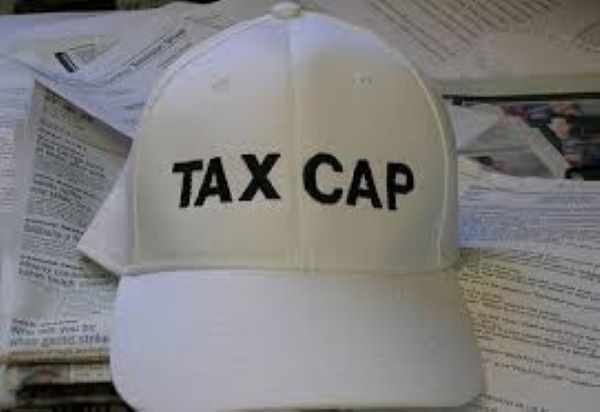
Legislation was passed in my town of Kingston during the March election and recently at the NH State House offering “tax caps” as a solution to exploding town and school budgets.
These measures – while tempting – resemble the “price controls” economists normally condemn.
Economists routinely oppose price ceilings. The best outcomes are achieved when buyers and sellers agree on a price through voluntary haggling.
Town and school tax caps – though fiscally understandable – appear to be arbitrary price ceilings and a politically lazy way to reduce spending.
Ideally, citizens will run for committees such as the school board, the school budget committee, and the town budget committee – and use their appointed time to carefully research where savings can be achieved.
As Chair of the Sanborn Regional School District Budget Committee last year, we realized $1.1 million in budget reductions by identifying overstaffing issues, primarily in administrative positions. We reduced the proposed $42 million budget by that amount, and it passed with voters.
It can be done.
For some towns and districts – yes, they spend way too much and should cut back.
But some school districts face sudden spikes in special education costs due to shifting student populations and must find resources to meet federal mandates, at least until reforms can be implemented.
Each town and school district is different.
Having said that, I recently voted in favor of HB 1300 as a State Rep. The bill places a question on the November ballot, asking voters whether they want to pursue a cap on property taxes for local public schools (HB 1300).
The reason I supported the bill is that the “price controls” I strongly oppose are already in place in school districts across New Hampshire.
The National Education Association, the teachers’ union, orchestrates Soviet style compensation grids used at all our schools.
These pay grids dictate “collectively” that all teachers shall be paid the same starting salary and receive the same increases as they advance up the grid, despite the fact that some are measurably better educators and some teach vastly more difficult subject areas (Math, Chemistry).
This is why we have chronic shortages of STEM teachers.
Though STEM graduates must master technically demanding fields, the egalitarian pay structure at our schools requires that all are paid the same, whether a Kindergarten teacher or a high school Physics teacher.
Starting salaries for those graduating with Education degrees are between $42K-48K, while those holding Math and Statistics degrees range from $68K to $76K.
However, thanks to NEA salary grids, we must pay all teachers more – to lift the compensation per teacher high enough to attract and hire a Calculus instructor.
75-80% of school taxes go toward staffing.
NEA’s unreasonable compensation structure is the source of our massive budgets and high property taxes.
Decades of public-sector wage controls and lack of merit pay have caused budget distortions that are inefficient and unfair.
Education unions “started it” with their initial price controls – so enacting tax caps in response may be a second-best solution to the unsustainable property taxes crushing Granite Staters.
In the long run, more choice in education is the real solution. More competition will force union-controlled, financially wasteful schools to be responsive to parents and taxpayers – or wither on the vine.
Education competition is a powerful tool, and we’ve been expanding it in Concord with a variety of bills.
That’s one policy solution we can all support.
Pam Brown – State Representative, Rockingham District #14
Last Day

Authors’ and Speakers’ opinions are their own and may not represent those of Grok Media, LLC, GraniteGrok.com, its sponsors, readers, authors, or advertisers.
Disagree, agree, Got Something to say? We Want to Hear It. Comment or submit Op-Eds to steve@granitegrok.com
