


After nearly a century, we’re still learning what Vitamin C actually does for us
TL/DR Synopsis:
- Vitcylation may finally explain what Linus Pauling was seeing decades ago
- The RDA is under 100mg but research suggests ten times that is safe and beneficial
- Higher Vitamin C in older adults correlates with more grey matter so feed your brain
Last time, we took a look at how many other nutrients Vitamin C interacts with in our body’s infinitely complex symphony, but the first published studies on nutrient interactions didn’t emerge until about a quarter-century after Vitamin C was discovered, and it took another quarter-century after that for researchers to document the Vitamin C and Iron interaction. Before that time, nutrient research was limited to studying one nutrient at a time.
When we look back further, we see that Pasteur and Lister were breaking ground on germs in 1865, but from there, it took researchers over a century to connect the dots between Vitamin C and iron, and today, vitcylation joins phosphorylation, methylation, acetylation, and glycosylation in the ranks of nutrient interactions that researchers have documented since 1906, when phosphorylation was observed but not fully understood until the 1950s. These interactions all occur at the enzyme or protein level, which was hypothesized around Pasteur’s time, but not identified until 1897, and they are still being researched, with vitcylation being the latest. Inquiring minds boggle at what next year’s research papers may reveal!
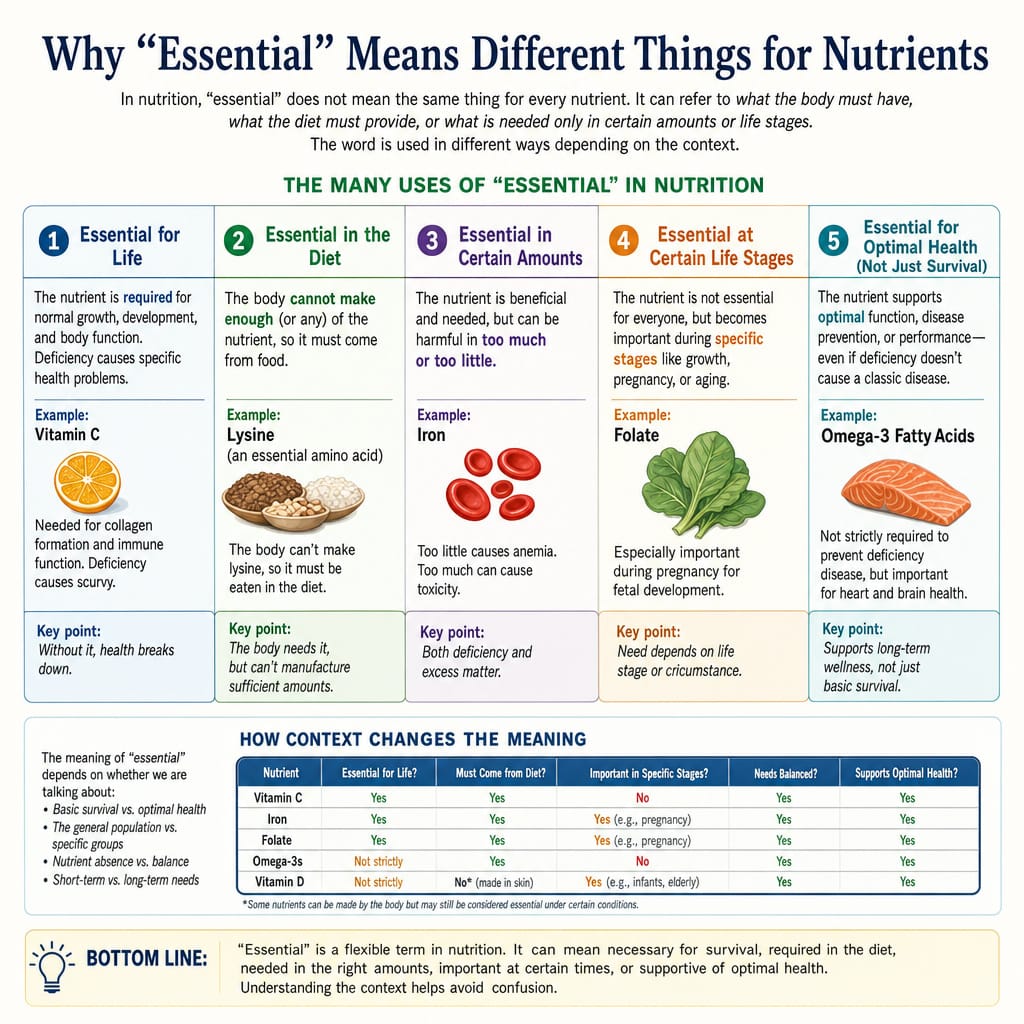
By the way, Vitamin C is “Essential” as is lysine, as is iron, but boron is only “conditionally” essential. As we proceed through all the nutrients on our list, we’ll review their “essential” status. Check the graphic for more confusion!
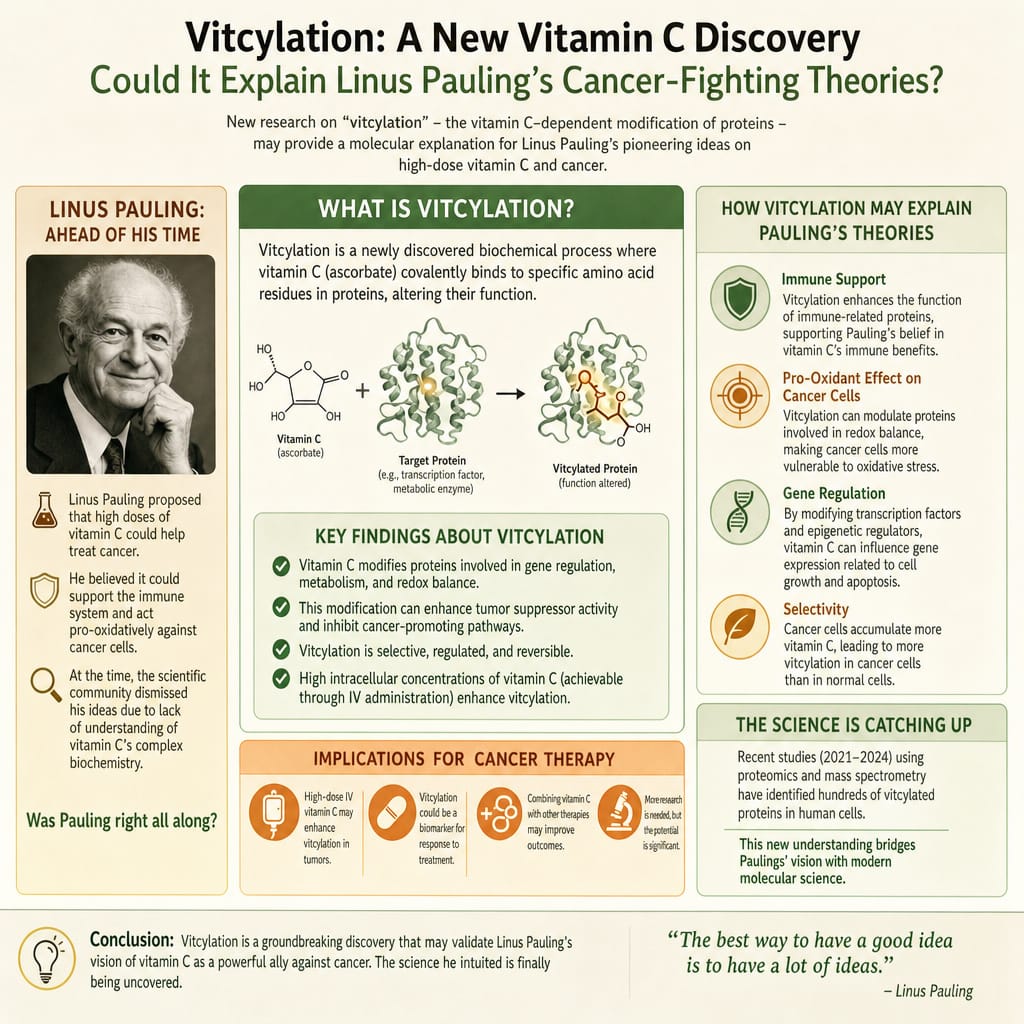
If you’re interested in some historical trivia, I think vitcylation may possibly explain some of Linus Pauling’s Vitamin C work, where he posited Vitamin C as a cancer preventive or even a cure. I tend to stay away from the technical weeds in these Posts because they’d run 5,000 pretty dull words if I did, but I always encourage readers to do their own research! Heck, higher doses of many nutrients can be safely taken because our bodies can generally dump unneeded intake, but hardly any nutrient works in total isolation, and needs one or more accompanying nutrients for best results, with some interactions even being dosage dependent! Start here and do your homework so you can get the best nutrient balance. AI can be helpful but verify! Don’t expect much from the MedicoBlob™ but I’m supposed to suggest that you consult your healthcare professional.
C and I are now both taking 500mg Vitamin C 2x daily. I am considering taking that up slightly, maybe a lot more, and I will update you when I do. Nutrient changes need to be done carefully so that you don’t get false or confusing signals from your old bod! As we learned earlier in this Post, even the researchers don’t know all of our nutrient interactions, so it’s always best to change only one dose at a time.
One reason C increased her C dose was a recent Japanese study of older adults that showed a correlation between Vitamin C levels and brain matter — the grey cells that keep us humming into old age! It’s one of the best studies when you look at Vitamin C for brain health because they actually measured blood Vitamin C levels, rather than going by Vitamin C intake. While it’s not relevant for us, one of our family members may benefit from bumping his Vitamin C for other reasons, namely because recent studies indicate that melanoma cells don’t do well in high concentrations of Vitamin C.
How Much Is Enough?
Here’s where the rubber meets the road. The RDA for Vitamin C is less than a measly 100mg! We’re taking TEN times that, and will doubtless go higher. According to a California physician named Cathcart, who did some research in the 1980s with high doses, we can take Vitamin C doses up to the uncooked weight of a quarter-pound burger. Yeah, you read that right.
Of course, there’s always a catch, isn’t there? Remember the “magnesium effect” from an earlier Post? There is also a very similar Vitamin C effect, but as with magnesium, all you have to do is back your dosage down. Cathcart also found, interestingly, that his sickest patients tolerated more Vitamin C before the “effect” kicked in. Knowing what we now know about the way our bodies utilize nutrients, one can only conclude that the sickest put more Vitamin C to work, keeping it from their digestive systems. (Pharmaceuticals, such as Elesclomol, used for melanoma, create additional nutrient dosing concerns, as Elesclomol drives copper into cancer cells to kill them, potentially upsetting the copper/zinc/Vitamin C balance!)
Before I did the research for this Post, I had no real plan to increase our Vitamin C intake, but the stuff is cheap and my brain is old, so I figure, what the hell! It really appears to be one of those supplements that may do a lot of good in the background but can’t do much harm. I’ll report again in six months, or so, be sure to keep checking back!
Authors’ and Speakers’ opinions are their own and may not represent those of Grok Media, LLC, GraniteGrok.com, its sponsors, readers, authors, or advertisers.
Disagree, agree, Got Something to say? We Want to Hear It. Comment or submit Op-Eds to steve@granitegrok.com
