



Tucker Carlson, who recently announced his own new media network, has been making the podcast rounds, talking to hosts of a variety of different ideological backgrounds.
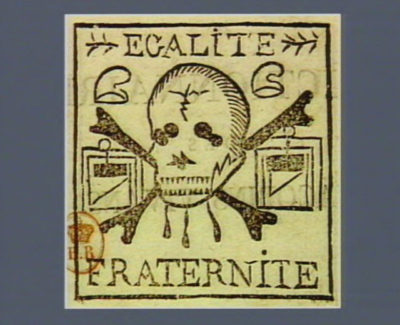
OPINION: Why the French Revolution Was Not a Libertarian Revolution
A common misconception about the French Revolution is that it was some sort of classical liberal or libertarian revolution. That is, some still claim that the revolution was, for all its flaws, in “the spirit” of what is historically known as liberalism. This flawed interpretation of the revolution persists for two reasons. One is used … Read more

 I never formally placed libertarians into two classes. However, I did recognize a difference but considered one as libertarian and the other as conservative, conservative in the Anglo-American sense: conserving American’s independence, the recognition of unalienable individual rights coming not from man but beyond, and the freedom from tyranny in every form. Doing so because it’s right, and not doing so is a violation of nature, virtue, and morals. I looked at libertarianism as more of a technical means to getting to this conservative moral ground. So, as is usually the case when I read something from Robert Higgs, I’m forced to reconsider my understanding. Higgs’ essay, “