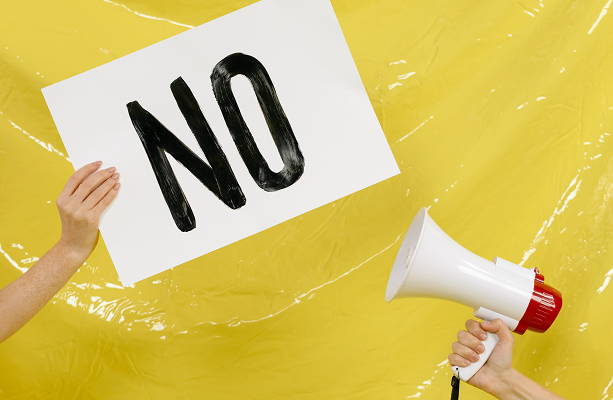
On August 4th, I stood before Nashua’s Personnel and Administrative Affairs Committee to comment on a proposed ordinance that would conditionally ban signs, banners, and flags in the Aldermanic Chamber. I came with three 8.5” x 11” paper signs to test whether the City’s rule would be enforced fairly, or selectively.
The signs were silent. One read “The Board Sucks,” another “Derek is an Ass,” and a third “Derek is an Asshat.” The first was allowed. The second triggered the Chairwoman Kelly to interrupt my 3 minutes comment and issue a warning. When I held up the third, my comment period was abruptly cut off, thirty seconds before my time was up.
The Chair claimed I violated the public comment policy by using “vulgar” language. But vulgarity is not prohibited. The City’s policy (O-23-054) references “obscene” and “profane” speech, two very specific legal categories that do not include colloquial insults. Courts have repeatedly affirmed that speech cannot be censored just because it offends those in power.
The real problem is deeper: Nashua’s proposed ordinance, O-25-060, creates a vague and potentially unconstitutional restriction on public expression. It prohibits signs that “may create a safety concern” or “obstruct the view”, yet provides no guidance on what that means and permit the Board to “waive their rules at any time”. Worse, the City refuses to adopt the reasonable constitutional protections recommended by the New England First Amendment Coalition, for the second time, even as cities like Manchester already have.
What unfolded Monday night wasn’t about safety or decorum, it was about control. A government uncomfortable with criticism has no business regulating speech based on who’s talking or what they say. That is textbook viewpoint discrimination, and it violates the First Amendment.
The board’s one-hour discussion after my comment confirmed what many of us already fear: this ordinance is not about safety, it’s about silencing dissent. Several aldermen openly debated which kinds of signs or messages they would personally allow, even comparing mine to political advertising and obscenity. One warned that allowing “inappropriate” signs would send the wrong message to children watching on TV. Another justified censorship based on how “disappointed” they were in me. But public meetings are not classrooms, and hurt feelings are not grounds to silence speech.
If Nashua is going to legislate public conduct, it must do so fairly, clearly, and constitutionally. The City should revisit the ordinance with an open mind, the presence of legal counsel and accept the input of organizations like NEFAC that exist to protect the very democratic values Nashua claims to serve.
Democracy doesn’t need protection from signs. It needs protection from leaders who believe the rules don’t apply when it’s their critics holding the markers.
Laurie Ortolano is a Nashua resident and government transparency advocate.