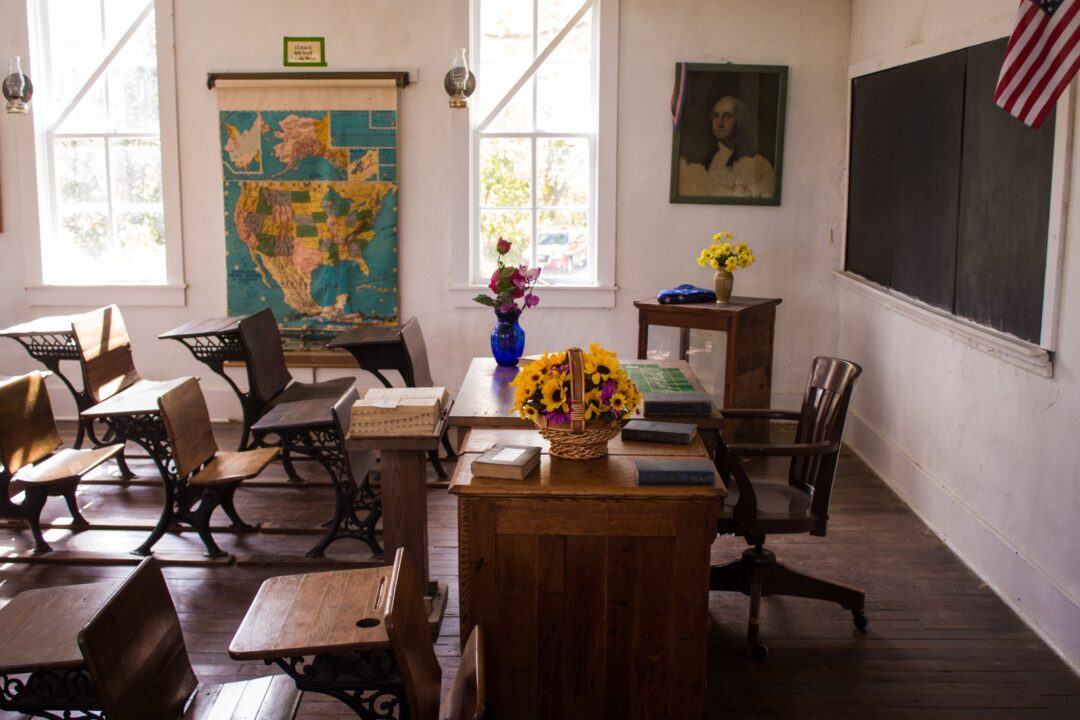
In 1784, New Hampshire’s schools were indeed overwhelmingly religious in character, typically operated by local towns or parishes under the state’s 1784 school law (and earlier colonial precedents). As Nathaniel Bouton documents in his 1833 A History of Education in New Hampshire, the explicit purpose of common schools at that time was to teach children to read the Bible, instill Protestant Christian morality, and produce virtuous citizens capable of self-government in a republic. The New Hampshire Constitution of 1784 (Part II, Article 83) even encouraged the support of “public protestant teachers of piety, religion and morality.”
Today, in US public (government) schools—including those in New Hampshire—the question of “who decides what is moral” has shifted dramatically because of a series of legal and cultural changes:
Primary decision-makers now
- The federal and state courts (ultimately the U.S. Supreme Court)
- Through a long line of First Amendment Establishment Clause rulings (Engel v. Vitale 1962, Abington v. Schempp 1963, Lemon v. Kurtzman 1971, etc.), organized prayer, Bible reading as a devotional exercise, and the teaching of religion as truth were removed from public schools.
- More recent cases (Kennedy v. Bremerton 2022, etc.) have slightly loosened restrictions on private religious expression by teachers or students, but the core prohibition on government-endorsed religious morality remains.
- State legislatures and departments of education
- They set academic standards, curriculum frameworks, and (increasingly) social-emotional learning (SEL) standards that include explicit values and behavioral expectations.
- In New Hampshire, for example, the Department of Education adopts minimum standards that now include “dispositions” such as “empathy,” “social justice,” “cultural competence,” and “responsible citizenship” as defined by secular, progressive-leaning frameworks (see NH DOE’s current competencies and work-study practices).
- Local school boards (within the limits set by state and federal law)
- They still have some latitude, especially on controversial topics (sex education, library books, DEI policies, etc.), which is why battles over “morality” now play out in school-board elections.
- National organizations that heavily influence curriculum
- The College Board, CASEL (Collaborative for Academic, Social, and Emotional Learning), GLSEN, Learning for Justice (Southern Poverty Law Center), and similar groups provide the actual lesson plans and teacher-training materials that fill the vacuum left by the removal of Biblical morality.
- These organizations generally promote a secular, progressive understanding of morality centered on diversity, equity, inclusion, gender identity, anti-racism, and environmental stewardship.
- Teachers and administrators individually (in practice)
- In the absence of an agreed-upon religious foundation, classroom teachers often become de facto arbiters of moral questions when issues arise, guided by their own values, union training, or district equity policies.
Summary of the shift
| Era | Source of moral authority in NH public schools | Enforced by |
| 1784–early 1960s | Protestant Christianity (Bible-based) | Town selectmen, local clergy, state constitution |
| 1960s–present | Secular court rulings + state standards + national progressive NGOs | US Supreme Court, state DOE, school boards, advocacy groups |
So, in short: the explicit Biblical morality that New Hampshire deliberately built its early public schools around in 1784 has been replaced by a morality that is ultimately defined and enforced by secular courts, state education bureaucracies, and influential non-governmental organizations—none of which are elected or directly accountable in the way the old town meeting or Congregational parish once were.