If you read the hundreds of pieces of content I’ve published on the subject, you might come away thinking I hate Electric Vehicles, but I love Golf Carts. A few beers or a bottle of Jack, a few joints (replaced these days with “gummies”, perhaps), and the fun never ends. I have a different relationship with roadworthy EVs, minus the depressant and the stimulant. If you want it, you pay for it.
It would also be amazing if you admitted that they are not green, that their carbon footprint is suspiciously large and underreported, that much of the production emissions are offshored, which causes environmental issues in second- and third-world countries, or that the electricity you use emits carbon as well.
If you want it, you pay for it, but I’m all in favor of the platform getting less dangerous (battery fires), lighter (tire, brake, bridge, and road wear), range needs to be a lot further, more affordable, and any advances in energy generation that resolve that side of it as well. I know Elon Musk wants those things, and I’ve no issues with any of that. Combustion locomotion used to be a lot dirtier than it is today, so keep at it.
But you pay for it, and that’s what EV sales depend on. Someone else paying some of the high price of admission into the Electric Vehicle Lawn Ornament Club. Look at me. I drive an EV. But you didn’t pay full price; taxpayers helped you into that resume-pimping social order.
TechCrunch is as liberally motivated and progressively dominated as most online portals ever were, so when it said GM and Ford are “talking less” about EVs, it made a point of leading with their continued devotion to the platform. Fine, as long as they pay for it. And by all means, use your money on R&D to make all the things I’ve mentioned better and cheaper. Elon will try, and you have to compete with him, but GM and Ford are talking less about EVs on their quarterly investor calls.
It’s Trump’s fault. He has disincentivized the illusion that we need to reduce transportation emissions and ended the free money again, and EV sales and conversations about them were hit hardest.
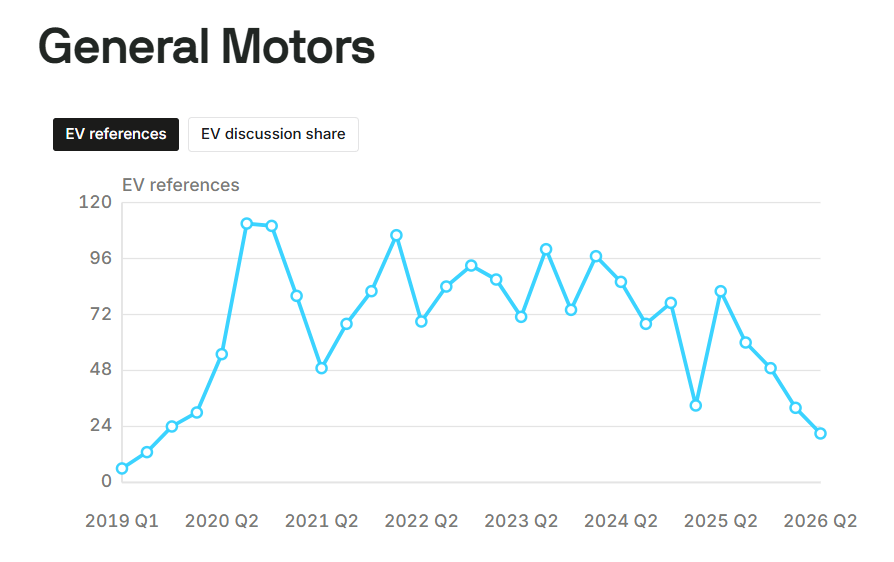
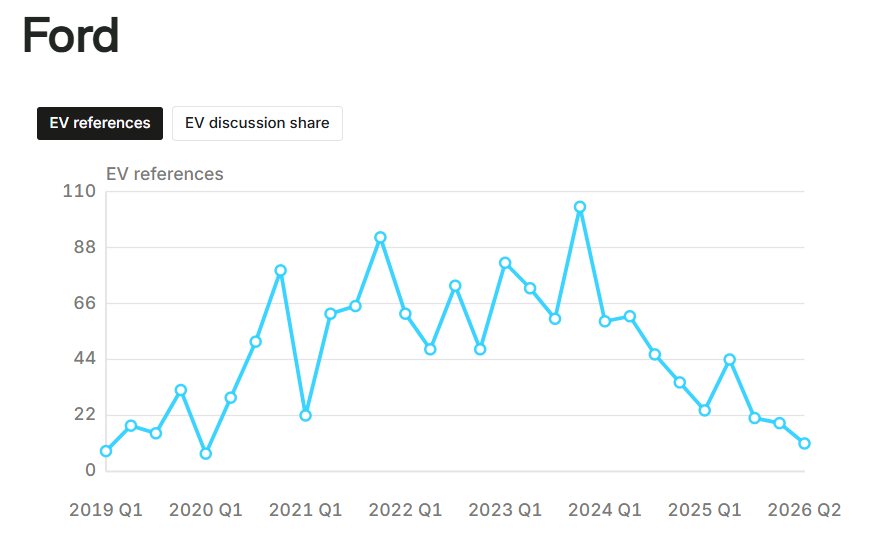
The taxpayer-backed discount is directly tied to the amount of time they spend discussing their investment, sales, or goals on the platform. It also impacts sales.
While US EV sales were more or less flat from 2010 to 2018, with a slight dip in 2016-2017, they spiked in 2021. The Biden administration and states like California were not just handing out taxpayer-backed discounts to dealers (which drives up the price until they find the sweet spot); they were promising that’d be the only thing you’d be able to drive.
The platform wasn’t ready. Mass storage technology wasn’t ready. Green energy tech wasn’t ready. Energy generation wasn’t ready. And infrastructure wasn’t, from transmission delivery to charging stations to roads and bridges. They passed emissions-reduction mandates anyway, and the one thing that did was drive up the cost of everything, especially electricity, while pushing industries out of blue states to give themselves more time.
You don’t get there from here without this stage of development, but they made it political, put government in the middle, and tied it to their environmental illness. The fastest way to achieve an EV future is to stay out of it and let the market do its thing. Giving anyone someone else’s money for anything is the worst possible way to approach most problems.
It made the drug problem worse, crime worse, homelessness worse, house prices worse, poverty, and the biggest, best example of all: the government educating children; that outcome has gotten exponentially worse. You create an incentive to get more free money, which relies on the problem being as bad or worse, and that’s what you get.
Automakers shouldn’t talk less about EVs because there are no federal handouts; they should talk more about where the technology is, where it needs to be, and how we get there, to sell a product on its actual value and merits.
If EVs cost half as much and weren’t rolling time bombs that ate through brakes, tires, roads, and bridges, had decent range, didn’t cost a fortune to repair, and were charged by affordable small-scale nuclear power, I might buy one.
None of that is true, and the people who want to use government to bribe people into them could have done it differently and should not be allowed to do anything about any of it ever again, and not just because that’s their answer for everything.
The solution, then, for almost every problem that ails us, is to have fewer of them in a position to make those kinds of decisions about how we spend other people’s money.