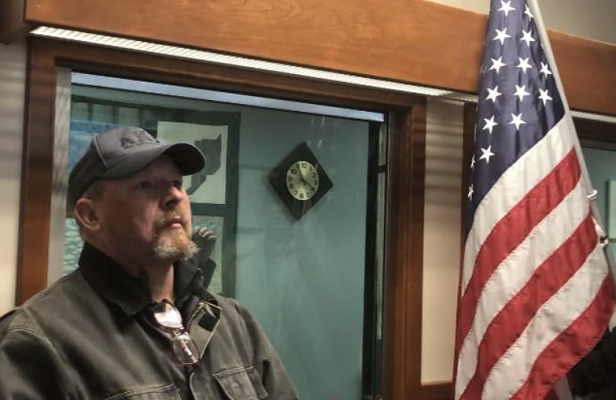
You may know Daniel Richard as a ‘Grok author who has been using the system to fight the system for four years. He became something of a Constitutional scholar in the process, as well as gathering a keen understanding of how State Government does and doesn’t work.
It is a question of Election Integrity. Following the Constitution as written, not as imagined.
Daniel Richard brought his concerns to the Legislature, which wouldn’t listen; the AG and Secretary of State were no help, and oftentimes the opposite. They fought him every step of the way, and the courts went so far as to say he had standing, only to dismiss his case anyway.
And so, it comes to this. Dan is asking the Highest Court in the Land for a remedy, justice, or at least an acknowledgment that the words in the Constitution and state law mean something and that the State is obligated to constrain itself accordingly. That it and its agents, elected by the people, answer to that document, especially when the people come before them seeking redress.
What follows is Daniel’s petition to the US Supreme Court. The state of New Hampshire has “been served,” and while we wait to see if SCOTUS will take the case, you get to read it here first, in its entirety, for your consideration.
It is formatted for the court and not overly long by those standards, but there’s a lot here to chew on. If you need or want background, we have forty articles cataloging the journey, attributed to Dan, going back to 2020. It is the most comprehensive record of Dan’s effort and the story that lands us here today.
There is additional related content from other GraniteGrok authors, as commentary, but Dan’s archive is the more comprehensive source.
I did make a feeble attempt to format the cover sheet in WordPress to match the original, but nothing else was reformatted for that purpose. An original PDF copy can be found here if that interests you.
Here is Dan’s petition.
No. ________________
_________________________________________________
In the
Supreme Court of the United States
_________________
Daniel Richard, pro se
Petitioner.
v.
Christopher T. Sununu, et al.
Respondents.
_______________
On Petition for a Writ of Certiorari
to the Supreme Court of New Hampshire
________________
.
Questions Presented
Question 1 – Meaningful Judicial Review:
Whether the New Hampshire Supreme Court denied meaningful judicial review under the Elections Clause and Qualifications Clauses of the U.S. Constitution, in violation of Moore v. Harper, 600 U.S. 1 (2023), by declaring N.H. Const. pt. II, art. 32 “silent” on the method of ballot counting expressly required by that provision and by disregarding its own binding precedent in Fischer v. Governor, 145 N.H. 28 (2000).
Question 2 – Vote Dilution:
Whether the Equal Protection Clause of the Fourteenth Amendment, as interpreted in Bush v. Gore, 531 U.S. 98 (2000), and Reynolds v. Sims, 377 U.S. 533 (1964), is violated when a state court dismisses as a non-justiciable “generalized grievance” a qualified voter’s claim that his in-person, hand-counted ballot—cast under strict constitutional verification standards, was commingled and tabulated with hundreds of thousands of absentee and machine-counted ballots processed under materially weaker verification and transparency standards.
Parties to the Proceeding
Petitioner is Daniel Richard, pro se, an inhabitant, a Citizen of the United States, and a taxpayer domiciled in Auburn, New Hampshire.
Respondents are: Christopher T. Sununu, et al.
Related Proceedings
Richard v. Sununu, No. 218-2022-CV-00676, Superior Court of New Hampshire, Rockingham County. Order entered November 10, 2022 (dismissal on merits).
Richard v. Governor, No. 2023-0097, Supreme Court of New Hampshire. Opinion issued September 12, 2024 (affirming in part, vacating in part, and remanding).
Richard v. Sununu, No. 218-2022-CV-00676, Superior Court of New Hampshire, Rockingham County. Order entered August 31, 2025 (dismissal on merits on remand).
Richard v. Governor, No. 2025-0297, Supreme Court of New Hampshire. Order issued January 13, 2026 (affirming dismissal of remaining claims).
Table of Contents
Page(s)
Questions Presented….….….………………. i-ii
Parties to the Proceeding.……………………. iii
Related Cases………………………………………. iii-iv
Table of Contents………………………….. iv-ix
Table of Authorities……………………… vi-ix
Opinions Below….……………………………. 1, 3
Jurisdiction……………………………………………. 2-7
Federal Constitutional and Statutory Provisions Involved……………………………….. 7-9
State Constitutional and Statutory Provision involved……………………………………… 9-13
Statement of the Case………………………………..13-18
Reasons for Granting the Petition…………….18-31
- The Decisions Below Conflict with Moore v. Harper by Denying Meaningful Judicial Review.………………………………………20-24
- Vote-Dilution Claims Are Not Mere Generalized Grievances: Conflict with Bush v. Gore, Reynolds, and Baker………..……….24-28
- This Case Is an Ideal Vehicle for Resolving the National Issues………………………………29-31
Conclusion………………………………………………………31
Certificate of Compliance………………………………32
Certificate of Service………………………………………32
Table of Appendices
Appendix A: New Hampshire Supreme Court Order, Richard v. Governor, No. 2025-0297 (Jan. 13, 2026) ………………………………………………. 1-A
Appendix B: Superior Court Order on Remand (Aug. 31, 2025) ……………………………………. 9a
Appendix C: New Hampshire Supreme Court Opinion, Richard v. Governor, 2024 N.H. 53 (Sept. 12, 2024) …………………………………………. 27a
Appendix D: Superior Court Order Dismissing Original Complaint (Nov. 10, 2022) ……….…. 53a
Appendix E: Constitutional and Statutory Provisions Involved ……………………………… 88a
Table of Authorities
Federal Authorities
Baker v. Carr, 369 U.S. 186 (1962) …. 26,27, 28
Bush v. Gore, 531 U.S. 98 (2000) … i, 6, 25, 28, 30 Michigan v. Long, 463 U.S. 1032 (1983) ..6, 20, 24, 30
Moore v. Harper, 600 U.S. 1 (2023) …… i, 3, 7, 18, 19, 20, 23, 24, 29, 30,
Reynolds v. Sims, 377 U.S. 533 (1964) …. i, 6, 25, 28
Smiley v. Holm, 285 U.S. 355 (1932) ……. 21, 24
U.S. Term Limits, Inc. v. Thornton, 514 U.S. 779 (1995).………………………………………… 4, 5, 30
Federal Constitutional Provisions
U.S. Const. art. I, § 2, ………………. i, 3, 7, 16, 24
U.S. Const. art. I, § 4, cl. 1. ……….. i, 3, 8, 16, 24
U.S. Const. amend. XIV………………. i, 8, 16, 25
U.S. Federal Statutes
28 U.S.C. § 1257(a)……………………………………. 2
U.S. Supreme Court Rules
Sup. Ct. R. 10(c)…………………………… 20, 29
Sup. Ct. R. 13.1……………………………………. 2
Sup. Ct. R. 33.1(g)…………………………………. 32
New Hampshire Constitutional Provisions
N.H. Amendment of Const. pt. I, art. 11, (Question 8 (1976)) …………………………………………… 9
N.H. Const. pt. I, art. 11. (voter qualification)… 9, 22
N.H. Const. pt. II, art. 30. (inhabitant defined).. 9, 22
N.H. Const. pt. II, art. 32. (State Elections Clause) ……………………………………… i, 2, 4, 10, 14, 19, 21, 25
N.H. Const. pt. II, art. 100……………. 4, 10, 15, 22
New Hampshire Authorities
Fischer v. Governor, 145 N.H. 28, 37 (2000) …. i, 19, 22
Gerber v. King, 107 N.H. 495, 225 A.2d 620 (1967)… 23
Richard v. Governor, 2024 N.H. 53… i, 1, 2, 16, 21, 22, 27
Richard v. Governor, No. 2025-0297……. 1, 2, 5, 18
New Hampshire Statutory Authorities
N.H. RSA 21:6..…………………………… 11, 15, 22
N.H. RSA 21:6-a…………………………… 11, 15, 22
N.H. RSA 654:1……………………………. 11, 15, 22
N.H. RSA 656:40-:42……………… 4, 12, 14, 15, 22, 26
N.H. RSA ch. 657…………………. 12, 13, 15, 22, 26
N.H. RSA 659:30…………………………. 13, 21, 25
N.H. RSA 659:50……….…….…………… 13, 21, 25
Other Authorities
The Federalist No. 59………………………………….. 4, 5
2024 Election Procedure Manual, p.154………. 27
Opinions Below
The Order of the New Hampshire Supreme Court in Richard v. Governor, No. 2025-0297 (Jan. 13, 2026), affirming dismissal of remaining claims, is reproduced in the Appendix A.
The Order of the Superior Court of New Hampshire, Rockingham County (Ruoff, J.), No. 218-2022-CV-00676, entered August 31, 2025, dismissing the complaint on remand, is reproduced in the Appendix B.
The Opinion of the New Hampshire Supreme Court in Richard v. Governor, 2024 N.H. 53 (Sept. 12, 2024), is reproduced in the Appendix C.
The Order of the Superior Court of New Hampshire, Rockingham County (Ruoff, J.), dismissing the original complaint (November 10, 2022) is reproduced in the Appendix D.
Jurisdiction
The New Hampshire Supreme Court entered its final Order on January 13, 2026. This petition is timely filed within 90 days under Sup. Ct. R. 13.1. Jurisdiction is invoked under 28 U.S.C. § 1257(a).
This Court’s jurisdiction under 28 U.S.C. § 1257(a) extends to final judgments of a state’s highest court where a substantial federal question is properly presented, even when the state court purports to rest its decision on state law grounds. The “adequate and independent state grounds” doctrine does not bar review here.
While the New Hampshire Supreme Court’s decisions in Richard v. Governor, 2024 N.H. 53 and No. 2025-0297 (Jan. 13, 2026) rely primarily on interpretations of the New Hampshire Constitution (e.g., deeming pt. II, art. 32 as “silent” on ballot-counting methods and dismissing claims as ‘generalized grievances’), under state standing rules, those state grounds are neither adequate nor truly independent in the context of federal elections.
The doctrine yields when state court interpretations of state law in the federal election cases below, evade or transgress federal constitutional limits, particularly under the Elections Clause (U.S. Const. art. I, § 4, cl. 1) and Qualifications Clause (U.S. Const. art. I, § 2,).
In Moore v. Harper, 600 U.S. 1, 29 (2023), this Court rejected the independent state legislature theory and held that state courts may not insulate state legislatures from ordinary judicial review under state constitutions. However, federal courts retain authority to ensure such review is “meaningful” and do not permit state legislatures to exceed or contradict federal constraints without scrutiny.
The Framers designed the Federal Elections Clause to prevent the very patchwork of non-uniform election rules that New Hampshire’s bifurcated system now produces. See The Federalist No. 59; U.S. Term Limits, Inc. v. Thornton, 514 U.S. 779, 822–23 (1995).
The New Hampshire courts’ deferential approach—by upholding RSA 656:40–42 and related statutes without enforcing the plain textual mandates for public hand counting of ballots (N.H. Const. pt. II, art. 32) or voter ratification requirements (art. 100).
Meanwhile, state actor defendants expanded new voter qualifications beyond Constitutional limits. Formerly, voters were restricted by the State Constitution to those “domiciled” (permanently) in the voting district.
By legislatively switching the constitutional term-of-art language over to a new term-of-art [changing “inhabitants” into the word “domiciled”] (which today is often a temporary abode)—the State Legislature effectively evaded the constitutional limits including who was qualified to vote in federal elections. This sleight-of-hand alteration of the State Constitution without following mandatory protocols, triggers this federal review and is consistent with the national goal to prevent a “patchwork” of non-uniform practices [which] the Framers sought to avoid (U.S. Term Limits, Inc. v. Thornton, 514 U.S. 779, 822–23 (1995); The Federalist No. 59).
Moreover, the state courts’ equal protection analysis treats the Federal Constitution as “no more protective” than the state equivalent (Richard v. Governor, No. 2025-0297, at 1–2), rendering the federal claim inextricably intertwined and therefore subsidiary. Where state grounds rest on interpretations that implicate federal rights in federal elections—such as vote dilution from disparate counting methods and unverified absentee ballots (Bush v. Gore, 531 U.S. 98, 104–05 (2000); Reynolds v. Sims, 377 U.S. 533, 565–66 (1964))—they are inadequate to insulate the judgment from this Court’s oversight. See Michigan v. Long, 463 U.S. 1032, 1040–42 (1983) (presumption against adequate independent grounds when federal issues fairly appear primary or intertwined). The federal issues here predominated because the challenged practices directly govern the ‘Times, Places and Manner’ of federal elections and implicate uniformity concerns central to the Federal Elections Clause.
Certiorari is warranted to clarify post-Moore federal review of state court evasions in federal election litigation and to enforce uniformity.
Constitutional and Statutory Provisions
Federal Constitutional Provisions
U.S. Const. art. I, § 2: (excerpt) “The House of Representatives shall be composed of members chosen every second year by the people of the several states, and the electors in each state shall have the qualifications requisite for electors of the most numerous branch of the state legislature.”
“No person shall be a Representative who shall not have attained to the age of twenty-five years, and been seven years a citizen of the United States, and who shall not, when elected, be an inhabitant of that state in which he shall be chosen.”[emphasis added]
U.S. Const. art. I, § 4, cl. 1: (excerpt) “The Times, Places and Manner of holding Elections for Senators and Representatives, shall be prescribed in each State by the Legislature thereof; but the Congress may at any time by Law make or alter such Regulations, except as to the Places of choosing Senators.”
U.S. Const. amend. XIV, § 1: (excerpt) “All persons born or naturalized in the United States, and subject to the jurisdiction thereof, are citizens of the United States and of the State wherein they reside. No State shall make or enforce any law which shall abridge the privileges or immunities of citizens of the United States; nor shall any State deprive any person of life, liberty, or property, without due process of law; nor deny to any person within its jurisdiction the equal protection of the laws.”
Federal Statutory Provision
28 U.S.C. § 1257(a) Jurisdiction……………………2
New Hampshire Constitutional and Statutory Provisions
N.H. Const. pt. I, art. 11 (excerpt): “All elections are to be free, and every inhabitant (pt. II, art. 30) of the state of 18 years of age and upwards shall have an equal right to vote in any election. Every person shall be considered an inhabitant for the purposes of voting in the town, ward, or unincorporated place where he has his domicile. … The general court shall provide by law for voting by qualified voters who at the time of the biennial or state elections … are absent from the city or town of which they are inhabitants, or who by reason of physical disability are unable to vote in person ….”
N.H. Const. pt. II, art. 30 (inhabitant definition prior to 1976, Question 8 b): And every person qualified as the constitution provides, shall be considered inhabitant for the purpose of electing or being elected into any office or place within the state, in that town, parish and plantation where he dwelleth and hath his home.
N.H. Const. pt. II, art. 32 (excerpt): “The meetings for the choice of governor, council and senators, shall be warned by warrant from the selectmen, and governed by a moderator, who shall, in the presence of the selectmen … in open meeting, receive the votes … and shall, in said meetings … sort and count the said votes, and make a public declaration thereof. ” [Full text reproduced in Appendix E.]
N.H. Const. pt. II, art. 100 (excerpt):
…provided that no alterations shall be made in this constitution, before the same shall be laid before the towns and unincorporated places, and approved by two-thirds of the qualified voters present, and voting upon the question.
New Hampshire Statutory Provisions
N.H. RSA 21:6: (excerpt) A resident or Inhabitant or both of this state and of any city, town, or other political subdivision of this state shall be a person who is domiciled or has a place of abode or both in this state and in such city, town, or other political subdivision, and who has, through all of his or her actions, demonstrated a current intent to designate that place of abode as his or her principal place of physical presence to the exclusion of all others.
N.H. RSA 21:6-a: Residence or residing shall mean a person’s place of abode or domicile. The place of abode or domicile is that designated by a person as his principal place of physical presence for the indefinite future to the exclusion of all others.
N.H. RSA 654:1 (excerpt): Every inhabitant of the state, having a single established domicile for voting purposes, being a citizen of the United States, of the age provided for in Article 11 of Part First of the Constitution of New Hampshire, shall have a right at any meeting or election, to vote in the town, ward, or unincorporated place in which he or she is domiciled. [Full text reproduced in Appendix E.]
N.H. RSA 656:40 (excerpt): “The mayor and aldermen of any city or the selectmen of any town, subject to the approval of the ballot law commission, may authorize the use of one or more electronic ballot counting devices for the counting of ballots ….” [Full text of RSA 656:40-:42 reproduced in Appendix E.]
N.H. RSA 657:1 (excerpt): (from ch. 657, Absentee Voting; excerpt): “Any person who is absent on the day of any election from the city, town, or unincorporated place in which he or she is registered to vote or who cannot appear in public on election day because of observance of a religious commitment or physical disability may vote at such election as provided in this chapter. …” [Relevant text of RSA ch. 657 reproduced in Appendix E.]
N.H. RSA 659:30: “The affidavit of a challenged voter, and asserting a challenge form, a qualified voter affidavit, or any other affidavit required by the election statutes may be sworn before any person authorized by law to administer oaths or before any election officer.” [Additional related provisions from N.H. RSA 659:50(b) The affidavit appears to be properly executed;] isreproduced in Appendix E.
Statement of Case
Petitioner Daniel Richard is a Citizen of the United States, and a qualified voter under the New Hampshire Constitution, domiciled in Auburn, New Hampshire. He brings this action pro se to challenge certain state election statutes and practices as they apply to federal elections.
In March 2022, during local elections in the Town of Auburn, Petitioner appeared at the polling place and demanded that all ballots be counted by hand in open meeting by the moderator in the presence of the selectmen and town clerk, as required by N.H. Const. pt. II, art. 32. and (RSA 659: 30 and 659:50(b). He provided prior written notice. The Town instead used electronic ballot-counting devices authorized by RSA 656:40–42 and commingled all ballots, including absentee ballots, for machine tabulation. The moderator declined the Petitioner’s request to separate ballots processed under different verification standards (established by executive branch officers—the New Hampshire Secretary of State, in the Election Procedure Manual—and enforced as law by the New Hampshire Attorney General). The Petitioner cast his ballot under formal protest.
Petitioner had previously submitted written remonstrances to the Governor and Secretary of State in May 2019 and February 2022, objecting that several statutes exceeded legislative authority for federal elections. These included the statutory redefinition of voter qualifications (RSA 21:6, 21:6-a, 654:1) and the authorization of expanded absentee voting (RSA ch. 657) and electronic vote tabulation (RSA 656:40–42) without compliance with the ratification procedures set forth in N.H. Const. pt. II, art. 100.
In August 2022, Petitioner filed suit in the Superior Court of New Hampshire, Rockingham County (No. 218-2022-CV-00676), naming as defendants the Governor, Secretary of State, Attorney General, the State of New Hampshire, and local Auburn officials in their official and individual capacities. The complaint sought declaratory and injunctive relief, asserting that the challenged statutes and practices violated the Elections Clause (U.S. Const. art. I, § 4, cl. 1), the Qualifications Clauses (U.S. Const. art. I, § 2), and the Equal Protection Clause of the Fourteenth Amendment when applied to federal elections. Petitioner raised these federal claims in the complaint and supporting memoranda.
On November 10, 2022, the Superior Court (Ruoff, J.) dismissed the action on the merits. Petitioner appealed. On September 12, 2024, the New Hampshire Supreme Court issued its opinion in Richard v. Governor, 2024 N.H. 53. The court affirmed the dismissal of most claims for lack of standing, characterizing them as generalized grievances. However, it held that Petitioner had standing on two claims: (1) the denial of his request for hand counting of ballots in the March 2022 election (Count I), and (2) the equal-protection/vote-dilution claim arising from the use of different vote-tabulation and verification methods across municipalities and between in-person and absentee ballots (Count II). The court otherwise affirmed the dismissal and remanded for further proceedings on the two surviving claims. App. C.
On remand, the Superior Court (Ruoff, J.) entered an order on August 31, 2025, dismissing the remaining claims. The court concluded that Petitioner had not alleged a concrete, particularized injury from the differing counting methods or absentee-ballot verification practices and treated the federal equal-protection claim as coextensive with, and no more protective than, parallel state constitutional claims. App. B.
Petitioner appealed. On January 13, 2026, the New Hampshire Supreme Court issued a summary order in Richard v. Governor, No. 2025-0297, affirming the dismissal of the remaining claims without additional extended analysis. App. A.
The federal questions presented in this petition were timely and properly raised in the complaint and briefing below and were passed upon by both the Superior Court and the New Hampshire Supreme Court.
Reasons for Granting this Petition
This petition satisfies Sup. Ct. R. 10(a)–(c). The decisions below conflict with this Court’s holding in Moore v. Harper that state courts must provide meaningful judicial review of legislative election rules under state constitutions. They also raise important questions under the Equal Protection Clause concerning vote dilution from disparate verification and tabulation standards in federal elections. The case presents a clean vehicle for resolving these recurring national issues.
Summary of Argument
The New Hampshire Supreme Court denied meaningful judicial review when it declared N.H. Const. pt. II, art. 32 “silent” on the method of ballot counting that the provision itself expressly requires, and when it disregarded its own precedent in Fischer v. Governor, 145 N.H. 28 (2000). This approach contravenes Moore v. Harper, 600 U.S. 1 (2023), which holds that state legislatures remain bound by state constitutional restraints subject to ordinary judicial review. At the same time, the courts below dismissed Petitioner’s particularized vote-dilution claim as a generalized grievance. Because the state-law grounds are intertwined with federal Elections Clause and Equal Protection issues, they are neither adequate nor independent under Michigan v. Long.
I. The Decisions Below Conflict with Moore v. Harper by Denying Meaningful Judicial Review of Legislative Action Under the Elections Clause (Rule 10(c))
In Moore v. Harper, 600 U.S. 1 (2023), this Court rejected the broadest form of the independent state legislature theory while preserving a federal backstop. The Court held that “the Elections Clause does not insulate state legislatures from the ordinary exercise of state judicial review” when they prescribe the “Times, Places and Manner” of federal elections. Id. at 26. State legislatures “remain bound by state constitutional restraints,” and state courts have both the authority and the duty to enforce those restraints through ordinary judicial review. Id. at 32, 37. At the same time, state courts “do not have free rein” and may not “transgress the ordinary bounds of judicial review” so as to arrogate to themselves the power vested in the legislature. Id. at 34, 36. This Court retains “an obligation to ensure that state court interpretations of state law do not evade federal law.” Id. at 27; see also Smiley v. Holm, 285 U.S. 355, 369 (1932).
The decisions below crossed those bounds. N.H. Const. pt. II, art. 32 expressly provides that the moderator “shall, in said meetings . . . sort and count the said votes . . . in open meeting” and “make a public declaration thereof.” Despite this clear textual command for public manual sorting and counting (N.H. RSA 659:30 and RSA 659:50(b)), the New Hampshire Supreme Court declared the provision “silent” on the method of ballot counting. Richard v. Governor, 2024 N.H. 53, ¶¶ 11–18. This interpretation gave the constitutional and statutory text no operative effect and permitted statutes authorizing electronic tabulation (RSA 656:40–42) to override the plain constitutional directive in approximately half the municipalities.
A parallel error occurred with respect to voter qualifications. The court sustained statutory redefinitions that expanded the constitutional term “inhabitant” (N.H. Const. pt. I, art. 11; pt. II, art. 30) to a broader “domicile” standard (RSA 21:6, 21:6-a, 654:1) and supported expanded absentee voting (RSA ch. 657). These changes were enacted without the voter ratification required by N.H. Const. pt. II, art. 100. In doing so, the court departed without meaningful explanation from its own binding precedent in Fischer v. Governor, 145 N.H. 28, 37 (2000), which held that the 1976 amendment did not validly remove constitutional limits on legislative power over voter qualifications because the ballot language failed to give voters clear notice of the change. See also Gerber v. King, 107 N.H. 495, 225 A.2d 620 (1967).
Whether these interpretations are ultimately correct as a matter of New Hampshire law is not the federal issue presented.
The narrower question is whether the state supreme court remained within the “ordinary bounds of judicial review” required by Moore. By deeming an expressly prescriptive provision “silent” on the very subject it addresses, and by disregarding controlling precedent without meaningful analysis, the court effectively insulated legislative action from the constitutional restraints the Elections Clause presupposes. Such an approach does not give meaningful effect to state constitutional limits on the legislature’s authority under the Elections Clause. See Moore, 600 U.S. at 27, 36; Smiley, 285 U.S. at 369.
Because these rulings interpret state law in the context of federal elections and directly implicate the Elections Clause (U.S. Const. art. I, § 4, cl. 1) and Qualifications Clauses (U.S. Const. art. I, § 2), the state grounds are neither adequate nor independent. See Michigan v. Long, 463 U.S. 1032, 1040–42 (1983). Federal review is therefore warranted to clarify the post-Moore boundary between legitimate state judicial review and interpretations that risk restoring the legislative insulation that Moore expressly forbade.
II. The Dismissal of Petitioner’s Particularized Vote Dilution Claim as a “Generalized Grievance” Conflicts with Established Equal Protection Principles and Raises Important Questions About Uniformity in Federal Elections (Rule 10(b), (c))
The Equal Protection Clause of the Fourteenth Amendment prohibits a state, once it has granted the right to vote on equal terms, from subjecting ballots cast in the same federal election to arbitrary and disparate standards of verification and transparency. Bush v. Gore, 531 U.S. 98, 104–05 (2000) (“Having once granted the right to vote on equal terms, the State may not, by later arbitrary and disparate treatment, value one person’s vote over that of another.”); Reynolds v. Sims, 377 U.S. 533, 555 (1964).
Petitioner’s injury is both concrete and particularized. In the March 2022 Auburn election, Petitioner cast his in-person ballot under the strict, publicly observable hand-counting process expressly required by N.H. Const. pt. II, art. 32. and (N.H. RSA 659:30 and RSA 659:50(b)). He formally protested when the moderator refused to separate his ballot and instead commingled it with hundreds of thousands of absentee ballots processed under materially weaker verification standards (RSA ch. 657) and with ballots from other municipalities counted by electronic devices offering far less transparency (RSA 656:40–42). Because New Hampshire conducts federal and state elections on the same paper ballot, Petitioner’s vote for federal offices was necessarily included in — and diluted by — the final official tally that combined votes subjected to unequal standards of verification and public scrutiny.
This Court has long recognized that such vote dilution through the debasement of a citizen’s vote constitutes a cognizable injury under the Equal Protection Clause. In Baker v. Carr, 369 U.S. 186, 206–08 (1962), the Court held that claims of vote dilution are justiciable and do not present non-justiciable political questions. The injury in Baker was the debasement or dilution of the weight of a voter’s ballot caused by systemic disparities in the electoral process. Here, Petitioner alleges precisely that harm: his properly verified, hand-counted in-person ballot was commingled and given equal weight with ballots cast under weaker verification and tabulation standards detailed in the 2024 Election Procedure Manual, p. 154. (See Appendix E) thereby debasing the relative value of his vote in the final tally for federal offices.
The lower courts nevertheless dismissed this claim as a non-justiciable “generalized grievance,” even after the New Hampshire Supreme Court had initially recognized Petitioner’s standing on the equal-protection vote-dilution count. Richard v. Governor, 2024 N.H. 53, ¶¶ 19–21.
On remand, the trial court treated the federal equal-protection claim as coextensive with, and no more protective than, parallel state constitutional claims, without conducting any independent analysis under federal law. This approach conflicts with Baker v. Carr’s holding that vote-dilution claims arising from unequal treatment in the electoral process are justiciable, as well as with the principles of Bush v. Gore and Reynolds v. Sims.
Federal review is warranted to clarify that a qualified voter who casts a ballot under stricter constitutional verification standards suffers a particularized injury when that ballot is commingled with, and diluted by, ballots processed under materially weaker standards in the same federal election.
III. This Case Is an Ideal Vehicle for Resolving These Issues, as the State Grounds Are Neither Adequate, Nor Independent (Rule 10(c))
The decisions of the New Hampshire courts rest primarily on flawed interpretations of the State Constitution and rules of standing. However, these are inadequate grounds which ignore and evade deeply intertwined important federal election issues.
When state judges assumed a deferential approach — they treated the Petitioner’s federal claims as secondary and avoidable. By failing to enforce meaningful limits on the state legislature’s ability to change election rules practices— the state courts improperly allowed exactly the kind of legislative evasion that the U.S. Supreme Court prohibited in Moore v. Harper.
Where state court rulings in federal election cases implicate federal uniformity and equal protection principles—see Bush v. Gore, 531 U.S. 98 (2000) (per curiam); U.S. Term Limits, Inc. v. Thornton, 514 U.S. 779 (1995)—they do not insulate the judgment from this Court’s review. Moore itself confirms that federal review remains available when state court interpretations risk “evad[ing] federal law” or fail to provide the “ordinary” judicial review that the Elections Clause demands, 600 U.S. at 27.
Therefore, the state grounds are inadequate to bar review and unfair against the Petitioner. They are not independent. See Michigan v. Long, 463 U.S. 1032, 1040–42 (1983) which applies a presumption against independence when federal issues appear primary or entangled.
Thus, this case presents a clean vehicle to establish boundaries and protocols for state review of state voter laws. The federal questions are squarely presented, fully litigated below, and dispositive of the outcome. There are no jurisdictional, mootness, or other procedural obstacles that would prevent the Court from reaching and resolving them.
Conclusion
For the foregoing reasons, the petition for a writ of certiorari should be granted.
Respectfully submitted,
/s/ Daniel Richard
Daniel Richard
pro se Petitioner
95 Rockingham Rd.
Auburn, NH 03032
603-315-5755
1danielrichard@protonmail.com
April 7, 2026
CERTIFICATE OF COMPLIANCE
This petition complies with Sup. Ct. R. 33.1(g) (word limit: 9,000) actual: approx. 3,881.
CERTIFICATE OF SERVICE
Served on Respondents via e-mail on April 7, 2026.