For the purposes of this discussion, I will not use the term “illegal alien” to indicate someone who is currently in the US through illegal means. Instead, I will refer to them, and those who have been granted visitor status (which including “green card” holders), as “noncitizen aliens”.
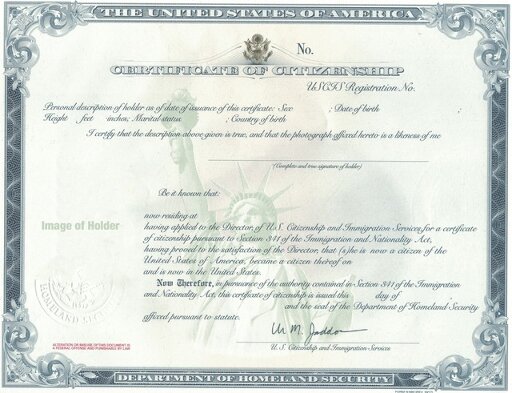
One of the questions before the SCOTUS in the upcoming session is whether birthright citizenship should be granted to all noncitizen aliens. I would suggest that the answer should be “no”.
Although some would wish it so, presidential Executive Orders (EOs) are not laws. They are the executive branch’s explanation of how existing laws are to be implemented and sometimes act as a redefinition or reimplementation of how a previous administration implemented those laws.
In the case of birthright citizenship, the current presidential EO is not lawmaking but a further definition of the phrase “subject to the jurisdiction” as written in the 14th Amendment. The case will be presented to the SCOTUS which will decide on birthright citizenship. My belief is that their decision will be based on the definition of “jurisdiction” and whether all newborns should automatically be granted US citizenship.
Briefly, I would argue that to be “subject to the jurisdiction” requires an affirmatively-made agreement to be bound by the laws of a specific government. The agreement cannot be granted automatically but must be requested and then granted by that government. Newborns cannot affirmatively swear to be bound to the laws of a specific government. Hence, there must be a way to determine the legal jurisdiction that protects newborns regardless of where they were born.
Foreign diplomats who do not swear allegiance to the US are still considered subject to the jurisdiction of their own country. That includes the children born to any diplomats while here in the US. Those newborns are not automatically granted US citizenship: their parents were not subject to US jurisdiction, so their children aren’t either. Their children are considered citizens of their parents’ country with the father’s citizenship typically the determining factor. (I don’t necessarily agree with this, but that’s an issue for another time.) And, due to diplomatic immunity, they are not required to obey American federal laws.
Further examination of the 14th Amendment adds clarity to the term “jurisdiction”. Note that the second sentence in section 1 begins a list of limitations beginning with “nor shall any State” and then follows with the text “any person within its jurisdiction”, meaning within the State itself.
Punctuation is important. Those who deny 2nd Amendment rights have argued over whether a simple comma (“,”) means that only those who are in a “well regulated Militia” may be armed, or whether the right is extended to all. My belief is that the right is extended to all of “the people” without limitation.
In the case of the 14th Amendment, the first semicolon in section 1 separates “privileges and immunities” of the United States as a whole from a list of State-specific legalities. After that semicolon and after “nor shall any State”, we find another use of the term “jurisdiction”
This second use of “jurisdiction” at the State level creates a direct relationship with the 10th Amendment, wherein the States may create their own “powers” that are not prohibited by the Constitution. Hence, there is a higher level “jurisdiction” granted at the federal level, and a second level of “jurisdiction” granted at the state level.
An example of this state-specific jurisdiction is demonstrated by – unfortunately – gun laws, where adjoining states may (and often do) have different laws related to ownership, licensing, and where guns may or may not be used. One state cannot dictate their gun laws to a different state.
So now we have a clearer idea of the definition of “jurisdiction”: those who, by residence or agreement, are bound by a specific set of laws.
Moving back to noncitizen aliens, the concept of “jurisdiction” becomes clearer. They are neither legally resident in the US nor have agreed to be bound by its laws. This puts noncitizen aliens into the similar situation as diplomats: they have refused to forswear allegiance to their home country whether they are here legally or not, and they have not been granted legal residence in the US by the federal government (which controls all entry into the US). Hence, they cannot fulfill the two requirements to attain “jurisdiction”: legal residence and agreement to obey laws.
The situation becomes one of a simple legal definition. Without forswearing allegiance to their formal country, without having permanent legal residence in the US, and without consciously agreeing to obey the laws of the United States, noncitizen aliens have no right to claim US citizenship either for themselves or their newborns.
Those noncitizen aliens who enter legally have cannot request, nor receive, permission to obtain permanent residence. And while they carry foreign passports, they are still under the jurisdiction of their host country. The only difference between them and foreign diplomats is that the diplomats have been granted legal immunity from federal law. Hence, noncitizen aliens who enter legally are still subject all federal and state laws and may be prosecuted accordingly.
This should make the case that newborns of noncitizen aliens should automatically be citizens of their parent’s home countries.
The US is one of very few countries who automatically grant US citizenship to newborns. In all other countries (and throughout Europe, for example), newborns are automatically considered citizens of their parents’ home country.
As some others have claimed, it is time for the US to join the rest of the civilized world and recognize that US citizenship is not automatically granted to noncitizen aliens merely as an act of birth.