

There’s a new fast food law in California. It raises the minimum wage for fast-food workers to $20 per hour.
Not for employees of other businesses. Just for those at fast food restaurants.
And not even all fast food restaurants. Just some of them.
For example, the law applies only to restaurants with at least 60 locations nationwide. And it exempts restaurants that make and sell their own bread. So McDonald’s will be affected, but Subway won’t. (The courts will have to decide whether pizza crust will be considered ‘bread.’)
It’s hard to even know where to start with something like this. How about with the 14th Amendment, which guarantees equal protection under the law? In a country where the judges aren’t trained to act like Humpty Dumpty, it shouldn’t take more than ten minutes to overturn this law in court.
But that’s not the country we live in.
Every once in a while, you see laws like this, which are narrowly targeted at particular companies or groups of companies. Like this one, they are often rationalized under the guise of ‘fairness,’ but they are really about exploiting companies that the lawmakers judge as (1) being able to afford to pay whatever extortion is being demanded and (2) unlikely to simply close down in response.
Politically, it’s the equivalent of taking the child of a rich person hostage. You know he’s going to pay, and you feel okay about that because you know that he ‘can afford it.’
This law holds businesses hostage, rather than children, but that’s a difference of degree, not a difference of kind.
For those who haven’t yet read Atlas Shrugged, it outlines one possible response to this kind of shakedown: A character named John Galt starts convincing the owners of businesses that they should just close those businesses instead of continuing to be treated as if their lives are resources to be managed for the good of others — not unlike those of farm animals.
That’s what needs to happen here. At some point, the business owners need to just walk away — to prioritize their long-term interests over their short-term profits — and leave the politicians to clean up the mess. (Much of the book is dedicated to laying out the philosophical, moral, and practical arguments that Galt makes to the business owners.)
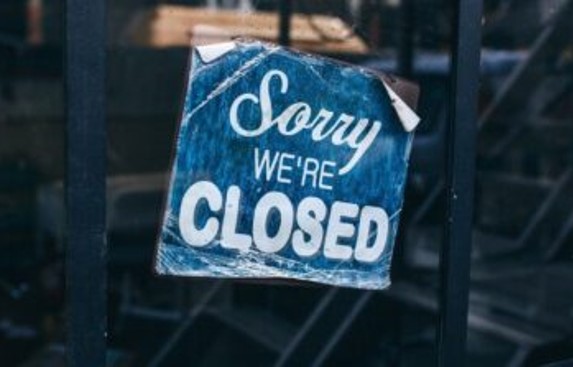
I know it won’t happen, but imagine that tomorrow, a modern-day John Galt convinces all the owners of fast-food restaurants in California to close their doors, lay off their employees, default on their mortgages, cease to collect sales and other taxes, and force people to either start eating at ‘slow food’ restaurants, or cooking their own meals.
And imagine that they post, on their closed doors, the names and telephone numbers of all the legislators who voted for this law.
What do you suppose might happen?
You want ‘civic engagement’? This is how you guarantee it.
