

Remarks on Ronald Coase (The Problem of Social Cost) application (emphasis mine):
The missed step that caused what I believe to be a calamitous misstep was identified more than 60 years ago by an economist who was, in 1991, awarded a Nobel Prize largely for his pioneering analysis of externalities: the late Ronald Coase. Coase was no obscure scholar, and his most famous paper on this topic is no obscure publication: “The Problem of Social Cost,” first published in 1960 in the Journal of Law & Economics, is one of the most cited economics papers ever published.
And yet in the hysteria over COVID, Coase was ignored.
What did Coase say that’s so important yet that was missed? To put Coase in popular parlance, what most policymakers, pundits, and economists missed is the fact that it takes two to tango; that is, it takes two, or at least two, to externality. More dryly, all externalities are “bilateral.”
As in the folks over at TreeHugger who keep saying that my CO2 emissions, an “externality”, harms them because it adds to “global warming / climate chaos” or something. Yet, when I have confronted them to specifically enumerate and assign a $$ value to MY created emission and not just some aggregated average by some study, the go silent (or deflect). They CAN’T provide how much “harm” I have caused them, especially those living in other places in my State, or they live in other States, or even other Countries.
I guess I had internalized Coarse’s thoughts without knowing them:
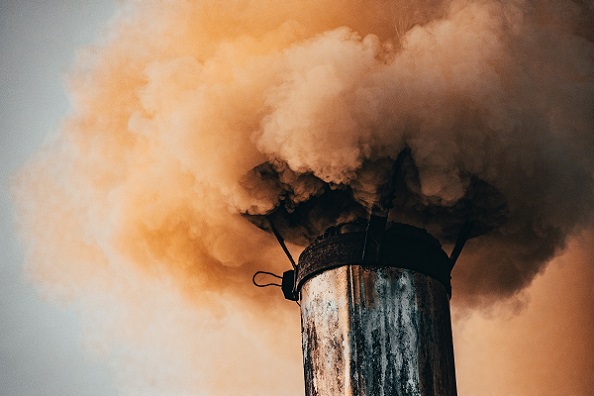
Smith cannot harm Jones unless Jones is in a position to be harmed by Smith. The neighborhood residents who are harmed by soot emitted from a nearby factory smokestack would not be so harmed if they lived further away. People who live near an airport would not suffer the disturbance of airplane noise if they lived elsewhere….
-Prof Don Boudreaux (Remarks delivered at the AIER COVID Policy Conference)
I recently found this out when my lawsuit against the Gilford School Board was dismissed for lack of standing; at the time of the suit, the judge decided that neither I nor the Grandson had been harmed YET by the GSB’s Policy JBAB that chill our Free Speech nor had I caught the Gilford School District at that point lying to me about the transgender status of my legal son (the Grandson).
Boudreaux expands on this (again, emphasis mine):
As stated, this reality sounds trivial. And indeed it is trivial. Yet it’s a reality with three key implications that are frequently overlooked in discussions of externalities.
The first key implication is that, because the harm wouldn’t occur if one or the other of the parties had chosen at some point to act differently, each of the two parties to the harm can be said, in a purely physical sense, to “cause” the harm, which implies that neither of the parties alone “causes” the harm.
Second, it follows that the harm can be reduced or eliminated by actions taken by one or the other (or by both) of the parties. Just because the factory’s smokestack emits soot that falls on nearby homes doesn’t necessarily mean that responsibility for mitigating the harm should fall on the factory owner. Maybe it should, but maybe it shouldn’t. The conclusion that the factory should be held responsible doesn’t follow as a matter of logic from the situation. An alternative means of avoiding the harm is for the residents to take steps to protect themselves from the factory’s soot, which brings us to the third implication:
Whether and the extent to which one or both of the parties to the externality should be responsible for reducing the harm depends upon the relative costs of doing so. In Coasean language, legal liability, and, I submit, also ethical responsibility for reducing the harm of any externality should be on the parties who can mitigate the harm at lowest cost
The reason the example of a factory’s emitting soot onto nearby households seems so easy is that our instincts scream, probably correctly, that the lowest-cost avoider of this harm is the factory. From the limited details of this hypothetical, it’s almost certainly the case that putting a scrubber on the smokestack, or switching to a cleaner source of power, is less costly than having each of the homeowners suffer the soot or attempt individually in their own ways to protect themselves from the soot.
But suppose the factory had been in its current location for decades, surrounded by no one for miles, with its soot falling harmlessly to the ground, affecting no third party. Now along comes Jones who wants to build a home on land close to the factory.
You overhear Jones’s wife point out the existence of the factory and its soot emissions, and then ask her husband, “Why not build our new home just a few miles away, in a location nearly as convenient as this one, but that is clear of the soot? Choosing that other location is easy and will cost us no additional funds.”
Then Jones responds: “Nah. We’re going to build here and then sue to have the factory stop emitting soot.”
The assessment of the case is now not so simple. It’s now at least plausible to identify as the party who legally causes the harm, not the factory owner, but the homeowner, Jones. If Jones can build a home just as nice and in a location nearly as lovely and as convenient as is the location near the factory, isn’t it at least plausible that the low-cost avoider of this harm are the Joneses? And would it then be economically or ethically appropriate to compel the factory to eliminate the externality at a cost higher than Jones would have incurred by building in a different location?
I think not.
Examples such as this one reveal that our moral sense of who “causes” an externality depends on our economic sense of which of the two parties to an externality is the lower-cost avoider. And so the lowest-cost avoider of a dangerous respiratory virus is not necessarily each of us as breathing human beings going about ordinary affairs of life.
Perhaps, instead, the lowest-cost avoiders are the vulnerable.
In fact, I think that there’s no “perhaps” about it. Because COVID overwhelmingly reserves its dangers for the very old and the seriously ill, it’s relatively easy to identify the vulnerable and to focus protection on them, while letting the rest of humanity go about life unmolested.
(H/T: Cafe Hayek)
