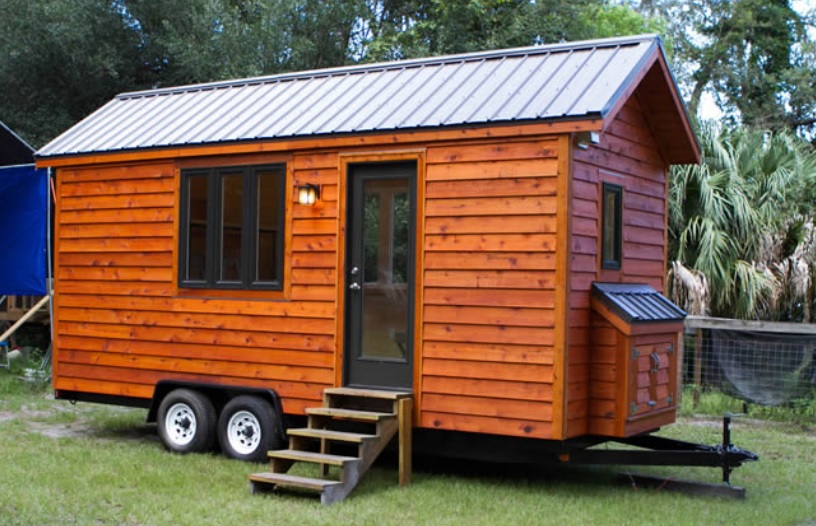
If you’ve not heard of Tiny homes, they are all the rage. They appeal to people on a budget who want their own space, have their own TV shows (also here), and are big with the diminish-your-carbon-footprint crowd. And in the name of public safety, the town of Peterborough made 25 tiny home residents homeless.
Related: Alert: Zoning Legislation Affecting Your Town
I guess being outdoors in the middle of a New England winter is safer than living in a small dwelling that is not properly permitted per the existing zoning laws.
Zoning is as zoning does.
“There is no building code for tiny houses, so you have to get an occupancy permit to get it zoned,” she told Business Insider in December 2020. And you can’t get an occupancy permit for a home that does not comply with the building code. “It’s a cycle that feeds into itself,” O’Brien said.
Funny thing. This clutch of diminutive dwellings existed, occupied and unhindered by local bureaucrats for twelve years until the property owner asked for permission to add additional units. The benevolent town stepped in and, in the name of public health (ten days before Christmas), kicked them all out on their asses.
I’m not a fan. Not of zoning Nazis or tiny houses. But I have watched some of the programs and if you want one be my guest. The space utilization innovations are impressive, and limiting your lifestyle to the confines of a 400 square foot home is commendable. But I’m weary of the long game.
The euro-idolizing left is obsessed with downsizing everyone but the government. These ‘homes’ strike me as a beta test for the future of what was once our republic—a trend toward state-mandated downsizing in the interest of [insert political goal here].
As with all things, we believe it is a matter of choice. You can choose to live in a tiny house or a trailer, an RV, a boat, or any dwelling that fits your means and style. Sure, there is a reasonable need for some bare-minimum standards, but some universal disclosure requirements should be adequate.
If you assume the known risks, then you accept the responsibility.
That would make this a different story. Instead of the government kicking people out into the cold uncertainty of a wintery mid-December, they would be focused on ensuring that people are aware of the (assumed) risk of living in a structure with few exits present (as one example).
At most, they promulgate basic rules that place this responsibility on the manufacturer or seller (renter) of these or any dwellings. But that’s not how it works, and we can that it doesn’t.
New Hampshire has legislation in play (HB588). This would allow municipalities to all tiny homes on any existing property (offspring living in one on their parent’s property, for example).
All other requirements for occupied dwellings apply. Water, power, waste disposal, egress, and so on, including added value for property taxes. They would even count “as a unit of workforce housing for purposes of satisfying the municipality’s obligation under RSA 674:59 if the unit meets the criteria in RSA 674:58, IV for rental units.”
Workforce housing is a whole different problem I won’t venture into here (look to these posts if you’re interested). As for the demands put on people who choose tiny homes, they are presumed to be in the interest of public health and welfare, but if the political response to COVID19 taught us anything, the State is heavy-handed and more often than not does more harm than good.
Featured Image: visit Tiny Home Builders.com