

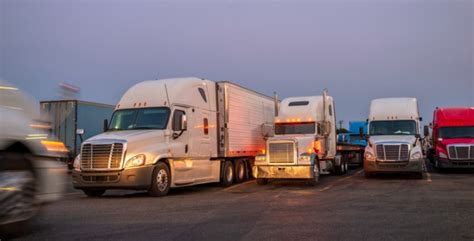
American trucking is responsible for much of our way of life. Most of us fail to realize how many of the things we use or consume daily do not have a local source. Whether it’s food, fuel, electronics or clothes; the goods are not from a local source.
The goods come from the extraction of raw material and manufacturing of finished goods nationwide and worldwide. These things mostly arrive by truck.
Supply chain change
The American transportation industry continues to be crucial to our supply chains. This is especially during coronavirus. But the industry carrying 71% of U.S. freight was already been going through flux before the shutdown. Rachel Premack is a freight trucking reporter for Business Insider. She has some insight into the impacts on the industry of various influences. From federal policy, new technology, the virus, and more here’s some of what she has to say.
Before coronavirus, the major trends in the trucking industry were due to recession last year. Disruption has come from the trade war with China. A lot of what industrial manufacturing was planning for did not happen. That causes a lot of disruption in the trucking industry. If you look at the first half of 2019, there were 3 times as many industry bankruptcies as there were the year before. That was the most bankruptcies the trucking industry had seen in decades.
The idea behind that trade war was to strengthen U.S. manufacturing. Yet it went into recession. There was basically just this feeling of uncertainty because of the tariffs. No one knew what was going to happen or how manufacturing was going to receive the impacts. The uncertainty destabilizes how much people were going to be investing in factories. Demand for American trucking services varies with manufacturing activity.
Retail and manufacturing drive trucking
The American trucking industry is split into two halves: retail and manufacturing. Retail was doing really well last year. The industrial side, however, was seeing the lowest factory activity since 2009. That made it tough for the planning and for operations in the transportation industry.
Other factors, like technology and e-commerce, have also been causes of disruption in trucking. In the past 10 years, the number of start-ups looking at supply chains is exploding. Often, they’re looking at the digital freight brokerage industry. That involves the process through which truck drivers, retailers, and manufacturers match up. How well it functions has a lot to do with pricing in the market.
Companies like Uber Freight are trying to automate especially the independents. They have seen some success, but not as much as you might think. Truck drivers are an older and pretty independent, pro-privacy, anti-interference group of workers. It’s challenging to get them to agree to use an app that will track their locations as they drive across the U.S. Because of the excess of independence there is irrational pricing in the market. That can and does cut both ways.
Technology disruptions
E-commerce is a disruption. The average mileage of an American trucking route has been seen a reduction of half. The change came about over the past 10 years because more of the driving is warehouse to warehouse. The nature of the products on trucks has changed.
Amazon is building up their own truck driver workforce. This is affecting driver compensation and employment. A lot of trucking companies are scared of Amazon. They are cutting driver pay and benefits which is driving cost down. For many it has meant bankruptcy.
Self-driving trucks are also a disruption. It is a small factor today. The projections are they won’t overtake the industry for 15-plus years. People have gotten way less optimistic about that. If they can be implemented the industry will be transformed. It is a wait-and-see thing at this point because the challenge isn’t only technological it is also legal and regulatory.
Coronavirus impacts
Then there’s the influence of COVID-19. 2020 was forecasting bad news before the virus. In the trucking industry; with this, it’s getting worse. There have been layoffs. What’s probably going to happen is more small companies will go bankrupt. The most well-financed companies will weather the economic disruption.
The biggest companies in the industry are UPS and FedEx. But then there’s also XPO Logistics, JB Hunt, Schneider, Werner, and U.S. Xpress. But the industry is weird because there’s something like 200,000 trucking businesses. Ninety percent have fewer than 5 trucks. It’s a textbook example of perfect competition.
There are so many firms, so many potential customers, and so many actual customers. The price of trucking services is the lowest it can possibly go. It’s good for consumers because the prices are so cheap. Maybe it’s not so good for the companies themselves. If their margins are too small can’t invest in technology, and they can’t invest in equipment or people. Their workers are not well paid for the most part.
Deregulation
The Motor Carrier Act of 1980 deregulated the industry. It freed trucking from New Deal-era protectionist regulations, really fostering this perfect competition. It’s interesting: with airlines, deregulation brought the concentration of power within 4 to 10 companies. For trucking, it caused the opposite effect. There had been a small number of companies that the federal government set the prices for. Now with deregulation, it’s a huge number of tiny companies.
Trucking is one of the few industries where just about any American can still become a small business owner. It shares that with the restaurant industry. You don’t need to depend on some mega-corporation for your take-home pay. Deregulation gave more power back into the average driver.
But there was also a huge flip side to independence. There has been a decline in salaries. It’s still a job that requires people to be away from home. It’s pretty common for drivers to have multiple divorces. They aren’t close to their children because they didn’t see them growing up. It’s a job that takes a big toll on your personal life.
The odd upside
In a weird way the coronavirus benefits the trucking industry. Oddly enough the coronavirus has driven costs down and revenues up. Because everyone’s working from home, traffic is way down. That’s makes it easy for drivers to do their jobs. The average speed of a truck has significantly increased in major metros.
Drivers get paid per driven mile, so that means more money for them. Another thing is that his happening is the reduction in fuel prices. Fuel is often a quarter or third of the expenses so that’s another benefit of everything going on. When you can double your revenue and at the same time cut costs by 10% the bottom line can get back to black. If you can find someone who is working… you can haul their product…