Protecting the vote supply

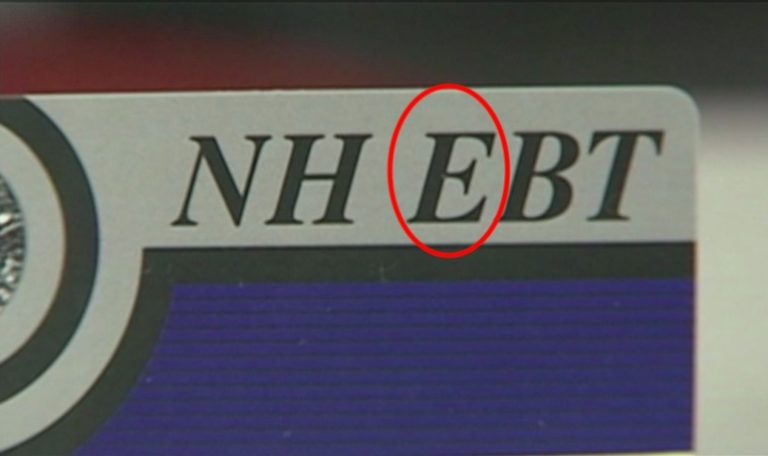
The Red Cross Bloodmobile has an elegant procedure for dealing with people who shouldn’t donate blood, but who don’t want to have to admit that to their friends or employers.

You go in with everyone else, and fill out the forms, and if there is something that would disqualify you as a donor, they put a specially coded sticker on your bag, and someone else discards it later.

It eliminates the danger of embarrassment or discrimination beforehand, and it mitigates the danger of a tainted donation entering the blood supply.  It’s a great system.

I’m wondering if maybe we shouldn’t have something like that for voting.

Read more

How to lose elections

I keep hearing that the GOP needs to get better at making use of social media, and the Internet in general.  And better at raising and spending money.

But looking at the mass of campaign literature in my burn box, it occurs to me that a party only needs things like web sites and social media pages and a ton of cash for mailings and yard signs if people don’t already know what it stands for.

Unfortunately, that’s a pretty accurate description of the current state of the Republican Party.

Read more

The 14th Suggestion

I’m amused to see people dragging out the 14th Amendment in response to President Trump’s suggestion that he’ll unilaterally end ‘birthright citizenship’ through executive action.

For example, a recent piece in Reason ends this way: ‘The original meaning of the 14th Amendment has been clear since 1866. If Trump proceeds with his unconstitutional executive order attacking birthright citizenship, he deserves to be laughed out of court.’

What the author fails to realize is that the words of the 14th Amendment aren’t any more meaningful, to the Supreme Court, than the words of the 1st Amendment, or the 2nd Amendment, or the 4th Amendment, or any of the other words in the Constitution.

Do we have laws, passed by Congress, abridging freedom of speech?  Yes.  Do we have laws infringing the right to keep and bear arms?  Yes.  Do we have laws allowing government agents to search people without probable cause?  Yes.  Do the words of the Constitution allow any of those?  No.  Has the Court unilaterally amended the Constitution to allow all of them?  Yup. 

Read more

The Ikea Bill of Rights

I recently read about a psychological phenomenon called ‘the Ikea effect’.  Briefly, if you make something — or even just finish making what someone else has started — you value it more than if it’s already complete when you get it.  The work you put in gives you a sense of ownership.

When I saw that, it occurred to me that people don’t seem to value our Constitution, and in particular, our Bill of Rights, as much as they probably should.  And now I wonder if that’s not at least partly because these were handed to them, already complete.

And if that’s true, what might we do about it? 

Read more

The War on Ants

You find ants in your kitchen, or in your bathroom.  What do you do? There are some obvious things to try: Interdiction:  You try to find out how they’re getting in, and block those entrances. Preemption:   You make food harder to find by keeping everything in airtight containers, cleaning up all spills immediately, and so … Read more

Psych Diving

In the documentary Free Solo  (now in theaters), you can watch Alex Honnold climb El Capitan without a rope — something that doesn’t seem possible even after you’ve just watched him do it.

Much of the film is about the reactions of the other people in his life, including his friends, who are making the film. During some parts of the ascent, they leave their cameras running, but have to look away because they’re afraid for Alex.

They’re afraid for good reason.  As one of Alex’s climbing partners puts it:  ‘Everybody who has made free soloing a big part of their life is dead.’

But his mother puts her own fears into perspective this way:  ‘I think when he’s free soloing that’s when he feels the most alive, the most… everything.  How can you even think about taking that away from somebody?’ 

Read more

Voating Rites

Let me see if I have this right:  SB 3, which clarifies the process by which some people — mainly non-resident college students — can vote in New Hampshire, has been set aside (temporarily, at least) by a  Superior Court judge because these students might have trouble reading the new affidavit specified by the law, which apparently is written at too high a reading level.

Too high a reading level.  For college students.

Specifically, the new affidavit places an ‘unreasonable and discriminatory’ burden on those students because — in the judge’s words — it ‘reads like a statute’.

So a statute can’t be a valid statute… if it reads like one?  What are the alternatives?

Read more

John Valera, Conscience of the House

When Herb Kelleher was starting up Southwest Airlines, he was asked which of the other airlines he regarded as his main competition.  Kelleher replied that Southwest wasn’t competing with other airlines.  It was competing with buses and trains.  A lot of people didn’t normally fly, and those were the people he wanted to turn into customers.

There are a lot of people out there who don’t normally vote, often because they don’t feel like they’re being offered a real choice.   (As Warren Beatty once said:  ‘We don’t need a third party, we need a second party.’)

But every once in a while, there is a real choice. 

Read more

Actions speak louder than words

Isn’t it pretty to think that Scalia really believed this? 

But if you look, for example, at the 2nd Amendment, it says that ‘the right of the people to keep and bear arms shall not be infringed’.

Read more

The Amended Amendment Procedure

I do solemnly swear, that I will bear faith and true allegiance to the United States of America and the state of New Hampshire, and will do whatever their Supreme Courts tell me to do, even when that conflicts with their written constitutions.


Article 100 of the New Hampshire Constitution outlines a few different methods by which that document can be amended.  But with election season upon us, and with school funding being such a hot topic, it’s worth taking a look at a method that isn’t included in the document itself, using Article 83 as an example.

Read more

Take our advice, we’re not using it

chicken in street

David Hogg recently extended his long string of goofy comments by claiming that the AR-15 rifle can’t be a ‘self-defense’ weapon because it can be used to hit things that are far away.

Predictably, it got a lot of media coverage.  And predictably, it generated a lot of comments along the lines of ‘How can anyone believe something that is so obviously wrong?’

But really, this kind of idiocy is predictable too.  In fact, we’re going to great effort to cultivate it. 

Read more

The Kavanaugh Compromise

Recent discussions regarding the nomination of Brett Kavanaugh to the Supreme Court seem to have centered largely around two issues:  guns and abortion.

Judging from my own experience, conservatives tend to be both pro-gun and anti-abortion, while progressives tend to be both anti-gun and pro-abortion:

                   Pro-abortion    Anti-abortion
Pro-gun                            Conservative
Anti-gun           Progressive

So it occurs to me that the current juxtaposition of these two issues might represent an opportunity to make, albeit informally, a historic deal linking the two.  

Read more

The Kavanaugh Amendment

stooges-at-blackboard

If the answers to constitutional questions are in the Constitution, then it shouldn’t matter at all who sits on the Supreme Court.  We should be able to replace any subset of justices, and the same questions should get the same answers.  They’re all looking at the same document, right?

You might be feeling some hesitation about that — doesn’t the Constitution have to be ‘interpreted’?  But consider what would happen if it were announced that from now on, officials would be free to ‘interpret’ the NFL Rulebook in order to get any outcome they want, so that the result of any contest would depend entirely on who was doing the officiating.

There would be riots, wouldn’t there? 

Read more

Make America States Again

The 17th Amendment was supposed to solve a particular problem — the political establishment was thought to be exercising too much control over the selection of senators, making the process too susceptible to corruption.  The idea was to fix that by taking control out of the hands of that establishment, and putting it directly into the hands of voters.

No, seriously.  People apparently thought that would address the problem.

But as is so often the case in politics, the cure turned out to be worse than the disease. Without solving the the old problem, it created a new, and much worse, problem — one that has recently metastasized from the Senate to the House. 

Read more

Legalize Failure

Police in Wilmette, Illinois recently considered charges against a mother for letting her 8-year-old daughter walk the family dog around the block unsupervised.  Predictably, a lot of people are reacting with incredulity.  ‘How can something like this even happen?’ they want to know.

It’s very simple.  It happens because we’ve made failure illegal.

Read more

Representative, or Role Model?

As the discussion over Andy Sanborn’s Q Score heats up, I can’t help being reminded of Pete Rose, who — despite his singular accomplishments as a player — remains ineligible for the Baseball Hall of Fame.

To paraphrase former major league outfielder Jim Dwyer:  The Hall of Fame is for baseball players.  Heaven is for good guys.

If your goal is to win a game, or a series, or a title, who do you want on your team?  The handsome, well-spoken guy with nice manners?  Or the crass, hard-charging guy with the skills and the drive to get the job done? 

Read more

Can comics save politics?

censored

Recently I was discussing the latest Trump-related hysteria with a friend, who was upset about what he perceived to be a progressive double standard.  Basically, he was arguing that in cases where Trump is just doing the same thing that Obama was doing, then Obama’s supporters ought to be willing to admit that they’re either both right, or both wrong.  He thinks they’re not being consistent.

But I think they are being consistent, albeit in an unexpected way. 

Read more

Party like it’s 1854

magnifier

There’s a lot of discussion just now about Eddie Edwards’s decision to pull out of the first Republican Congressional District 1 (CD1) debate rather than sign a pledge to support the eventual primary winner.

Is he showing ‘character’, and ‘standing up for his principles’, by refusing to sign the pledge?  That’s one way of looking at it.  Another is that he’s indicating a basic misunderstanding of what a political party is for, and what it means to belong to one.  He’s not alone. 

Read more

Fixing schools: Is money really the issue?

A phrase we heard a lot the other night at Andru Volinsky’s traveling show was ‘fix it’, as in: ‘Some states have fixed it’, ‘The legislature doesn’t have the political will to fix it’, and so on.

Which raises the question:  Does something actually need to be fixed?

This needs to be asked, because whenever there is a conversation about reducing spending on government schools, we hear this argument:  ‘New Hampshire’s schools are among the best in the nation’, the implication being that this is a result of our willingness to spend so much on them (about $15,300 per pupil, well above the national average of $11,800).

That doesn’t sound like something that needs to be fixed, does it? 

Read more

Share to...