From ESAs to EARP — An exercise in accurate naming

Confucius said that the first step towards wisdom is to call things by their right names.  It’s a good rule to live by.  If you misname something, you won’t really be able to think about it correctly, because you’ll be thinking about what it’s called, rather than about what it is.  On the other hand, if you name something very accurately and precisely, many of the straw man arguments against it can’t gain any traction.

Let’s apply  this reasoning to ESAs, or Education Savings Accounts, and see where it takes us.

Read more

Don’t hold the line. Get rid of it.

Someone smart — maybe it was Epictetus, or Mark Twain — said that what matters isn’t what happens to you, but what you learn from what happens to you.

So, what’s happening to us now?

Well, we have a truckload of anti-gun bills moving towards passage by the legislature, and we’re depending on a pseudo-Republican governor to veto them, and hoping that his vetoes won’t be over-ridden.

And what should we be learning from this?

Well, in some stories about vampires, a vampire can’t come into your house unless you invite him.  It turns out that the same is true about anti-gun bills.  And we need to learn to stop inviting them. 

Read more

What we can learn from the Cursive Wars

The debate over whether to include cursive in the curriculum has flared up again, this time in Nashua.  It can be instructive to look at the arguments that people put forth in favor of teaching cursive — but not because it’s important whether cursive is actually taught in schools.  (Spoiler:  It’s not.)  The arguments are instructive because of what they say about the underlying thought processes of the people putting them forward.

Read more

The New Green Dress Code

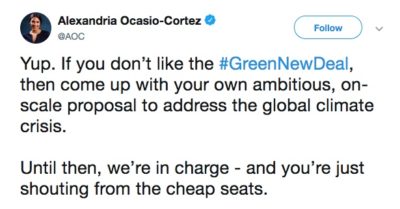
At first, I thought this was yet another bogus AOC meme, but apparently she really said it.

Remember the epic idea that set this country in motion?

We hold these truths to be self-evident, that all men are created equal, that they are endowed by their Creator with certain unalienable Rights, that among these are Life, Liberty and the pursuit of Happiness. — That to secure these rights, Governments are instituted among Men, deriving their just powers from the consent of the governed.

A government created to protect your rights is supposed to be ‘in charge’ of you in the same way that your gardener is ‘in charge’ of your garden.  They work for you, not the other way around.

Read more

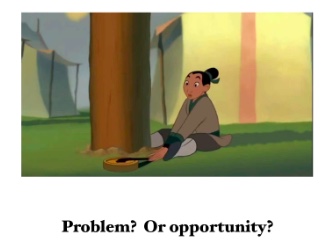
Schools: Seeing problems as opportunities

In response to this piece at the School Funding Shell Game site, one visitor asked for some specific examples. That makes sense.  It’s one thing for people to finally recognize that obsessing over school spending is preventing us from improving student achievement.  But that realization leaves a vacuum: If we stop doing that, what should we … Read more

Crime Extinguishers

I was talking with a friend recently, and we got to discussing the merits of various firearms.  When I showed him the revolver that I was carrying that day, he expressed surprise that I would have a gun with me all the time.

He asked if that didn’t mean that I was ‘living in fear’.  So I asked him if he had a fire extinguisher in his home.  He said yes, of course.  I asked if that meant that he was living in fear.  Or was he just recognizing that if something unlikely but potentially terrible occurs, it’s good to be able to deal with it on your own until help arrives?

Read more

Anti-Gun Bills: The Short View

I don’t believe that the Democratic majorities in the House and Senate have any interest in protecting rights that they don’t think are important — in particular, the right to keep and bear arms for self-defense, whether against criminals, or against the state. But I do believe that they are interested in power — that is, … Read more

Anti-Gun Bills: The Long View

The first thing to be said about all of the firearm-related bills being considered in Concord is that they take the wrong approach toward the goals sought by their sponsors.  The right approach would be to amend the New Hampshire Constitution to declare that not all persons have the right to defend themselves, to claim that self-defense is a privilege, to change the definition of ‘persons’ to something like ‘persons who don’t scare us’, and so on.

But until such changes have been made, any fifth-grader can see that these bills conflict with the New Hampshire Constitution.  It takes a constitutional scholar to miss that.

Read more

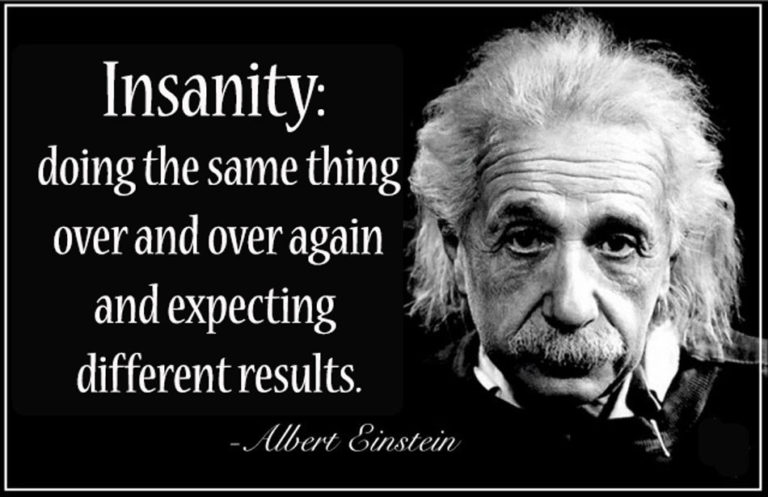
Stop the insanity

If there’s anything that we should have learned over the last half century, it’s that spending more money on schools does nothing to improve student achievement, and that there is no correlation between the amount spent and the results obtained.

And if there’s anything that we should have learned during the two decades since the Claremont decision, it’s that even making every district into a ‘rich district’ does nothing to improve student performance.

These results shouldn’t come as a complete surprise.  We’ve been focusing all our attention on money, and very little on what we’re doing with the money.  It’s almost as if we think that something will work better if we pay more for it, or if we take the money out of a different pocket.

Read more

Daddy, why do we have taxes?

Percy Blakeney recently made the argument that ‘the proper function of taxation is to raise money for core functions of government’.

The first problem with this is that it ignores the fact that there are lots of other ways in which money can be raised, apart from taxation:  Principally user fees, but also penalties, sales of goods and services, donations, raffles, and so on.

So it might be more precise to say that ‘The proper use of taxation is to raise money for core functions of government only after all other avenues have been shown to be ineffectual’.

But there’s still a problem. 

Read more

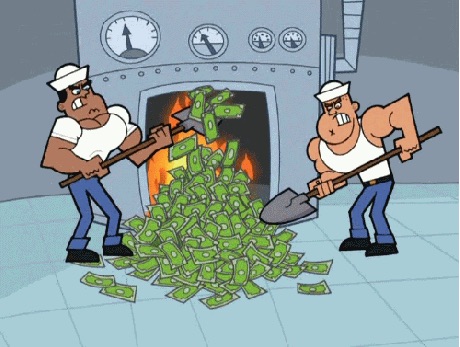
burning money

Money can’t buy love. Or education.

Our representatives in Concord are currently discussing how much money school districts require, where that money should come from, and how it should be collected.

But three simple graphs are sufficient to demonstrate decisively that money is not the issue.

The first graph shows that since 1970, tripling school spending (in inflation-adjusted dollars) has had no effect on student achievement:

Read more

Educaid

Over time we’ve developed a method for dealing with situations where (1) we don’t want poor people to be denied access to something essential, (2) we don’t want tax money to be wasted on substandard products or services, and (3) we don’t want poorer people to subsidize richer people.

That method works like this.  Poor people demonstrate that they can’t afford to pay for X.  We let them choose a private provider of X, who meets basic standards, and we give them money that can be spent only on X.

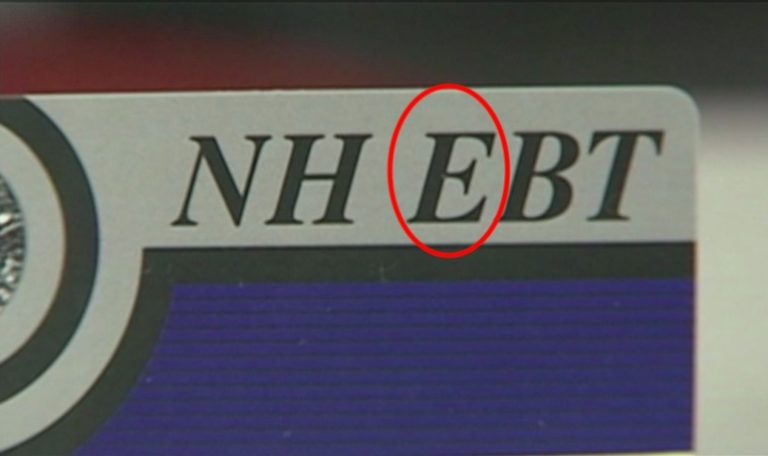
If X is medical care, we call that Medicaid. If it’s heating oil, we call it LIHEAP (the Low-Income Home Energy Assistance Program).  If it’s food, we call it SNAP (the Supplemental Nutrition Assistance Program, or Food Stamps, or EBT cards).  If it’s housing, we call it Section 8 (the Housing Choice Voucher Program).  And so on.

Read more

Crimefighters

Every once in a while, even an Ivy League law professor can surprise you by saying something sensible.  For years I’ve been quoting Alan Dershowitz of Harvard Law School on the dangers of using judicial review to circumvent the formal constitutional amendment process:

Foolish liberals who are trying to read the Second Amendment out of the Constitution by claiming it’s not an individual right or that it’s too much of a public safety hazard don’t see the danger in the big picture. They’re courting disaster by encouraging others to use the same means to eliminate portions of the Constitution they don’t like.

Recently, I was pleasantly surprised to read this from Stephen Carter at Yale Law School:

On the opening day of law school, I always counsel my first-year students never to support a law they are not willing to kill to enforce.  Usually they greet this advice with something between skepticism and puzzlement, until I remind them that the police go armed to enforce the will of the state, and if you resist, they might kill you.

Neither idea is new, but there are a lot of people who don’t seem to be willing to listen to an idea unless it comes from a ‘respectable’ source, so it’s nice to be able to quote these two.

What I’m waiting for now is an Ivy League endorsement of another idea that has been kicking around for a while, and whose time, I think, may finally have come:

Read more

The dumbest argument in politics?

Now that a ‘red flag’ law (more precisely a ‘suspension of due process for gun owners’  law, although that would telegraph its intent too clearly) is being considered, it means we’re going to hear the following specious argument raised in its defense:  ‘Rights are not unlimited. For example, you can’t yell fire in a crowded theater.’

It’s amazing to me that an argument this dumb has managed to stay around for as long as it has.  Why?  Because it’s so easily refuted.

Read more

Milk Cows Not Taxpayers

The Union Leader reports that Governor Chris (‘Bernie’) Sununu has ‘promised to create the New Hampshire Career Academy, a partnership involving community colleges, employers and local high schools that will enable motivated and capable students to get a tuition-free associate degree’.

So, is this part of the state’s court-mandated responsibility to provide an opportunity to get an adequate education? If it is, why stop at an associate’s degree? Why not have tuition-free bachelor’s, master’s, and doctoral degrees? But if it’s not, what’s the constitutional justification for it?  

Read more

assault plastic

The Assault Plastics Bill

No, I’m not talking about ‘plastic guns’.  I’m talking about HB102, which would add ‘the distribution of single-use plastics to consumers’ to the list of things towns can regulate. The idea is to let towns ban the use of plastic bags in grocery stores, or plastic drinking straws in restaurants.  But ‘single-use’ covers a lot of ground. … Read more

Mr. Speaker, regarding the proposed changes to Rule 63…

Mr. Speaker… Let’s imagine that, at some point in the future, some other party has a majority in the House. And that party, having seen the Democratic party claim — as it does today — that there are no limits to what can be controlled via the House Rules, decides to push through some rules like:

• No women are allowed in the House Chamber.

Read more

Rethinking Fairness in Education

Below is a picture of the current educational system. We put kids in school for about 1000 hours per year, for 12 years, and see what happens. At the end of that time, some may be taking college-level courses. Others may still be unable to read.

Read more

Share to...