

TL; DR:
- Massachusetts spent August doing two things at once
- What the record actually is
- Another mother. Another two boys. Not the same case.
- The applause is the tell
- Liberal women, mental illness, and the Clancy spectacle
- Death as content, death as right, death as identity
- Why the slip matters
Liberal feminism, late-term abortion, and the Clancy spectacle
I personally have found this story and everything around it absolutely disturbing. I wrote this piece because I can’t have children.
Massachusetts spent August doing two things at once.
Governor Maura Healey signed a law stripping the last gestational limits off abortion, surrounded by smiling women as if a deadline on killing had been an injustice. In Plymouth, a jury sat with the bodies of Cora Clancy, 5, Dawson, 3, and Callan, 8 months — strangled by their mother with a resistance band on January 24, 2023, after she sent their father out on an errand.
One story is called healthcare. The other is called a trial. They are not the same act. They are the same inversion: the adult woman’s distress is the protagonist, and the child is the obstacle.
I do not have children. I am not sure I could have carried them. I spent more than twenty years inside anorexia and bulimia, which is another way of saying I spent more than twenty years treating my own body as an enemy and calling it control. When it was biologically time, I was married to a man with no stability. Bringing a child into that house would have been a mistake, and I knew it. I was also more liberal then, which is a polite way of saying I had swallowed the catechism: get the job, get the success, do not get pregnant, a baby will keep you from becoming someone, you do not need a man, you can do it yourself. Lies. Pretty ones. Effective ones.
I asked my mother. She had raised three girls. She said, “Why would you want to do that?” That was the nail. Not a lecture. A shrug from the one woman who might have told me the other story — that it is hard and it is the point. Years later I met the man I should have met first: steady, skilled, attractive in the ways that matter, a worker. By then it was too late for us in the ordinary way. I know the magazines like to sell fifty-year-old miracles. That was not our life. I regret it in a way that does not have a neat ending. I will not get the baby. I will not get the ordinary miracle I was told was a trap.
So I am not writing this as a mother who “gets it.” I am writing it as a woman who was sold a story that treated children as the enemy of a female life, and who now watches other women treat actual children as disposable — in a clinic at birth, in a basement with a band, on social media as a plot. My emptiness is not their crime. It is why I refuse to clap when they call the emptiness freedom.
What the record actually is
Lindsay Clancy killed them. That is not the controversy. The controversy is whether Massachusetts can prove she still knew what she was doing and could obey the law. She was unwell. That is also not the controversy. She had been through a pharmaceutical churn — drugs started, stopped, swapped — and a collapse after the third birth. I believe she had serious mental illness. I also believe she knew. Those two sentences are allowed to sit in the same paragraph.
Postpartum psychosis is real. It is not “sad after the baby.” It is a rare bipolar-spectrum emergency: about one to two cases per thousand births, usually detonating in the first two weeks, often looking like mania, mixed mood, or psychotic depression plus confusion that can mimic delirium. Delusions frequently attach to the infant. Command hallucinations happen in a subset. Untreated, reviews cite on the order of four percent infanticide and five percent suicide — elevated, still uncommon. Most women with the illness never kill anyone. Most women with ordinary postpartum depression are not Clancy. Lithium started the night of delivery, for the right patient, is the prophylaxis with the best evidence. Hospitalization is the treatment, not a hashtag. If you flatten those categories you are doing what the online detectives do: using a rare file as a mirror.
What the public evidence has not shown is a command voice reported to her treaters before the killings. What it has shown is planning a gap in the house, a functioning presentation that day, three children dead by ligature, and a sequence that ends with self-harm and a jump from a window. You can be bipolar and depressed and still know that strangling your toddler is wrong.
The trial record makes the physical reality impossible to ignore. Prosecutors argued that Clancy wrapped exercise bands around each child’s neck and continued strangling them for one to two minutes after they lost consciousness. Medical testimony indicated that loss of consciousness can occur in as little as ten to thirty seconds when the airway and blood flow are cut off, and that irreversible brain damage and death follow within minutes when oxygen is fully deprived. One expert said the older children would have lost consciousness within seconds and died within about ten minutes after that as the bands remained in place. Another described the act as requiring that each child be held down for at least four minutes. This is not a snap. This is not a momentary break. This is a sustained, deliberate act, repeated three times, in a basement, while a husband is timed to be out of the house.
After killing the children, Clancy slashed her own wrists and then jumped from a second-story window. She survived. The children did not.
The jury went out Thursday, sat Friday, asked to see the pill bottles and the knife, and returned Monday. First-degree murder in Massachusetts is life without parole. The judge also handed them second-degree and manslaughter. Not criminally responsible is not a parade home. It is a locked hospital with review.
Another mother. Another two boys. Not the same case.
While Plymouth deliberates, a Bronx judge closed Dimone Fleming’s file. On November 26, 2022, Fleming, then 22, living in a family shelter, stabbed Octavius Canada, 11 months, and Daishawn Fleming, 3, with kitchen shears, put them in a bathtub, covered them. Police found her half-naked, holding a children’s book upside down. The boys were not even seen until the infant’s father came home. Judge Audrey Stone found her not responsible by mental disease or defect. She avoids prison. She does not go free. Doctors will decide how long she stays committed.
Prosecutors and defense psychiatrists agreed she was psychotic. The state’s own doctor wrote that she was “grossly psychotic and out of touch with reality,” hallucinating that a spirit inhabited her and the world was ending. Defense doctors said she thought she had to “cleanse” the boys. That is the textbook pattern: delusion first, killing as mercy inside a broken cosmos. She had a major-depression diagnosis, was prescribed medication, used marijuana daily instead, and got worse. Nobody at that table was pretending this was a planned takeout window.
Clancy’s table is the opposite. The Commonwealth is not conceding psychosis. They say depression and suicide, a window of time, a functioning mother that afternoon, a voice that shows up late. Eight months after birth with no documented command hallucination to clinicians before the act is late and off-pattern for incident postpartum psychosis. A shelter, an upside-down book, a spirit in the body, and the state’s own doctor saying she was gone — that is closer to the phenotype. Two files. One word. Do not spend the word like Monopoly money.
Fleming did not get the Clancy chorus. No gaggle at a bill signing. No million-dollar empathy pot in the same headlines. She is poor, in a shelter, and the cameras were thinner. That means the loud, degreed, therapeutic internet did not adopt her as a mascot. It also means “maternal mental health” is a slogan that gets deafening when the defendant looks like the feed and goes quiet when she does not. If your politics needs one mother excused and one ignored, you are not talking about psychosis. You are talking about who is allowed to be the protagonist.
A judge can find Fleming not responsible and a jury can still find Clancy responsible. That is not hypocrisy. That is what evidence is for.
The applause is the tell
Healey’s signing was not a somber exception for dying fetuses and dying mothers. It was a party for “no limits.” Massachusetts already allowed abortion to 24 weeks — a gestation at which thousands of American babies are born and live every year. That was not enough. After 24 weeks you are not managing an abstraction. Late procedures begin with feticide — potassium chloride to the heart, or digoxin — so the baby does not come out moving. If the injection fails, the Society of Family Planning itself warns of “unanticipated expulsion of a fetus with cardiorespiratory activity.” Forceps. Disarticulation. Induction. Lawmakers can say “termination.” They cannot silence the pump. Every time a legislature calls this care, a beating heart gets easier to ignore.
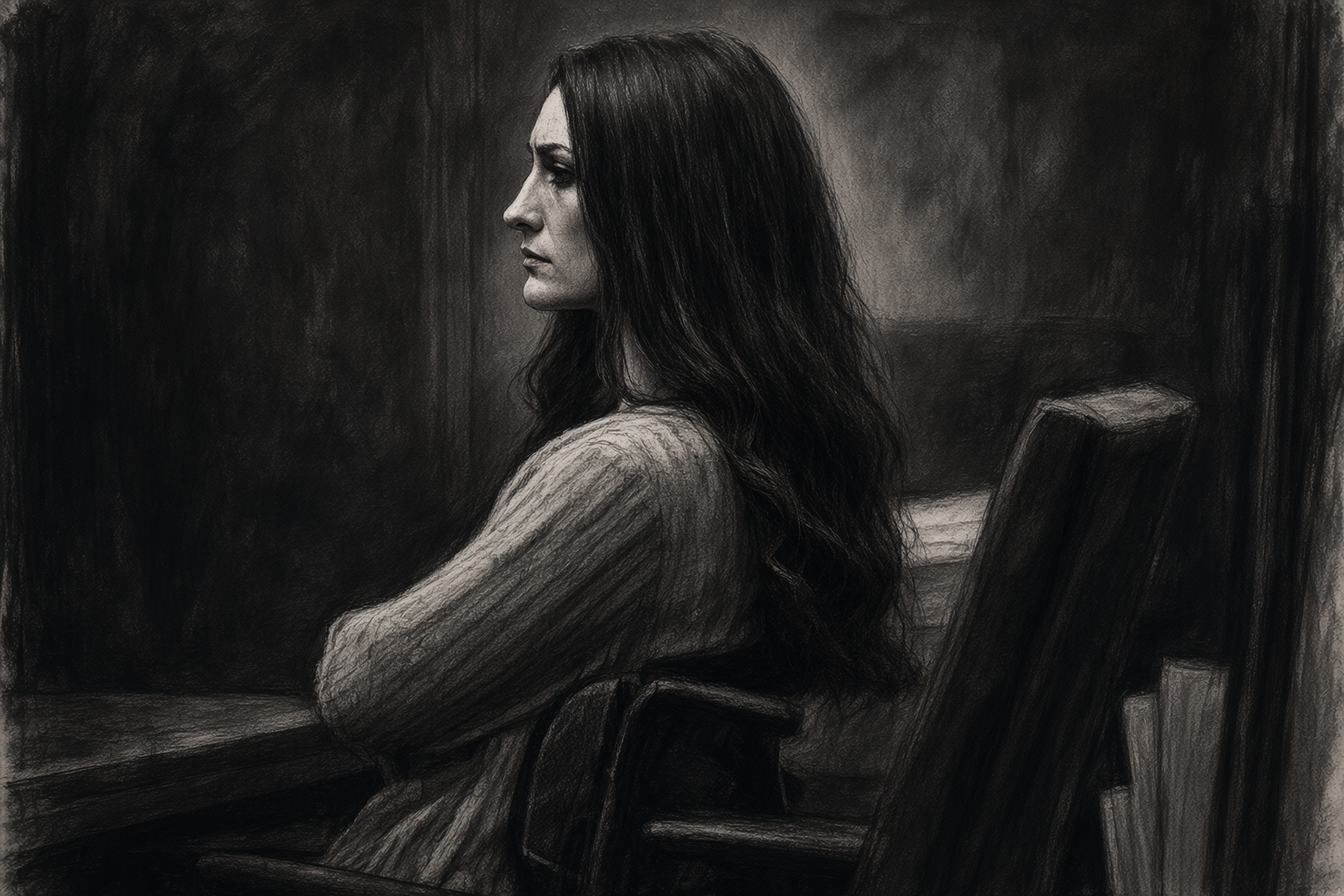
Then look at Plymouth. Women wiping tears for the defendant. Crowdfunding. Empathy essays. Online, a visible cohort of college-credentialed, politically progressive women — not all women, not all mothers, the loud ones with a microphone and a theory — treat Clancy the way they treat every story that has a woman in the center and a body offstage. She is “failed by the system.” She is “every one of us.” She is brave for being sick. The husband is a suspect until proven otherwise. The children are sad, of course, but they are not the subject.
I know that catechism. I used to speak it. Get the life. Do not get the baby. The difference is that most of us who swallowed it only erased a future. Some of the women now clapping have decided that even the child who already exists is negotiable — in law, in a clinic, and, in the worst rooms, in a basement.
True crime trained a generation to sit with rape and murder as a hobby, complete with heroes, villains, and fan theories. Destigmatizing care slid into branding diagnoses and swallowing pills like vitamins. Public resentment of one’s own children is a content mill now, an orgy of self-pity with comments that say “you’re so brave.” Clancy is not you; this kind of filicide is vanishingly rare, and using her as a stand-in for “women” is a category error. Hold all three. The cultural problem is not that postpartum illness exists. The cultural problem is that a class of women has been trained to relocate victimhood onto the adult female in every frame, including the frame where she is the one with the band in her hands.
This is not a census. It is a visible cohort: coastal, degreed, therapeutic, true-crime fluent, fluent in the language that turns killing into “access” and murder into “a conversation about care.” They are overrepresented in the feeds that matter and in the nonprofits that write the bills. If that description offends, name a counter-ritual as loud as Healey’s signing or as funded as Clancy’s sympathy machine.
Liberal women, mental illness, and the Clancy spectacle
There is a specific pathology at work in the liberal, progressive women’s online ecosystem around this trial. It is not simply empathy misapplied. It is a worldview that has been trained to see every adult woman as a potential victim and every child as a complication in her story. In that frame, the most disturbing acts can be reinterpreted as cries for help, and the most obvious victims can be pushed to the margins.
On TikTok and Instagram, hundreds of women filmed themselves crying, sometimes while holding their own children, and declared, “Same, Lindsay.” They turned a triple filicide into a mirror for their own exhaustion, resentment, and medicated fog. Some went further, spreading conspiracy theories that the husband was the real killer, that the system failed Clancy, that she was a martyr for maternal mental health. This was not cautious advocacy for better treatment. It was a performance of identification with a woman who strangled her children.
Allie Beth Stuckey has spoken directly to this dynamic. She initially approached the case with nuance, then changed her position as the trial record became clearer. She highlighted that no doctor formally diagnosed Clancy with postpartum depression, anxiety, or psychosis before the killings. She noted that mental health experts on both sides testified it was unlikely Clancy was experiencing a psychotic episode when she murdered her children. She called out the “female victimhood culture” in popular songs, books, and TV shows that promotes the idea that evil is just misunderstood, and she traced how that mindset shapes the way many women view this case. She also pointed to the TikTok trend in which mothers say things like “I feel for Lindsay Clancy because I’ve had postpartum depression too. I know how crazy it made me, so I feel for her, and I just want to give her a hug.” That is not solidarity with the sick. That is solidarity with the story that makes the self the hero and the children the backdrop.
This is where the mental illness conversation gets twisted. Real postpartum psychosis is rare and severe. Real postpartum depression is common and treatable. But the online culture around Clancy does not behave like a public-health movement. It behaves like an identity movement. Diagnosis becomes a brand. Pills become vitamins. Rage at husbands, doctors, and the state becomes a moral credential. And the children — the actual dead children — become a plot device in a larger narrative about women’s suffering and systemic oppression.
Some of the women amplifying this are not unwell. They are well-educated, well-spoken, and socially rewarded. They are not ill in the clinical sense; they are morally disordered in the cultural sense. They have been taught that the highest form of female virtue is to center the adult woman’s experience in every story, even when that woman is the one who killed. That is not mental illness in the DSM. It is a chosen orientation of the soul.
Death as content, death as right, death as identity
True crime taught many to need a twist. Social media taught many that pain is a personal brand. Celebrity adjacent to both taught many that a hot take is participation. Abortion politics taught many that a child’s death can be a civil right. Put those four in one nervous system and you do not get a mystery. You get a woman who can look at a late-term abortion statute and a triple filicide and feel more outrage at the people who refuse to clap.
American progressivism has always been able to talk about fewer of the wrong babies as if that were compassion. The answer is not to retrofit old projects as fan fiction. The answer is to stop lying about what the instruments do.
Narcissism is the bridge. A narcissist cannot endure another person who has needs that interrupt the self. A fetus interrupts. A toddler interrupts. A husband who will not be the villain interrupts. The feed that rewards “I hate being a mother” interrupts nothing; it pays. I interrupted myself for twenty years and called it discipline. I know what it looks like when a woman makes war on the future tense. Act as if you love them and let the feeling follow. Say the children’s names.
I will never say those names as a mother. That is my grief, and I do not get to spend it as a verdict. What I get to spend is this: I was lied to about what a woman’s life is for, and I will not stand in the room where they lie about what a child’s death is.
Why the slip matters
If the jury finds Clancy not criminally responsible, she does not go home to a book tour. She goes to a hospital. If they find first-degree murder, it is life without parole. I can live with a hospital if the facts require it. I cannot live with a culture that needs her to be innocent so it can stay innocent.
Fleming’s disposition does not decide Clancy’s. Postpartum psychosis is a diagnosis. It is not an identity. It is not a brand. It is not a reason to celebrate a law that lets you stop a baby’s heart at birth and call it care. The illness in the Duxbury house in 2023 was psychiatric and it was real. The illness in the culture in 2026 is moral and it is chosen. Do not confuse them. Treat the first. Refuse the second.
And when you write about either, start with the children. They are not a twist. They were the whole story.
Cora. Dawson. Callan. Octavius. Daishawn.
