


Coping with a tenant security deposit can feel perplexing and stressful. You need to guard your apartment assets, comply with the law, and preserve tenant satisfaction; however, deciding where to save the deposit, how to track it, and when to return it can be overwhelming. Many landlords worry about mistakes that could cost them cash or cause disputes.
This guide will show you exactly how to manage a tenant security deposit account effectively using Baselane. You will learn how to set up accounts properly, track deposits, comply with state laws, and keep clear information. By the end, you will have practical steps to protect your apartment investment and make deposit control simple and pressure-free.
Table of Content
- How a Tenant Security Deposit Account Works
- Why Proper Security Deposit Management Matters for You
- Legal Rules You Must Follow for Tenant Security Deposit Accounts
- Choosing the Right Bank or Platform for Your Tenant Security Deposit Account
- How Baselane Helps You Manage Tenant Security Deposits
- Setting Up a Separate Tenant Security Deposit Account Step by Step
- How to Collect and Record Tenant Security Deposits Correctly
- Exceptional Practices for Containing and Safeguarding Security Deposits
How a Tenant Security Deposit Account Works
A tenant security deposit account is a separate account used specifically for storing tenant deposits. Unlike your operating account, this account keeps funds safe and ensures they are used only for legitimate purposes. It protects tenants by guaranteeing their cash is available for a refund after the lease term, and it protects landlords from disputes and legal issues.
Normally, landlords deposit security finances into an interest-bearing account. This lets the deposit grow while still complying with state laws. Tracking is important because it guarantees you may record every transaction, together with deposits, deductions, and refunds. A properly maintained account reduces confusion and builds trust with tenants.
Why Proper Security Deposit Management Matters for You
Mismanaging security deposits can cause disputes, misplaced income, and legal penalties. For instance, blending tenant deposits with your commercial enterprise price range or returning them late can create unnecessary conflicts. Many landlords underestimate the importance of preserving targeted data, which can complicate move-out inspections or damage claims.
Right deposit control protects your condo property and your reputation. It demonstrates professionalism and guarantees tenants feel assured renting from you. Clear documentation also simplifies accounting and tax reporting, providing you with peace of mind and a better-prepared condominium operation.
Legal Rules You Must Follow for Tenant Security Deposit Accounts
State and federal laws dictate how landlords need to handle security deposits. Many states require that deposits be held in separate bank accounts and, in some cases, in interest-bearing accounts. Federal laws, along with the Fair Housing Act, also apply to deposit dealing and discrimination prevention.
Landlords ought to provide tenants with written receipts and clear facts of deductions. Failure to comply with state security deposit laws can lead to fines, legal action, or mandated refunds. Staying informed of those regulations is important to avoiding mistakes and maintaining a wonderful landlord-tenant relationship.
- Maintain security deposits in a separate financial institution account out of your personal or enterprise funds.
- Use an interest-bearing account if required by your state laws.
- Provide tenants with written receipts for each deposit collected.
- Keep clear, itemized facts of any deductions made from the deposit.
- Follow the Fair Housing Act to ensure deposit dealing is non-discriminatory.
- Stay updated on state security deposit laws to avoid fines or criminal issues.
- Return deposits right away and in compliance with state-mandated timelines.
- File all deposit transactions to prevent disputes with tenants.
Choosing the Right Bank or Platform for Your Tenant Security Deposit Account
Selecting the right account or platform is essential for compliance and ease of management. You may use a conventional financial institution account, a dedicated interest-bearing account, or an internet platform like Baselane. Each alternative gives unique features, from basic deposit tracking to automatic compliance tools.
When selecting a financial institution, consider protection, accessibility, and the capacity to split the tenant budget from your personal or business budget. Systems like Baselane also offer dashboards to track deposits, interest, and refund closing dates, helping you stay prepared and compliant without extra effort.
How Baselane Helps You Manage Tenant Security Deposits
Baselane streamlines tenant deposit control with automatic tracking and report maintaining. You can effortlessly display all security deposits in one place, file move-in and move-out inspections, and generate reviews for compliance. This reduces the risk of mistakes or disputes.
The platform also simplifies online collection of deposits, supplying tenants with receipts and notifications. Baselane tools assist landlords in keeping transparency and trust while saving time on manual accounting. Using Baselane ensures deposits are handled professionally, legally, and efficiently.
Setting Up a Separate Tenant Security Deposit Account Step by Step
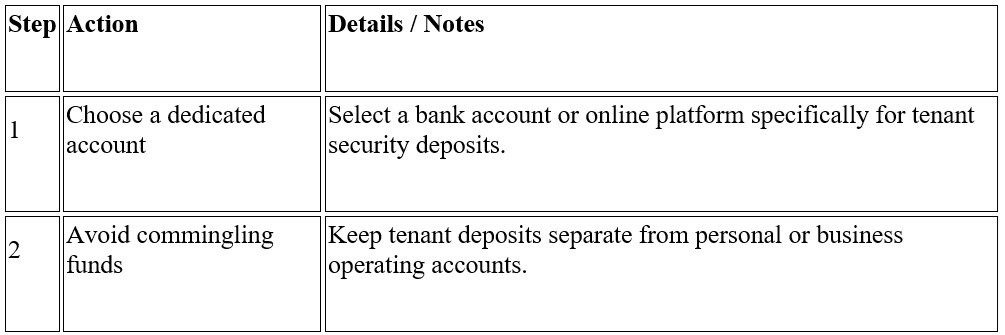
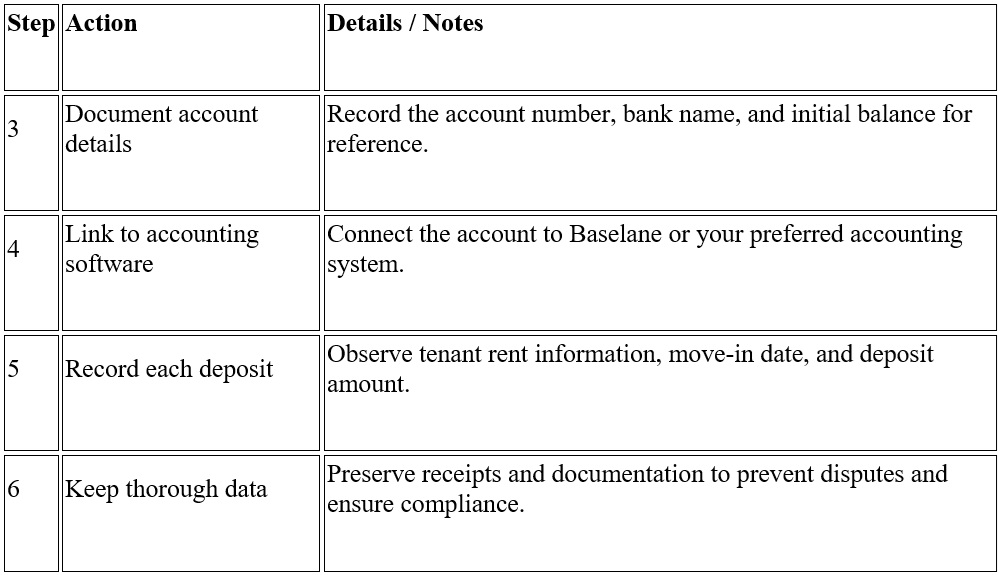
Begin by deciding on a committed bank account or online platform for security deposits. Keep away from blending tenant price ranges together with your operating or private accounts. File the account info and preliminary stability for your records.
Next, link the account to your accounting software program or Baselane dashboard. File each deposit with the tenant name, hire details, and move-in date. Maintaining thorough information from the start ensures easy control and prevents disputes afterwards.
How to Collect and Record Tenant Security Deposits Correctly
Accumulate deposits according to your lease agreement, making sure all terms are clear and in writing. Offer tenants a receipt for each payment and note any particular situations for deductions. The use of Baselane or similar equipment can automate this process and generate a permanent digital record.
File every deposit in your separate account, including partial payments or additional costs. Documenting that information makes it a lot less tough to track refunds, interest, and deductions at move-out. This transparency protects each landlord and tenant from misunderstandings.
Exceptional Practices for Containing and Safeguarding Security Deposits
Security deposits must never be commingled with different finances. Restrict the right of entry to the account to authorized personnel and often reconcile balances with hire records. Secure your documentation and keep digital backups of receipts and inspection reports.
Carry out move-in and move-out inspections thoroughly, noting any damage past ordinary wear and tear. This documentation enables justified deductions and protects you from disputes. Often reviewing interest ensures deposits are handled correctly and tenants stay satisfied.
FAQs
What is a tenant security deposit account?
It is a separate account where landlords store tenant deposits to ensure legal compliance and smooth monitoring.
Can I blend tenant deposits with my business funds?
No, deposits need to stay in a separate account to avoid disputes and comply with state laws.
How does Baselane help manage security deposits?
Baselane tracks deposits, interest, and deductions and generates reports for transparent, automated management.
When should I return a security deposit?
Refunds should be issued directly after the tenant moves out, following state laws and any deductions.
What happens if I make a mistake with security deposits?
Errors like late refunds or mistaken deductions can cause legal consequences and tenant disputes.
Conclusion
Properly managing a tenant security deposit account is critical for protecting your rental property, staying compliant with the law, and maintaining positive tenant relationships. By using a separate account, tracking deposits accurately, and leveraging tools like Baselane, you can simplify the technique and save you expensive mistakes.
With clean techniques, thorough documentation, and automated tracking, managing deposits becomes a smooth, stress-free part of running your apartment enterprise. Following best practices guarantees your tenants are happy, your funds are at ease, and your property is well-protected.
