

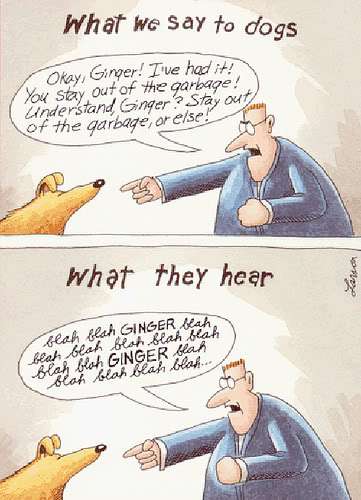
Currently, we’re seeing lots of calls to action regarding anti-gun bills. ‘You have to get out and do something!’ is the rallying cry. But the people making these cries might want to think a little more about how campaigns work.
Think for a moment about how Donald Trump became president. Perhaps his most potent weapon was his ability to keep his name in the news. He would go out and make what seemed to be momentous gaffes, which would send journalists scrambling to point out his mistakes. So the headline, every day, became ‘Blah blah Trump Blah Blah’.
Or think about how elections are conducted here in New Hampshire. As I’ve noted elsewhere, a significant number of people head to the polls on election day without even knowing who they’re going to vote for. So they get into the booth, and put a check next to whatever names seem most familiar. Which is why the most important factors in getting elected in this state aren’t your ideas, but how many signs you put out, and where you put them.
Interestingly, even if you put out signs against someone (‘Don’t vote for Trump!’), through the magical transmutation of repetition into recognition, they would end up functioning as advertisements for that candidate. Following Gary Larson’s cartoon (above), we might call this The Ginger Principle.
The Ginger Principle works for ideas as well as for candidates. Which is to say, the more conspicuously you protest against an idea (like Red Flag laws), the more normal that idea starts to seem to people. The harder and more publicly you fight against it, the more you end up supporting it, because the only thing most people are hearing is ‘Blah blah Red Flag law blah blah’. Do this enough, and Red Flag laws start to seem like something obvious, something inevitable… just ‘common sense’.
To see how this works, let’s contrast two scenarios. In each, we begin with the Democrats introducing some inane bill, like a Red Flag law, or a proposal to ban gun ranges, or whatever. In each, Republicans have enough votes to sustain a veto of the bill.
In scenario one, Republicans rally their supporters. The supporters burn themselves out writing letters, sending emails, driving to committee hearings and rallies, and so on. The bill passes anyway. The governor vetoes it. The veto is sustained.
In scenario two, Republicans act like the bill doesn’t even exist — as indeed, it shouldn’t. They completely ignore it in public — skipping committee hearings on the bill, and stepping outside to get some air when it comes up for a vote — while quietly communicating to the governor that when he vetoes it, he will have the votes to sustain that veto. The bill passes. The governor vetoes it. The veto is sustained.
The difference? In the first scenario, Republicans are effectively putting out the cognitive equivalent of lawn signs reading ‘Blah blah Red Flag law blah blah’. In the second, they are not.
In the first scenario, Republicans (deservedly) get part of the blame for the law passing. In the second, they do not.
In the first scenario, people who would normally have the energy and resources to get out and try to elect Republicans in the next election will find that they have already dissipated much of that energy, and many of those resources. In the second, they will not.
As Trump demonstrated (and as The Ginger Principle explains), the best way to make a candidacy, or an idea, seem normal, and even inevitable, is to keep it in the headlines day after day. It’s ironic that it should be Democrats, rather than Republicans, who seem to have taken his lesson to heart.
