

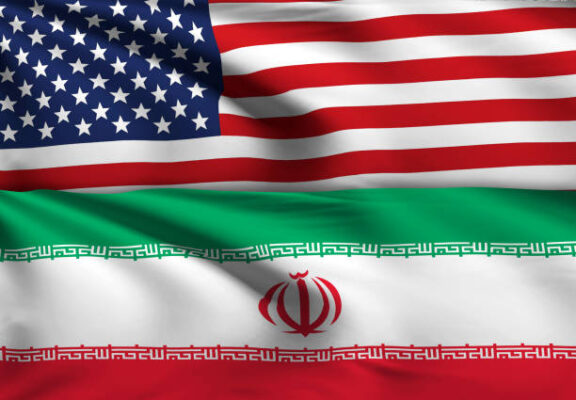
Iran’s Uprising vs. America’s Fake Oppression”
How America’s “anti-fascist” protesters scream at ICE while Iranians pay “bullet fees” to bury their dead—and why calibrated U.S. action could end the theocracy for good.
If America were the fascist nightmare the radical left claims, half the protesters outside ICE offices would already be dead. They wouldn’t be live‑streaming confrontations with federal agents; they’d be paying “bullet fees” to collect their children from a government morgue. That’s what dissent looks like in Iran right now, where thousands of unarmed demonstrators have been shot, beaten, and disappeared under an internet blackout while Western activists congratulate themselves for bravely yelling at a democratic Republic that lets them go home safe. Central argument about regime stability The Islamic Republic looks stable only because it is willing to massacre its own citizens under blackout and blame foreigners; in reality, the scale of revolt, the spread of monarchist symbols, and open pleas for outside help show a regime losing legitimacy and relying on raw terror as its last pillar.
Iran’s streets are running with blood, and the loudest “anti-fascists” in America are too busy screaming at ICE to notice. In Tehran, families pay “bullet fees” to retrieve the bodies of husbands and sons shot in the face for daring to stand in a crowd; in Los Angeles, Minneapolis, Philadelphia, Boston, New York, and other blue cities, activists livestream their fury and anger fits at border agents on iPhones, then go home safely. The bitter truth is this: if the United States were the authoritarian nightmare the progressive left insists it is, those same nose-ringed, purple, green, pink rainbow‑haired agitators would not be chanting in front of federal buildings—they would be lying on the pavement, like thousands of Iranians gunned down by a regime that actually does slaughter its own people.
The morgues that expose the lie
In Iran today, the morgues are overflowing faster than the regime can bury the evidence. Rights groups and exile networks estimate that thousands have been killed in a matter of weeks, with at least hundreds confirmed even under blackout conditions. Hospital corridors and forensic centers in Tehran and other cities are stacked with bodies while families scrape together “bullet fees” just to reclaim their dead.
These are not casualties from a civil war. They are unarmed citizens shot down in the streets because they dared to protest a regime that treats every economic grievance as treason. Protesters chant “javid shah,” wave Pahlavi flags, and call for the end of clerical rule—not for cosmetic reform, but for wholesale political change. That is why the security forces respond with live fire, hangings, and mass arrests rather than tear gas and concessions: the regime understands that this is an existential challenge.
A regime at war with its own people
The Islamic Republic has dropped any pretense of “governance” and has slipped fully into militarized rule. Security forces and IRGC units use live ammunition on crowds, beat detainees into confessions, and reportedly threaten death sentences against protesters branded “enemies of God.” The reported numbers—hundreds confirmed dead, possibly thousands in reality—are not aberrations; they are the logical outcome of a system that has always seen its people as a threat to be neutralized.
The blackout is part of that war. Internet and communications shutdowns lasting days on end are not just technical measures; they are weapons. When you cut off a nation’s connectivity, you don’t just disrupt organizing—you bury the evidence. A government genuinely confident in its story about “armed rioters” would want as many cameras as possible on the streets. A government that kills indiscriminately reaches for the off switch.
“Call the police,” not “Yankee go home”
One of the most striking elements of this uprising is how Iranian protesters talk about the outside world. In Western universities, activists still talk about the CIA in 1953 as if it happened yesterday. On Iranian streets in 2026, people are asking the United States and Israel to help. To them, U.S. intervention is not imperialism; it is, in their own words, “calling the police” on a regime that is mass‑killing its civilians. The Iranian people love Donald Trump and are actively asking for his help.
Many of these protesters do not see Reza Pahlavi as a monarch to be restored in some nostalgic fantasy. They see him as a bridge—a figure who can help stabilize a transition away from clerical rule toward a democratic future, whether republican or constitutional monarchist. Their demands are simple and radical at once: connectivity to break the blackout, targeted pressure on the killers, and a clear signal that the West will not look away while they are shot down.
The privilege of fake oppression
Now contrast that with the moral theater playing out in the United States. Here, self‑styled revolutionaries march against ICE, scream at border agents, videotape their insanity rants and victimhood on their expensive iPhones, call America an oppressor nation, and insist that America is an authoritarian hellscape no different from the regimes they claim to oppose. They cite the shooting of Renee Good as proof that the United States is just another Iran.
This is where the hypocrisy becomes unbearable.
If America were Iran, those protesters would not leave the rally with sore throats, pats on the back, and viral clips; they would leave in ambulances—or not at all. They would not have lawyers, NGO’s and “special organizations” paying them for protesting, media allies, and endless appeals. They would have a bullet in the chest, and a knock at their parents’ door demanding payment for the ammunition. The very fact that these activists can organize, march, blockade, film, resist law enforcement, act violently towards law enforcement, and insult their government and the President of The United States with impunity is proof that they do not live under the kind of regime they claim to be fighting.
The same goes for the feminist radicals who praise the hijab as a symbol of “resistance” while Iranian women are jailed, beaten, or shot for the crime of showing their hair and their face. It takes a special kind of Western privilege to romanticize an article of clothing that is enforced by law, backed by truncheons, and written into penal codes. American feminists can dye their hair purple, pink and green, pierce whatever they like, and shout about “patriarchy” on social media precisely because they live in a country that does not treat dissenting women as enemies of God. Hollywood’s selective outrage
Hollywood offers its own case study in selective outrage. Actors and directors will line up to condemn ICE, the border wall, or the latest Republican villain of the week. They will sign letters, record monologues, and donate to bail funds. Yet when it comes to Iran’s blackout‑shrouded massacres, the silence is deafening.
The logic is depressingly simple. Standing with Iranian protesters would mean standing against a regime that funds Islamist movements some of these same voices have romanticized or excused. It would mean acknowledging that compulsory hijab and theocratic rule are not “authentic culture” but instruments of oppression. It would mean admitting that the United States—whatever its flaws—is not remotely comparable to a regime that organizes public executions and forces families to buy back the bodies of their children.
Conservative outlets have been blunt about this hypocrisy, and they are right. You cannot claim to be a defender of human rights and then go mute when those rights are crushed by a regime that happens to fit your preferred narrative of “anti‑imperial resistance.” Silence, in this context, is not neutrality. It is a choice.
Fetterman, Trump, and the question of intervention
The U.S. political class is divided, but the lines do not fall neatly along partisan boundaries. Senator John Fetterman, hardly a conservative icon, has broken with much of his party by publicly backing Iranian protesters and arguing that the West has a duty to help them topple the regime. That stance stands in sharp contrast to progressives who treat any talk of supporting dissidents as a pretext for “another Iraq.”
At the same time, the Trump administration has taken a more confrontational posture toward Tehran. Trump has warned that the United States will respond if the regime escalates its killing; he has signaled that “help is on the way,” while weighing options that range from cyber operations and sanctions to providing satellite connectivity that pierces the blackout. There is a real debate to be had about the risks of direct strikes or wider war. But there is no escaping the basic moral fact: whatever else one thinks of Trump, his administration is not mowing down protesters in the streets, demanding bullet fees from grieving families, or executing women for improper dress.
That contrast matters. It is the difference between a flawed democratic system and a genuine theocracy that survives by terror.
What the West should actually do
The choice is not between invasion and indifference. There is a narrow but real space for calibrated action that matches what protesters themselves are asking for:
Treat connectivity as a lifeline by expanding satellite internet and anti‑censorship tools.
Impose targeted sanctions and travel bans on IRGC commanders and units tied to specific atrocities, naming names publicly.
Give Iranian dissidents platforms, asylum, and resources instead of treating them as an inconvenience to progressive narratives.
Draw explicit red lines on mass executions and nuclear escalation, without dressing this up as a crusade for regime change by force.
The point is to tilt the balance in favor of those already risking everything in the streets, not to substitute American fantasies for Iranian agency.
The silence that will not be forgotten
Iranians are not confused about who is killing them. They know who orders the snipers, who signs the execution warrants, and who pulls the plug on the internet. They are also taking careful note of who in the West bothers to say their names—and who prefers to scream at ICE while ignoring mass graves.
Iranian women do not have the luxury of confusing a Texas border checkpoint with a morality police van. Iranian students do not get to chant slogans on campus and then go home to graduate school applications. Their protests are not performance; they are a coin flip between freedom and death.
That is the real indictment of the Western left in this moment. Not that they lack perfect policy answers, but that they lack the basic moral clarity to tell the difference between a country where activists can safely lie about living under fascism and a country where telling the truth can get you shot.
History will remember that distinction. So will the people now whispering “javid shah” under blacked‑out skies while they wait to see whether the free world believes its own rhetoric about freedom.
Bronwyn Sims
Note: The resources below include conservative reporting and analysis alongside human‑rights documentation and mainstream news, to give readers both factual grounding and interpretive frameworks aligned with this op‑ed’s perspective.
References & resources
Core reporting on the crackdown in Iran
Overview of the 2025–2026 protests and massacres
Background on protests, estimated casualty ranges, and use of live fire and blackouts.
Example: encyclopedia‑style entry on “2026 Iran massacres” (summarizing multiple rights‑group tallies and timelines).
Human rights documentation
Amnesty International & Human Rights Watch joint statement on unlawful use of force, live ammunition, and mass arbitrary arrests.
Detailed accounts of IRGC and police firing from bases into unarmed crowds, including named locations and dates.
Eyewitness & hospital-based evidence
Eyewitness testimonies of IRGC and Basij units firing on protesters from motorcycles and unmarked vehicles.
Hospital reports from Tehran and provincial cities documenting hundreds of gunshot victims in a few days.
Death‑toll estimates and blackout impact
Updates from Iranian and exile rights organizations (HRANA / HRAI) tracking confirmed deaths, security‑force casualties, and “unconfirmed but likely” totals.
Reporting on the nationwide internet blackout, its duration, and how it blocks casualty verification and organizing.
Conservative analysis & commentary
Ben Shapiro / Daily Wire
Podcast episodes and articles on “Iran slaughter in the streets,” focusing on regime brutality, U.S. policy, and Western silence.
Discussion of Iranian protesters’ pleas for U.S. and Israeli help, and criticism of progressive “anti‑imperial” framing.
National Review & similar outlets
Op‑eds on “progressive silence” over Iran, contrasting campus and media mobilization for Gaza with near‑silence on Tehran’s massacres.
Pieces highlighting monarchist symbols (“javid shah”) and Reza Pahlavi’s potential transitional role.
FDD / conservative Iran experts
Behnam Ben Taleblu’s analyses on why this is the most serious legitimacy crisis in 40+ years, and how Western policy can shape the outcome.
Briefs on IRGC structure, regime survival strategies, and the risks of both over‑ and under‑intervention.
U.S. politics & Western reaction
Trump administration moves and rhetoric
Coverage of Trump’s statements (“help is on its way,” warnings about executions), troop movements, sanctions, and connectivity support options.
Conservative commentary on how this differs from Obama‑era and progressive responses to past uprisings.
Sen. John Fetterman’s stance
Articles quoting Fetterman explicitly backing Iranian protesters and calling for U.S. support in toppling the regime.
Pieces contrasting his position with the broader Democratic reluctance to support dissidents viewed through an “Iraq syndrome” lens.
Progressive rhetoric & equivalence with ICE
Reports and clips of U.S. activists and Democratic officials equating ICE or U.S. policing with Iranian security forces.
Conservative editorials (e.g., WSJ, National Review) critiquing these comparisons as morally obscene and deeply misleading.
Culture, feminism, and Western hypocrisy
Masih Alinejad & Iranian dissidents
Interviews and op‑eds denouncing Western feminists’ “ideological silence” on compulsory hijab and regime violence against women.
Dissident testimonies calling out activists who romanticize hijab and political Islam while ignoring Iranian victims.
Hollywood & celebrity activism
Articles cataloguing celebrity campaigns against ICE, the border wall, and Republican politicians.
Conservative critiques of Hollywood’s absence on Iran, and its tendency to treat Islamist regimes as “complicated” while demonizing U.S. enforcement.
Background on Iran’s political landscape
Reza Pahlavi and opposition abroad
Profiles of Reza Pahlavi, his calls to “seize city centres,” and his argument for a transitional role rather than a simple royal restoration.
Analyses from conservative think tanks on possible post‑regime scenarios (democratic evolution, military takeover, chaos).
IRGC, Basij, and regime structure
Explainers on the IRGC, Basij, and security apparatus used to crush protests.
Timelines of prior crackdowns (2009, 2019, 2022) for historical context.
