

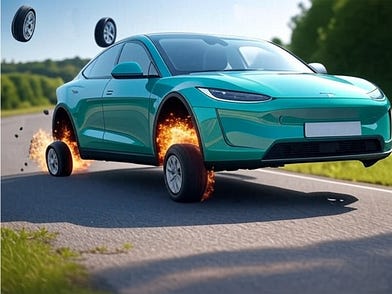
The latest clash between climate ideology and reality – the requirement in the Global Warming Solutions Act (2020) that Vermont adopt California’s Clean Cars and Clean Trucks standards – is coming to a head. So far reality has been racking up the victories with the Clean Heat Standard for home heating now lying “dormant” as too expensive, too complicated, too regressive and ripe for fraud, and its equally expensive and regressive alternative, a Cap & Invest carbon tax on heating and transportation fuels, too politically toxic for meaningful discussion. That leaves the only policy in place for either of the two significant GHG emitting sectors, thermal and transportation, as the Clean Cars & Trucks rule — the wheels are coming off fast.
Vermont was not alone in signing onto the California standards. Eleven other states initially jumped on this electrically powered bandwagon. But we are now one of a shrinking number sticking with the policy, or at least its current timeline, despite a growing list of niggling details dogging its implementation – like requiring dealers to sell vehicles that don’t exist, consumers don’t want and can’t afford, and the infrastructure to operate them isn’t in place.
Legislators in Montpelier have heard volumes of testimony from vehicle dealers who cite lack of sufficient customer demand. The GWSA mandate insists that in 2026 the percentage of EVs sold in Vermont triple from 12 percent to 35 percent. (How? I don’t know. Magic?) While demand for EVs in Vermont has been increasing, it’s not increasing nearly that fast, and with likely cuts to government subsidies for EV purchases, that demand growth is not likely to persist. According to the Wall Street Journal, “Sales of EVs in the U.S. fell by around 5% during the month [of April], according to estimates from the research firm Motor Intelligence, while the broader car market grew by 10%. Monthly EV sales in the U.S. have only declined three times since 2021.”
As for trucks, the mandates are even more fantastical and damaging. An Oregon legislator, Rep. Shelly Boshart Davis (R-Albany), calling for her state’s withdrawal from the compact summed things up neatly:
“Even if the state would be willing to spend the money needed to install chargers throughout the state, and somehow changed land use laws to park all these trucks somewhere to charge, and changed the federal hours-of-service laws to allow these truck drivers to be able to rest while charging and still complete their normal haul, and had the money to invest in companies upgrading their fleets to EVs that cost twice as much, and started that all today, it would be years before this would happen. And yet the rules are already implemented.”
While these types of arguments are being heard and acted upon in some states (Delaware, Maryland and Massachusetts have already hit the pause button, and Oregon, Washington, New York and New Jersey are seriously considering joining them), Vermont’s majority party (that would be the Democrats) are sticking their fingers in their ears and chanting “lalalalalalalalalala”all the day long. The minority Republicans, on the other hand, have put forward bills that would remove Vermont from the California standards, but unfortunately don’t have the numbers to move the bills.
A legislative solution would certainly be the cleanest option for averting this obvious pending disaster. However, with the Democrats unwilling to let the necessary bills move forward and the mandates set to kick in in less than 90 days, desperate calls are asking Governor Scott to get us out of this mess with an executive order – which he can do to at least some degree. For example, last month, Maryland Governor Wes Moore (D-MD) caved to reality and issued an executive order that did not completely halt enforcement of Advanced Clean Trucks, but gave his state Department of Environment “enforcement discretion” to not enforce the mandates for the model years through 2028.
Vermont’s Advanced Clean Cars II and Advanced Clean Trucks Rules were adopted by the Agency of Natural Resources in 2022 in response to the 2021 Vermont Climate Action Plan created under the Global Warming Solutions Act. Ergo, ANR is free to pull back its rule on its own authority, or by executive order. And this is what some are pressing the governor to do. If you agree, consider the following call to action:
In Vermont, Governor Scott also has the power to delay or repeal these regulations. Delaware’s governor announced that the state would drop its adoption of California’s EV rules, joining Maryland and Massachusetts in hitting the pause button on some or all of the mandates.
Click on the link below, enter your information, and send a polite and straightforward message to the Governor asking him to do the same.
https://vermontce.my.vermont.gov/s/governor-office-ce
Now this could open up Vermont to lawsuit under the GWSA’s idiotic, moronic “right of action” clause for not following the Climate Action Plan. The common sense solution to that problem is, of course, to repeal right of action clause, which Republicans and the Governor have tried to do this session, but again, the majority has placed fingers firmly in their ears and “lalalalalalala!”
