

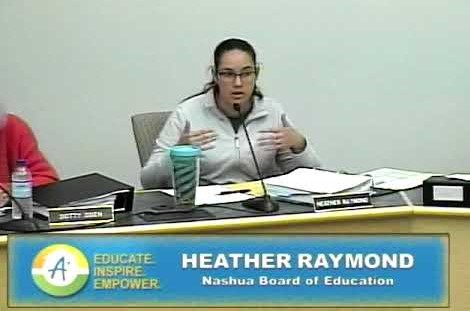
Last night the Nashua Board of Education held its first meeting of the year. Despite welcoming five new Board members, the Board was able to quickly approve an additional budget item of $693,568 for K-5 reading materials. As we all know, reading is an important life skill.
According to district assessments, students are failing to read at grade level. In 2019, the Board majority refused to discuss the district’s reading programs to understand why over 40% of elementary school students are failing to read at grade level. That discussion was shut down before it started. It wasn’t considered “productive.”
This year, the new Board quickly approved the purchase of additional reading material for the same Fountas and Pinnell K-5 reading program its been using for years. The new Board was so eager they couldn’t delay for a Curriculum & Evaluations Committee meeting to discuss the details of the program or review student assessment scores.
With five new Board members, one might expect the Board to refer the issue to committee, allow for discussion and public comment, and take into account an informed committee recommendation, before putting the issue to the full Board for final approval.
But no, this Board didn’t need any discussion, data review, or research. They simply accepted administrative assurances that this reading program was a solid program. They unanimously approved it. What an agreeable Board!
Except, it turns out that the Fountas and Pinnell K-5 Guided Reading Program is not a phonics program, despite administrative assurances. It’s a whole language reading program. Students are expected to use “cues” from context, sentence structure and visual information to decode words. Teaching cueing together with phonics doesn’t work. One negates the other. In “How a flawed idea is teaching millions of kids to be poor readers” we read,
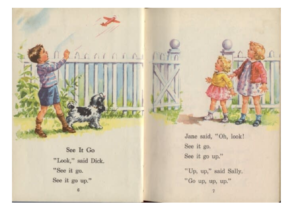
One idea is that reading is a visual memory process. The teaching method associated with this idea is known as “whole word.” The whole word approach was perhaps best embodied in the “Dick and Jane” books that first appeared in the 1930s. The books rely on word repetition, and pictures to support the meaning of the text. The idea is that if you see words enough, you eventually store them in your memory as visual images.
The other idea is that reading requires knowledge of the relationships between sounds and letters. Children learn to read by sounding out words. This approach is known as phonics. It goes way back, popularized in the 1800s with the McGuffey readers.

For decades, schools have taught children the strategies of struggling readers, using a theory about reading that cognitive scientists have repeatedly debunked. And many teachers and parents don’t know there’s anything wrong with it.
But don’t worry. The new Board is very agreeable. According to the Board President and Superintendent, there’s nothing to worry about.
Board of Education President Heather Raymond and Superintendent Jahmal Mosley hope for somewhat more productive meetings now that Howard Coffman and Doris Hohensee are not involved.
Meetings will indeed be more “productive” without distracting discussions or divergent opinions on key issues, such as how to teach reading.
