


The message voters sent in the November election is becoming increasingly difficult for New Hampshire school administrators to ignore. The growing support for school administrative tax caps is a clear warning: taxpayers have reached their breaking point, and the culture of unchecked spending in some of our School Administrative Units (SAUs) is finally catching up with them.
Social media is filled with frustrated New Hampshire residents asking why their property taxes keep climbing as school enrollment declines and academic proficiency remains stagnant. School budgets keep growing, yet taxpayers are asking a very reasonable question: What exactly are we getting for all this additional spending?
This is no longer a partisan issue. In communities where Democrats won their elections, many of those same voters also supported tax caps. Republicans, Democrats, and independent voters are increasingly united by one concern: the cost of local government, particularly public education, has become unsustainable.

Some will argue that the problem is the state’s failure to adequately fund public schools. But that argument overlooks an important point. State adequacy funding is tied to student enrollment. When a child leaves the public school system, the associated state funding generally leaves with that student. That has long been part of the funding structure.
Furthermore, increased state aid does not automatically translate into property tax relief when local school spending continues to grow. Taxpayers are not simply asking for more money to be poured into the system. They are demanding accountability for the money already being spent.
Consider the compensation being paid to some school administrators. Many New Hampshire superintendents earn salaries well above the $153,000 annual salary of our own Governor. Some SAU administrators earn more than department heads serving the state. Meanwhile, some of these high salaries are being paid in districts where parents have raised serious concerns about leadership and called for administrators to resign.
What exactly are taxpayers rewarding? And why should administrators receive increasingly generous compensation when significant problems within their districts remain unresolved?
There are plenty of examples of spending that deserve public scrutiny:
- Excessive administrative salaries: Superintendent compensation exceeding the Governor’s annual salary, often accompanied by substantial benefits and additional compensation.
- Curriculum coordinators: Expensive administrative positions that add another layer of bureaucracy. Private schools and homeschooling families manage to select and implement curriculum without maintaining an entire layer of district-level curriculum administration. Why can’t public schools take a closer look at how those responsibilities are handled?
- Public relations spending: Money allocated to public relations and communications while programs and services directly benefiting students face cuts.
- Excessive legal expenses: Taxpayer-funded payments to law firms to defend districts against parents raising concerns about bullying, special education services, and other issues involving their children’s rights.
- Questionable professional development: Teacher professional development days devoted to organizations and political advocacy rather than meaningful academic instruction and improving classroom outcomes.
- DEI administrative positions: Positions that warrant scrutiny when they are filled by personnel without appropriate professional credentials or when their responsibilities and measurable benefits to students are unclear.
These are just some of the examples taxpayers across New Hampshire are bringing forward. They are asking why administrative spending continues to expand while families struggle with rising property taxes.
And let’s not forget who bears the greatest burden.
Visit your local food pantry or charitable organization. Talk to families struggling to pay their mortgages, afford groceries, and keep up with their property tax bills. There is a growing need in our communities. Yet those same families are being asked to finance administrative salaries, consultants, public relations campaigns, legal battles, and positions that may have little to do with improving academic outcomes.
This is more than a budget debate. It is a question of priorities and basic fiscal responsibility.
Why should state officials be expected to send more money into a system where taxpayers are identifying so much questionable spending? Before demanding additional state funding, school administrators should demonstrate that they are responsibly managing the resources they already receive.
Let’s be clear: This is not an argument against funding public education. Our teachers, quality curriculum, and services that directly support students are essential. We should be protecting those priorities, not sacrificing them to preserve an expanding administrative structure.
If New Hampshire communities want to get serious about property tax relief, they need to elect school board members and budget committee members who understand the difference between spending money on education and spending money on bureaucracy. It is entirely possible to maintain academic excellence, support teachers, and meet the needs of students without perpetuating excessive administrative spending.
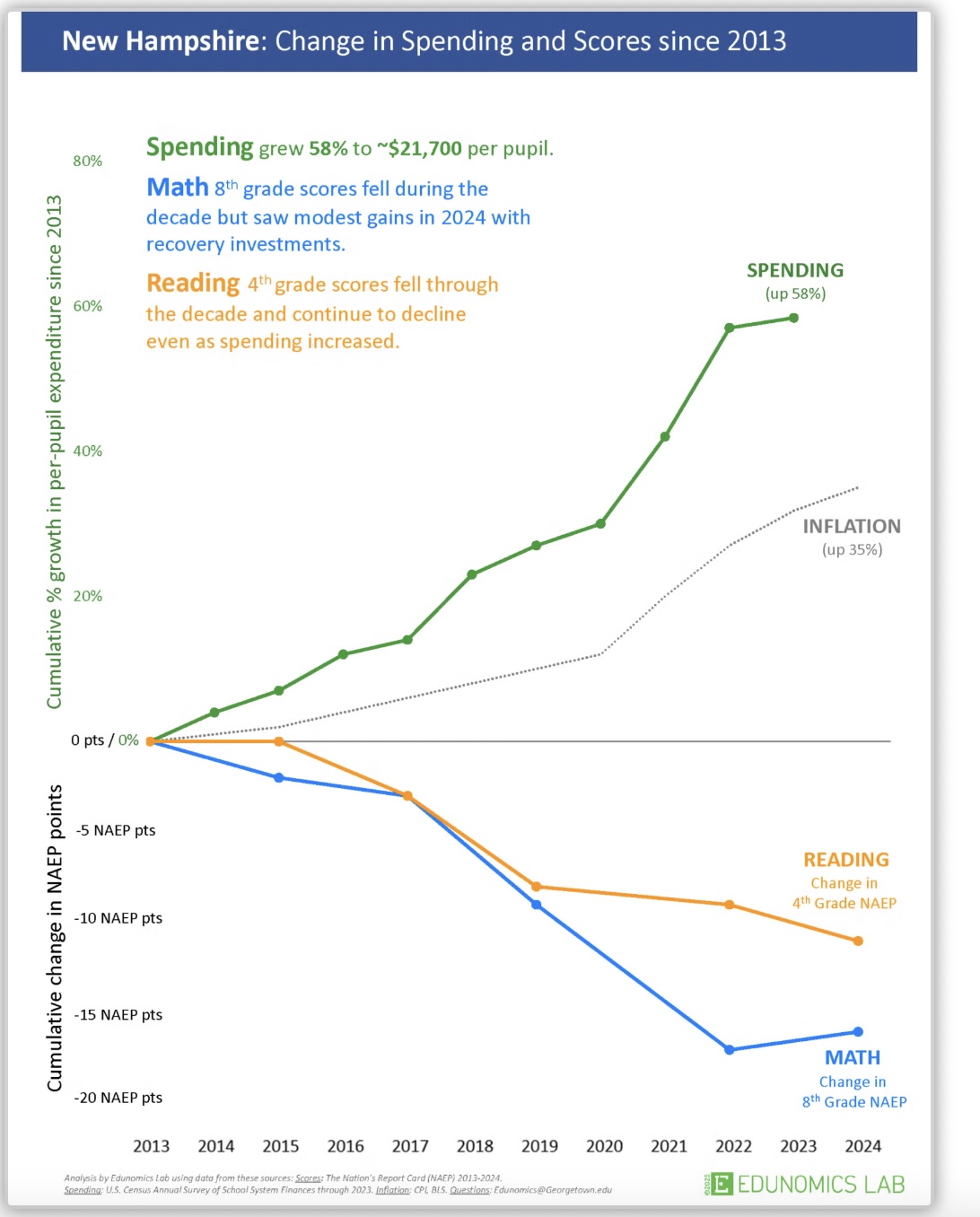
And if tax caps are forcing school districts to finally develop more fiscally responsible budgets, taxpayers must remain vigilant. Administrators should not use those caps as an excuse to threaten cuts to teachers, paraprofessionals, special education services, or programs that students depend on. That is not fiscal responsibility. It is an attempt to shift the consequences of administrative overspending onto children and families.
Do not allow school administrators to turn students into bargaining chips in a fight against taxpayers.
The voters have spoken. They are not asking for an inferior education. They are asking for a responsible one.
School board members and administrators who respond to demands for fiscal restraint by threatening the very students they are entrusted to educate have their priorities backward.
And those who continue to put administrative interests ahead of students, taxpayers, and academic excellence should be replaced.
New Hampshire taxpayers are not an endless source of revenue. It’s time our school administrators started acting like it.
