

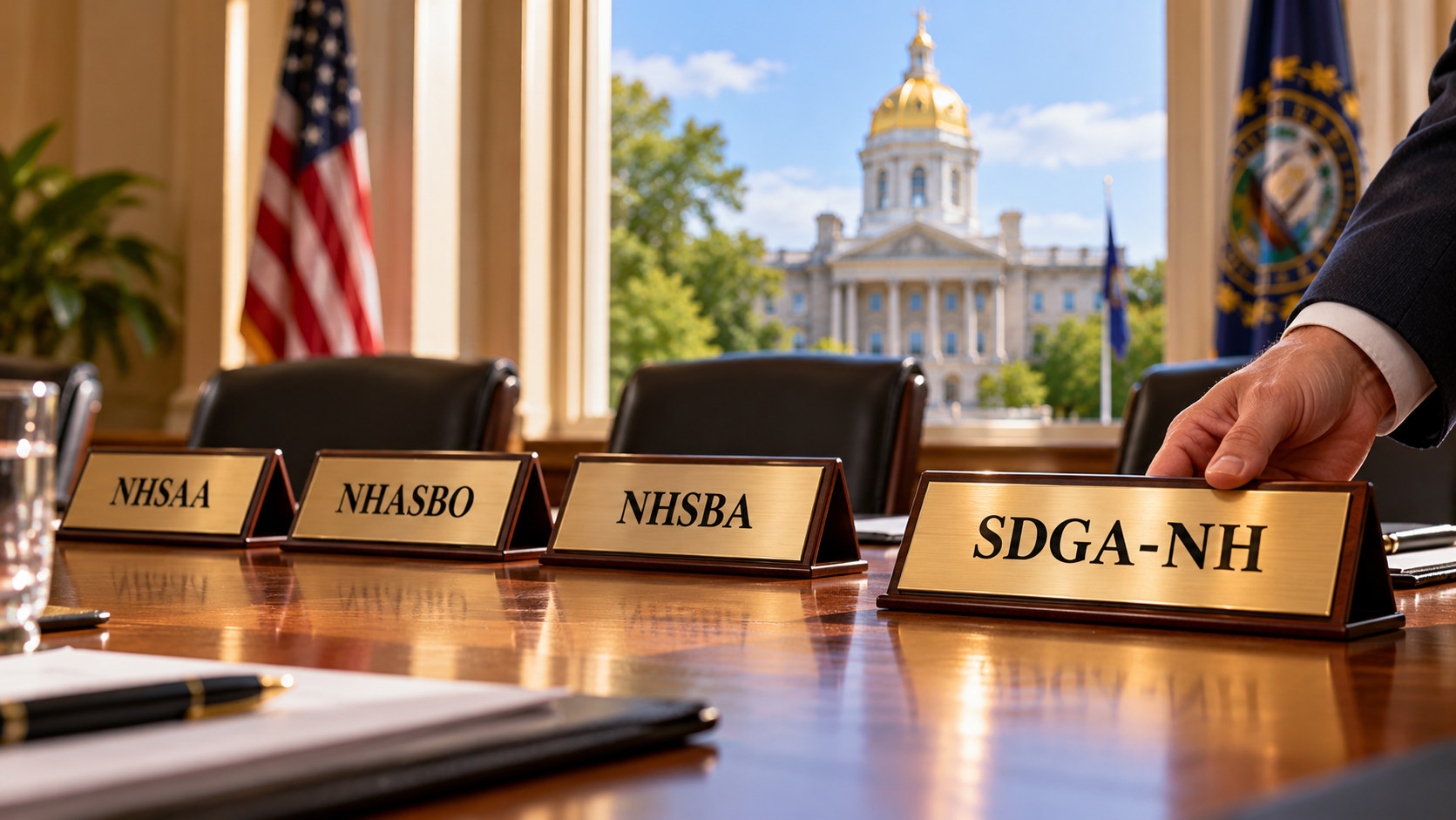
A new milestone for the School District Governance Association of New Hampshire (SDGA-NH): after ten years of work, the organization is now formally recognized in chaptered state law; see RSA 194-C:13.
This is a significant step forward. SDGA-NH, as an all-volunteer non-profit seeking improved school governance, is now legislatively recognized alongside the established statewide organizations of NHSAA, NHASBO, and NHSBA, which are heavily funded by taxpayers. Together, our SDGA-NH team is making a difference, without taking any taxpayer dollars!

For the first time, these established organizations will no longer be the only institutional voices representing different perspectives on New Hampshire’s public education system. More voices at the table means more opportunity for informed discussion, greater transparency, and broader representation. We thank our state reps, senators, and Governor for making this happen.
The SB 574 “School Administrative Unit Study Commission” now has a dedicated webpage listing its appointed members, meetings, minutes, etc.:
https://gc.nh.gov/statstudcomm/details.aspx?id=1748%20&rbl=1&txtbillnumber=sb574
We will continue our important focus on responsible governance, fiscal prudence, and academic excellence in our NH public schools and for NH students.

To learn more about SDGA-NH, visit https://sdganh.org/. Check out our model policies for school boards, our legislative scorecards, sample petition warrant articles, state proficiency results from 2009-present, and more.
Our aim is four-fold:
- to educate elected school district officials as to their proper role and responsibilities
- to promulgate best practices in good governance and prudent budgeting
- to formulate model school district policies so elected officials will have an independent, alternative resource
- to propose and monitor legislation that enhances local control in education and openness in administration
SDGA Membership is open to all who share our mission. The core of our membership consists of past or present elected officials with fiduciary responsibility over a school district’s budget, with a growing contingent of elected representatives at the state level.
