

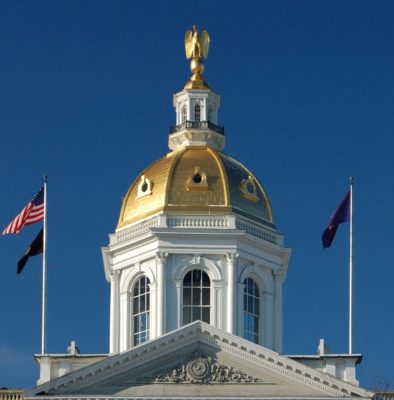
This week the House met for my last time, to consider the Governor’s vetoes. August is unusually early for a veto session, but we did get about 320 representatives attending. There were 21 House bills we needed to vote on, plus as many Senate bills as they overrode, starting with nine vetoed. Every vote was a roll call with 2/3 needed to override the veto.
The first bill we took up was HB 2026, the ten year transportation plan, which was felt to have the best chance of passing. The governor had vetoed it because of the toll increase; I looked at it like a budget and decided the toll increase wasn’t enough to block the entire transportation plan, including aid to municipalities. After speeches in favor of the bill – by representatives from both parties – it passed, 292-25, and the veto was unanimously overridden by the Senate.
I decided to support overriding all the vetoes – this was the House position, and many of these bills had passed the House unanimously. Some were partisan – like the “bathroom bills” – and I had voted with the majority on all of them.
HB 221, allowing utilities to own advanced nuclear power plants, did not override, 152-167. This bill passed early in the session, and later bills covered much of the same points.
HB 232, rights of conscience for medical professionals, which would allow principled refusals to participate in an abortion, had some debate before not overriding, 166-154.
HB 396, on farm processing of cattle, sheep, swine, and goats, was discussed on both sides of the aisle, with the main issue being the need to disobey federal requirements. This bill had gotten a lot of interest lately, and was supported by many farmers who want to sell meat locally. The override failed, 204-116; after lunch, a motion to reconsider passed, 181-120, and the override failed again, 202-107. I expect this to come back next year!
HB 1072, on notices for inspections by the department of labor, had some debate before failing, 160-159. The governor had vetoed this bill about a concern that employees might not be paid, but the bill does not have any effect on the statutes requiring timely payment.
HB 1097, requiring legislative oversight of removal or modification of historic markers, had a very brief debate before failing, 193-125. This bill had passed both the House and Senate on consent, so I don’t understand the opposition.
HB 1102, increasing the research and development tax credit cap, also requires state parks to charge residents no more than half the non-resident rate. The first part was popular with many Republicans since it helps businesses that invest in new technology; the second with many representatives from both parties because it raises money for our (self-funded) park system from out of staters! The vote was 231-88, and the Senate later overrode the veto unanimously.
HB 1184, on no trespass orders on municipal or school property, was necessary because some towns and schools have issued these orders without allowing for due process, maintaining them perpetually, and not having a consistent process. The bill requires such a process, and also a review and re-authorization (if appropriate) of all existing orders. The veto was overridden, 290-29, with the Senate voting unanimously to override.
HB 1267, prohibiting school district attorneys and non-school personnel from questioning students without their parent present, is another parents’ rights statement that should have been obvious. It passed both House and Senate on consent, which is why it wasn’t familiar to me. The governor’s veto was based on it inconveniencing law enforcement, but the bill has exemptions for legitimate investigations. It was overridden, 311-6, and the Senate voted unanimously to override.
HB 1336, conditionally allowing higher deposits from high-risk tenants, was voted down, 159-155, without comment. Likewise, HB 1337, repealing the council on autism spectrum disorders, failed 148-172.
HB 1358, creating a study commission on transitioning all public schools to charter schools, failed 150-166. Most of the opponents – and even the governor – seemed not to know that all charter schools (in New Hampshire, at least) are public schools!
HB 1369, on the manner of posting the warrant for town meetings, was explained before passing, 305-12. It actually allows a town (or school district) to choose any two methods of posting the warrant: physically; on their website; or published in a newspaper. The Senate overrode unanimously.
HB 1422, extending the time limit to petition for a new trial, was explained and passed, 314-7. The Senate also overrode, by a vote of 18-6.
HB 1442, allowing classification by biological sex, was debated and, as expected, failed, 165-149. HB 1491, pooled risk management programs, failed, 160-148. Later in the day, a motion to reconsider failed on a voice vote.
HB 1565, penalties for false reports of abuse or neglect (usually in a family court situation) was debated and not overridden, 168-140.
HB 1610, on changing the process for school districts to use year end unassigned fund balances, was debated and failed, 162-148. The governor’s veto was based on the timing of the change, and the overwhelmingly Democrat opposition only spoke about the inconvenience to the districts, so I would expect to see this again.
HB 1643, limiting the authority of a guardian ad litem in some cases, was briefly debated and failed, 157-152. HB 1726, on sale of surplus state-owned land, failed 101-206.
HB 1766, on cruelty to livestock, was debated – or mostly explained – and passed, 249-56. The Senate voted 11-13, sustaining the veto.
SB 434, regulation of public school materials, was debated and failed, 165-140.
SB 468, enabling medical cannabis centers to grow in greenhouses, passed 257-44 after some discussion. The Senate had voted 16-8, so this became law.
SB 552, another “bathroom bill,” was debated and failed, 161-142. SB 661, on pooled risk management programs, had a pointless speech saying “it’s a bad bill, what we wanted to work out didn’t” without explaining what the bad parts were! I voted in favor, but it failed, 84-216.
At the end of the day, we took up a report from the ethics committee that recommended censuring Representative James Spillane, of Deerfield. He had made some rude social media posts about Democratic representatives. One claimed to fear violence; the other was pushing the improper behavior. The ethics committee was acting on the principle that since the X account was titled “Representative James Spillane” that it was connected to his legislative activities. Rep. Spillane insisted this was a free speech issue. After some debate, the censure passed, 185-93, and Rep. Spillane was censured and lectured. I voted against it because it is a free speech issue, and similar complaints are made and enforced inconsistently. I’ve seen lots of stupid and obnoxious social media posts; very few of them get official complaints.
This was my last session day. I’ll get one more committee meeting on our interim study bills, and write one last newsletter about my bills this year.
Authors’ and Speakers’ opinions are their own and may not represent those of Grok Media, LLC, GraniteGrok.com, its sponsors, readers, authors, or advertisers.
Disagree, agree, Got Something to say? We Want to Hear It. Comment or submit Op-Eds to steve@granitegrok.com
