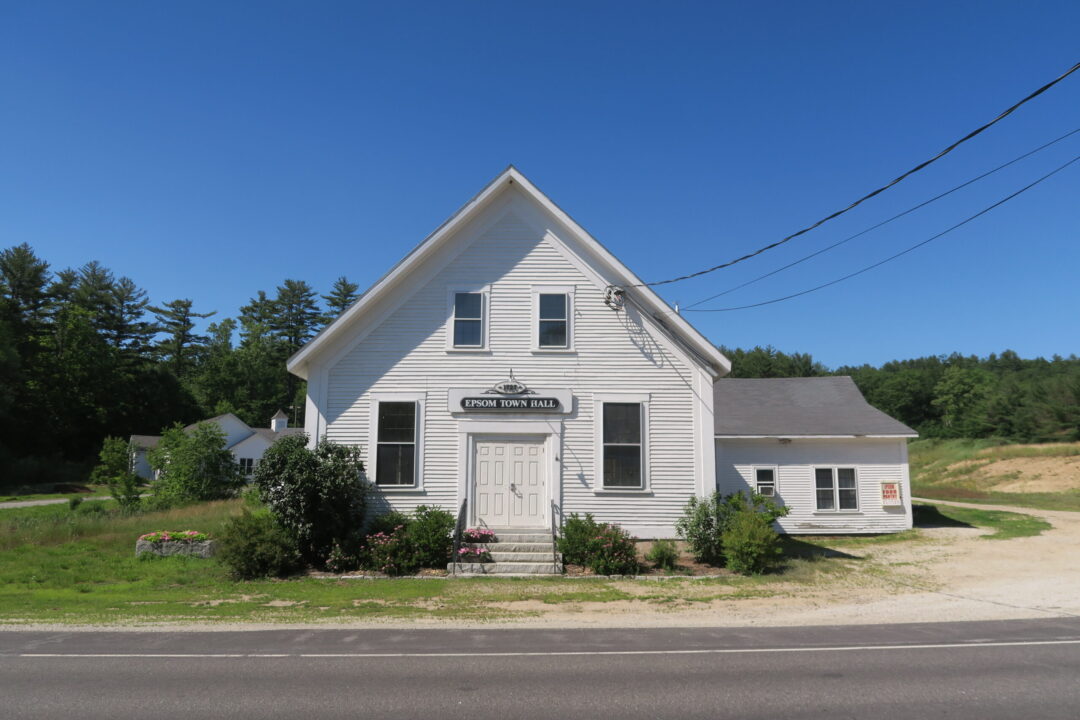
There’s going to be a warrant article in Epsom that asks the voters if TIFs (Tax Increment Financing) should be allowed. You might already be thinking this article isn’t for you, but stay with me here, especially if you live in a town that doesn’t currently have TIFs, because the discussion of them might be coming to your zip code in the future. I’ll also add that I was unfamiliar with them until a few years ago, when Laurie Ortolano asked a question about them at a Coffee with the Mayor event. It was a while after that when I learned what a charrette is. And after reading the definition of a charrette, I finally learned about the NRPC.
I mentioned all those things because it’s important to know what they are, who the players are, and what their goals are, furtive or outspoken. Jefferson did say that a well-informed citizenry is the best defense against tyranny. Being well-informed is a learning process for me, and I would argue that it requires ongoing maintenance. That is why I present to all readers the following question:
Are TIFs being overused, misused, and abused to quietly implement agendas that the local population does not embrace?
Yesterday, there was a hearing in Epsom that included public comment and questions about the TIF warrant article. It began with a presentation by Mr Tardiff, who used the words “prime the pump” (for economic activity) more times than Humphrey Bogart said “here’s looking at you, kid.” I couldn’t resist making a Hollywood comment because Mr McGuire is big into movies and he’s a local voter. The interesting thing to note is that Mr Tardiff’s credentials are not CPA, tax attorney, or even an Epsom resident. He is the executive director of the Central NH Regional Planning Commission. Read that again because it’s important to know who he works for, and it’s NOT the Epsom taxpayer! NH has 9 of such commissions, and they’re unelected bodies that control the flow of HUD and perhaps other federal dollars. They’re into all kinds of Agenda 21/2030 crap and use words like SUSTAINABLE too often to keep track of.
You can also look up the history of TIFs, which have existed since the 50s, but are there enough people talking about unintended (by the voters) consequences? I mean the consequences of TIFs failing to meet goals (on paper) and expectations (of voters). Seeing that creating a TIF is a multi-stage project, starting with passing a warrant article to allow it, to reach its final materialization, there are plenty of opportunities for things to go wrong. We’ve all heard that the road to Hell is paved with good intentions.
Suppose the warrant article passes, and TIFs are in the toolbox of economic development. You wouldn’t let just anyone (kids and irresponsible adults, for example) use your power tools unsupervised. The next step after allowing TIFs is defining the territory that will become a TIF district. Nashua has more than one, and Chicago has between 120 and 130, according to a quick internet inquiry. Equal treatment be damned, the floodgates are now open for multi-tiered special treatment, and I’ll pause for a quote by the esteemed Thomas Sowell. “It’s easy to be wrong-and persist in being wrong when the costs of being wrong are paid by others.” You might be fortunate enough to have zoning and planning board members that you like, but what happens when they make a mistake, such as choosing the wrong place(s) to be a TIF?
Suppose the TIF district has been defined and approved, and it’s now official. Are the landowners going to sell? Are the buyers (presumably developers) going to build what the locals want? There are no guarantees in life but death and taxes. We are talking about taxes, after all, and what’s the goal for the local voter? I surmise that it’s reduced property taxes (compared to what they would be in the absence of economic development) in the future. It’s important to note that the local voters’ goals are NOT the same as the NRPC’s goals. Mr Tardiff used an arbitrary example of coaxing Market Basket into opening a store in Epsom. Sure, it would be nice not to have to make that pilgrimage to Concord for grocery shopping at discount prices, but what could possibly go wrong in making a particular site attractive to their upper management? I’m sure there are enough answers to write about in a separate article.
Suppose undesirable businesses come to town because of a TIF, and there’s no lawful way to get rid of them? What about those unintended consequences? Heavy traffic comes to mind, maybe some crime, also, and so does extra demand on the police and their fellow 911 services. I’m talking about significantly more calls than were expected. Who’s going to pay for that, either in dollars or response times? You know the answer. You can’t just go back and “un-TIF” all those parcels because bad decisions were made a few years earlier. You’re stuck with a TIF for 20 years and potentially some of its consequences forever. Another personal disclosure is that I don’t have kids. I think of the TIF situation like the decision to have kids. Once you’re a parent, there’s no going back to being a non-parent, even after your kid turns 18. My point is that it’s a decision not to be taken lightly when voters are in the booth looking at such a warrant article. TIFs are UNNECESSARY.
The merits of economic development ought to be recognized by everyone. It’s in everyone’s best interest to be business-friendly, and I get that. Regarding Epsom, several large businesses came to the circle in recent years, the liquor store and the Common Man being a few examples. They came to town without TIFs coaxing them. There are other tools available to cultivate economic development, which subject matter experts could discuss, but let’s move along with the following message:
Don’t be like Nashua.
If TIFs are allowed in any community, transparency gets lost, and the Trojan horse is loaded with many of the ills of Nashua City Hall, like secrecy and confusion by design. Just ask Laurie Ortolano about the arts center, which so happens to be inside a TIF. The questions that voters should be asking is who is being better served by TIFs. Is it the NRPC or the taxpayer? The former wants people to think the latter benefits at least equally. I found it very telling that the only reason Epsom has this particular warrant article this year is that boards and committees have discussed TIFs before, but the town attorney said that use of TIFs must be approved by the voters. Just say NO at the polls on March 10.