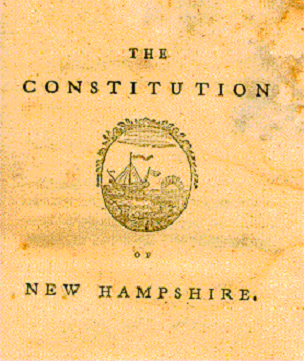
The framers of the New Hampshire Constitution of 1784, influenced by Puritan traditions that intertwined education with moral and religious formation rooted in the Protestant Reformation, crafted Part II, Article 83 to implement the principles in Part I, Articles 4, 5, and 6 of the Bill of Rights. Articles 4 and 5 declare the unalienable rights of conscience and free worship without molestation, provided public peace is preserved. Article 6 emphasizes that morality and piety, grounded on evangelical principles, best secure government and foster due subjection, empowering the legislature to authorize towns, parishes, bodies corporate, or religious societies to support at their own expense public Protestant teachers of piety, religion, and morality, while prohibiting compelled support for other sects and ensuring equal legal protection without subordination.
The term “Protestant” in Article 6 must be understood as a term of law in light of the Protestant Reformation, which the founding fathers viewed as a rejection of the abusive practices of the Church of England—itself seen as adopting hierarchical and ceremonial elements akin to those of the Roman Catholic Church. By specifying “Protestant teachers,” the framers sought to retain core evangelical principles—such as personal piety, scriptural authority, and moral instruction—while rejecting centralized ecclesiastical control, particularly that associated with the Anglican establishment. At the time of adoption in 1784, New Hampshire’s religious landscape included several Christian denominations, primarily Congregationalists (the dominant group, descended from Puritan settlers), Presbyterians, Baptists, Episcopalians (Church of England remnants), Quakers, and emerging others like Methodists; the framers aimed to protect this diversity of Protestant expressions without favoring any one sect or subordinating others, promoting voluntary local support for evangelical-grounded morality.
Article 83 advances these aims by charging legislators and magistrates to “cherish the interest of literature and the sciences, and all seminaries and public schools,” and to “countenance and inculcate the principles of humanity and general benevolence… sincerity, sobriety, and all social affections, and generous sentiments among the people.” This duty reflects Article 6’s focus on propagating morality through public instruction, viewing education as essential to republican virtue and societal order without direct establishment of religion. Nathaniel Bouton’s 1833 discourse, The History of Education in New-Hampshire, traces early education from colonial times as rooted in religious and moral training, with schools often under ministerial oversight to instill piety, reading (especially of the Bible), and virtue—aligning public schools with the framers’ vision of moral inculcation tied to Protestant evangelical principles.
In 1784, “cherish” connoted nurturing, protecting, and fostering (per contemporary usage, e.g., Samuel Johnson’s dictionary). This included the legislature’s power to grant charters to seminaries, academies, and corporations, regulating them to promote knowledge, arts, sciences, and morality while preventing monopolies. Early incorporations, such as academies like Phillips Exeter (1781) and Dartmouth College, exemplified this support for institutions advancing virtuous education under local or private auspices, consistent with Articles 4–6’s safeguards for conscience.
The 1819 Toleration Act reinforced Part I, Article 6 by affirming legislative authority to permit voluntary local provisions for Protestant religious teachers at private expense, while abolishing mandatory town taxes for established churches. This ended compelled support amid rising religious diversity, preserving protections against molestation in worship and sectarian compulsion, and allowing moral education to continue through public schools informed by evangelical moral principles.
The 1850 Constitutional Convention’s proposed amendments—to relocate Article 83 to the Bill of Rights, mandate free common schools under state supervision, require minimum funding, and appoint a state superintendent—were rejected by voters. This preserved the original intent favoring local discretion and legislative flexibility over centralized state mandates.
The 1877 amendment to Article 83 added that “no money raised by taxation shall ever be granted or applied for the use of the schools or institutions of any religious sect or denomination.” This constitutionalized the Toleration Act’s separation of public funds from religious entities, responding to Catholic immigration and debates over parochial schools, while ensuring public schools—historically bound to inculcate evangelical-grounded morality under Article 83 and Bouton’s documented tradition—remained non-sectarian in funding but aligned with the framers’ moral objectives, without violating rights of conscience. Prior to 1877, no truly secular public schools existed; common schools were inherently shaped by the constitutional duty to inculcate piety and morality rooted in evangelical principles.
Role of Nathaniel Bouton’s 1833 Discourse
Nathaniel Bouton’s discourse, titled The History of Education in New-Hampshire, delivered before the New-Hampshire Historical Society at their annual meeting in Concord on June 12, 1833, serves as a key historical source documenting the origins, development, and character of education in the state from colonial times through the early 19th century. As a scholarly address (approximately 36 pages when published), it traces education’s roots in Puritan and Protestant traditions, emphasizing its inseparable link to moral and religious formation.
Bouton’s primary purpose was to highlight education as “one essential part of the foundation on which our free Institutions rest,” venerating the ancestors’ efforts while underscoring duties to posterity. He describes early colonial education as deeply religious: schools were often under ministerial oversight, focused on teaching reading (especially the Bible), piety, virtue, and basic literacy to instill evangelical principles and prepare citizens for republican self-government. This aligns closely with the framers’ intent in the 1784 Constitution—particularly Part I, Article 6 (morality and piety grounded on evangelical principles propagated through public instruction) and Part II, Article 83 (duty to cherish seminaries and public schools while inculcating principles of humanity, benevolence, sincerity, sobriety, and social affections).
The discourse illustrates that New Hampshire’s common (public) schools in the colonial and early state periods were not secular but inherently shaped by Protestant evangelical morality—prioritizing scriptural authority, personal piety, and rejection of hierarchical abuses associated with the Church of England or Roman Catholicism. Bouton notes the role of ministers, grammar schools, academies (e.g., Dartmouth College founded in 1769), and local efforts in advancing learning tied to moral character, without centralized state control.
In constitutional arguments regarding original intent, Bouton’s work functions as contemporaneous evidence (just 49 years after the 1784 Constitution) that public education was understood as a means to propagate the very evangelical-grounded morality referenced in Article 6. It supports interpretations that “cherish” in Article 83 involved nurturing locally controlled, morally infused schools consistent with Protestant principles, rather than secular or state-mandated systems. By chronicling this tradition, Bouton reinforces why pre-1877 public schools were bound to inculcate piety and virtue rooted in Reformation ideals, rejecting Anglican-style establishment while protecting diverse Protestant denominations.
Overall, the discourse stands as authoritative historical testimony to the religious-moral foundation of New Hampshire education, directly illuminating the framers’ vision in Articles 4–6 and 83, and remains a valuable reference for understanding the continuity of evangelical principles in public instruction prior to later secular shifts.
Here are key quotes from Nathaniel Bouton’s 1833 discourse, The History of Education in New-Hampshire, delivered before the New-Hampshire Historical Society on June 12, 1833. These excerpts highlight the religious and moral foundations of education in the state, emphasizing its roots in Protestant evangelical principles, piety, virtue, ministerial oversight, and the role of public instruction in supporting free institutions and republican government.
On the purpose and foundational importance of education
1. “The brief hour which I have the honor, by your appointment, to occupy this evening, shall be devoted to the History of Education in New-Hampshire: a subject which however little it may flatter our vanity, inspire admiration of native genius or enkindle literary enthusiasm; may yet claim this solid advantage — it will show one essential part of the foundation on which our free Institutions rest, teach us to venerate the character of our ancestors, and point out some of the most important duties which we owe to posterity.” This opening sets education as tied to moral character, ancestral veneration, and the preservation of free government.
Early colonial education’s religious character
2. Bouton describes colonial schools as deeply intertwined with religious and moral training, often under ministerial supervision, focused on piety, Bible reading, and virtue to instill evangelical principles. He notes that early efforts prioritized “teaching reading (especially of the Bible), piety, virtue, and basic literacy” to prepare citizens for self-government, aligning with Puritan/Protestant traditions that rejected hierarchical abuses while promoting scriptural authority. (Derived from his tracing of education from colonial times as “rooted in religious and moral training, with schools often under ministerial oversight to instill piety… and virtue.”)
Moral and virtuous outcomes of education
3. In discussing progress in education, Bouton observes: “Not satisfied with the bare rudiments of learning; with reading, writing and arithmetic, which 50 years ago were all that was required to be taught in our schools; they are pressing on in the high road of knowledge, and acquiring even in the district school, an education that fits them to fill both honorably and usefully the more responsible stations in society.” This reflects the shift toward broader moral inculcation, but rooted in the earlier pious framework.
Call to rulers on education’s role in virtue and society
4. “Where it befitting the occasion, I would say to our honored rulers — If it is your ambition to benefit and to please the people… if you would stamp the character of intelligence and virtue upon the face of the whole people; if you would promote industry, order and happiness in every family, and secure to future generations the rich blessings which we now enjoy — in short, if you would raise the State… to a still higher rank…” Here, Bouton links education directly to inculcating virtue, industry, order, and moral character—echoing constitutional duties to propagate morality and piety.
These quotes and themes illustrate Bouton’s view that New Hampshire’s common schools were historically non-secular, shaped by Protestant evangelical morality, ministerial influence, and a focus on piety and virtue through Bible-centered instruction. The discourse serves as evidence that education was designed to propagate the evangelical principles referenced in the 1784 Constitution (Part I, Article 6), without centralized Anglican-style control, supporting diverse Protestant denominations in fostering republican virtue.