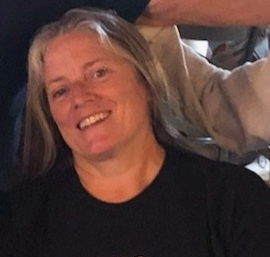
A few days ago, Ms. Melanie Levesque was Mr. Marchand’s guest on his podcast, presumably because of her candidacy as Councilor Wheeler’s opponent. I tuned in because The Art of War tells us to know your enemy, and any member of the enemy camp (the Dems) is our shared enemy. It was 53 minutes of ridiculous comments, like the trashing of EFAs, blaming Frank Edelblut for Gov-ed being a dumpster fire, claiming that Hollis wants commuter rail, and advising Nashua voters to look for Free Stater rep candidates in Donuts for Democracy.
The first several minutes, however, are of Marchand interviewing Melanie with biographical questions involving family history. She said her parents went to MIT and her father became an engineer. She also said her mother wanted to be a nurse, but was told she couldn’t because she was black. Several parts of that comment got my attention. Her parents were undoubtedly treated unfairly quite regularly in their day, but WHO told Melanie’s mother that she couldn’t be a nurse? Her grandparents? A career counselor? The dean? I have unanswered questions and I picture Seinfeld’s lawyer, Jackie, on the phone with his secretary and asking “who told you that?”
With the internet at my disposal, information is readily available for most things, though not on who said Melanie’s mother couldn’t be a nurse. Stay with me here. I’ve explored many rabbit holes of curiosity involving several pioneers in their professions. Here are a few examples:
- Dr Elizabeth Blackwell (1821-1910)
- Attorney Arabella Mansfield (1846-1911)
- Rabbi Regina Jonas (1902-1944)
- Senator Hiram Revels (1827-1901)
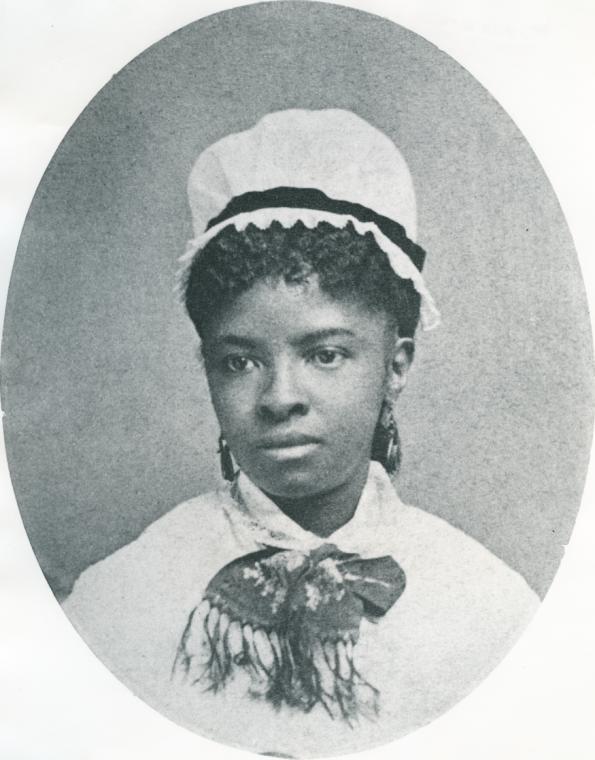
“Game on,” I thought. Let’s get to know the first black nurse, and that happened to be Mary Eliza Mahoney (1845-1926). She has her own wiki page, and I recommend reading it, but I’ll summarize.
Mary was a Bostonian, born in Dorchester, not far from Melanie’s birthplace (Roxbury), and received her education in Boston in a rigorous hospital diploma program (as opposed to a BSN). All her accomplishments resulted from hard work (as opposed to DEI). She was a real northern woman’s counterpart to the Tuskegee Institute’s founder, Booker T. Washington (1856-1915), who was known for telling his peers that if you want respect, you must get out there and earn it.
Mary Eliza Mahoney earned respect through her hard work before, during, and after her studies, as an employee, student, nurse, and reformer. She died of breast cancer in the same hospital that issued her diploma, which is currently known as the Dimock Community Health Center. This was decades before the first National Nurses Week, which happens to be in May and includes Mary’s birthday, May 7.
I considered saving this article in a draft folder for the next Nurses Week, but my impatience to submit it now got the best of me, and I came up with a (hopefully) plausible reason for doing so.
If you happen to vote in Allenstown, Auburn, Barnstead, Barrington, Bedford, Candia, Chichester, Deerfield, Epsom, Goffstown, Hooksett, Lee, Londonderry, Loudon, Manchester, Northwood, Nottingham, Pembroke, Pittsfield or Strafford, you can honor the distinguished life of Mary Eliza Mahoney by voting for a NURSE in the executive council primary, and that’s Nurse Terese.