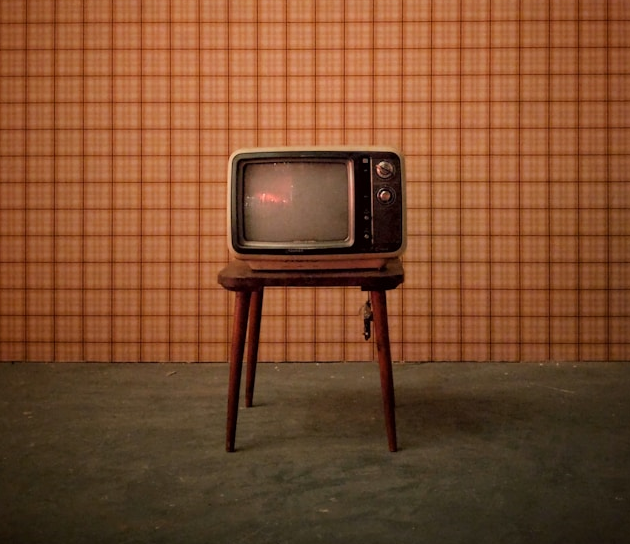
I remember growing up. The networks, we didn’t have anything else except PBS, were required to give equal time to opposing views if the network gave a candidate or advocate earned media time. I wouldn’t become remotely political for another thirty years, but it struck me as annoying, not that I was paying attention or truly understood. This despite growing up watching black and white news reports about Vietnam, campus riots, and left-wingers (commies) bombing things all over America.
Commies used to bomb things a lot, so we should prepare for that, given their recent rise in public interest. Violence is political activism 101 for socialist revolutionaries, and the DSA is letting the foreplay in DC get them a bit too frisky.
I’d also expect an elevation of activity from Antifa, despite it being a domestic terrorist organization. Antifa’s remit is to convince National socialists (Nazis) to join the Bolsheviks (the DSA in America).

Anyway, the equal time thing was a product of an Act of Congress called the Communications Act. Passed in 1943 and tweaked in 1959, it includes a requirement for equal time.
Equal Time, as the act’s Section 315 is commonly known, stipulates that a broadcast program that hosts a political candidate also must provide equal access to the office seeker’s opponent to appear on the show or in another commensurate capacity.
The section was amended in 1959 when Congress passed limited exemptions to the equal time requirement for content deemed “bona fide” news — interviews, newscasts, and documentaries. The idea was to spur news coverage of political campaign activity in the early days of broadcast television.
Fast forward to 2026, and the question has arisen as to what ” bona fide ” news is. The FCC has expressed concern over the free ride regulated media has gotten over the past few decades. It’s gotten so bad that we can recite the “networks” doing “news” who are so radical and partisan that giving “equal time” to any opposing view would result in viewers storming their studios.
Much like how internet platforms funnel you into a silo where you only see what you want to see, Broadcast networks long ago did that very thing while pretending they weren’t. Most of them still think they are unbiased and fair, at least until Bari Weiss becomes their boss.
As the guidance states, Congress’ inclusion of “bona fide” in the exemption categories reflects congressional concern that “broadcast stations would apply the exemptions too broadly in service of a political agenda and thereby frustrate the original purpose of the equal opportunities requirement to maximize broadcast coverage of political events.”
“The idea was pro-speech. It was about more debate, more discussion, more candidates, let’s empower people,” Carr said. “What Congress didn’t want was for broadcasters to put a thumb on the scale for one political candidate for one partisan political party.”
Congress was right to be concerned.
Carr’s plan to investigate/rein in the abuses and exceptions is not necessarily a bad idea, but half of Congress will lose its mind (the left half), and I’ll admit that while it is a law passed by Congress and it does regulate broadcast media, and Congress could have changed the law to meet the times, this makes my skin crawl just a tiny bit.
Back in 1943 or 1959, there was more than enough concern that unregulated media would have a key to unlock the subconscious of the public at large. These days, with so much unregulated media, picking on the Alphabeta seems cruel.
The “Big Three” over-the-air, broadcast TV networks have become the purveyors of the “vast wasteland” that then-FCC Chairman Newton Minnow warned Americans about in 1961. They also have long abused the public interest through biased, one-sided coverage of American politics. That bias has exploded in the Trump Age.
Carr said that over the years the networks and the producers of their shows had “just assumed that the FCC had walked away from enforcing the line between bona fide news programs and those that aren’t, and that basically everything is treated as bona fide news.”
Okay, maybe not that cruel. The late-night so-called talk shows and those like The View are behaving in ways that, as products of broadcast networks, should be scrutinized because there’s a law.
Congress could, of course, change the law to address the modern arena of news and information. It could change the exceptions, exemptions, remove them, add new ones, or, more likely, find some crooked path to empower the FCC to regulate or control non-broadcast media – something the DSA would love and Democrats under the Biden Administration actually did without the FCC.
The Left, if it had the means, would regulate all media by an act of Congress and then pack the Supreme Court to protect that.
Carr’s FCC does have the lawful authority to regulate the broadcast networks and a good reason to ask questions about the line between news and entertainment, as long as it doesn’t wander into the censorship woods, message control, fear or intimidation tactics, and focuses on advancing free speech, more speech, right or wrong, while protecting the right to disagree.