


After speaking at a recent hearing on bullying legislation in New Hampshire, I left with a troubling question: Is there a growing apathy toward the suffering of bullied children in our schools?
For years, Representative Glenn Cordelli—until recently the Chairman of the House Education Policy Committee—has worked to strengthen laws that protect students. I have testified alongside parents in support of legislation that helps families when school administrators fail to protect children who are bullied. At the time, it was surprising—and frankly disheartening—to hear who lined up against anti-bullying legislation. Lobbyists and advocacy groups opposed measures specifically designed to protect children. Why? And if they oppose accountability for negligent handling of bullying, what exactly are they supporting instead?
Some people will argue that proactive approaches to improving school climate are more effective than disciplinary consequences. But we are not living in a hypothetical world where those approaches are working. Today, teachers are leaving the profession because of escalating behavior problems. Schools have adopted systems like Multi-Tiered Systems of Support (MTSS-B), which were supposed to improve behavior, yet across the country we are seeing the opposite trend.
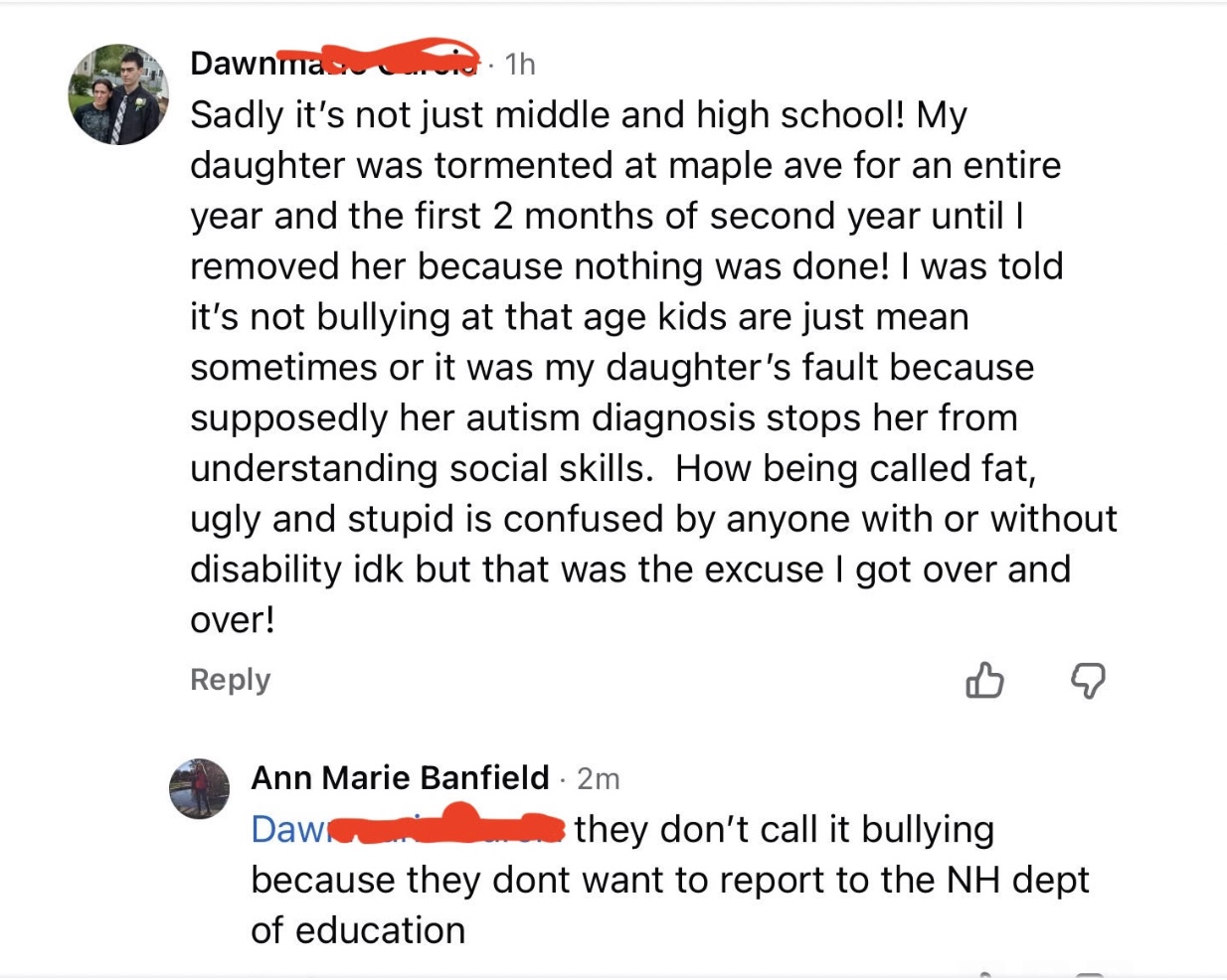
In New Hampshire, I have worked with families whose children have endured relentless harassment—sometimes to the point where parents felt they had no choice but to pull their children out of school. In some districts, administrators may take some action, but sometimes the torment continues. In others, the behavior is simply redefined so it does not have to be reported. The loophole is simple: if you refuse to call it “bullying,” then no reporting to the Department of Education is required.
A child can experience harassment, retaliation, and repeated targeting, yet if a district chooses to classify it as something other than bullying, it disappears from the official record. This means New Hampshire’s statewide data is not only misleading—it’s unreliable.
One parent in Goffstown pulled her child out of the public schools after repeated torment, only to be told the situation still did not meet the definition of bullying. Her experience is not unique.
That is why Representative Cordelli introduced amendment #2025-3000h, which closes the loophole that allows districts to quietly avoid reporting bullying incidents. Yet Democrats on the committee, along with several lobbyists, opposed it. Fortunately, Republicans supported the measure, allowing it to pass in committee.
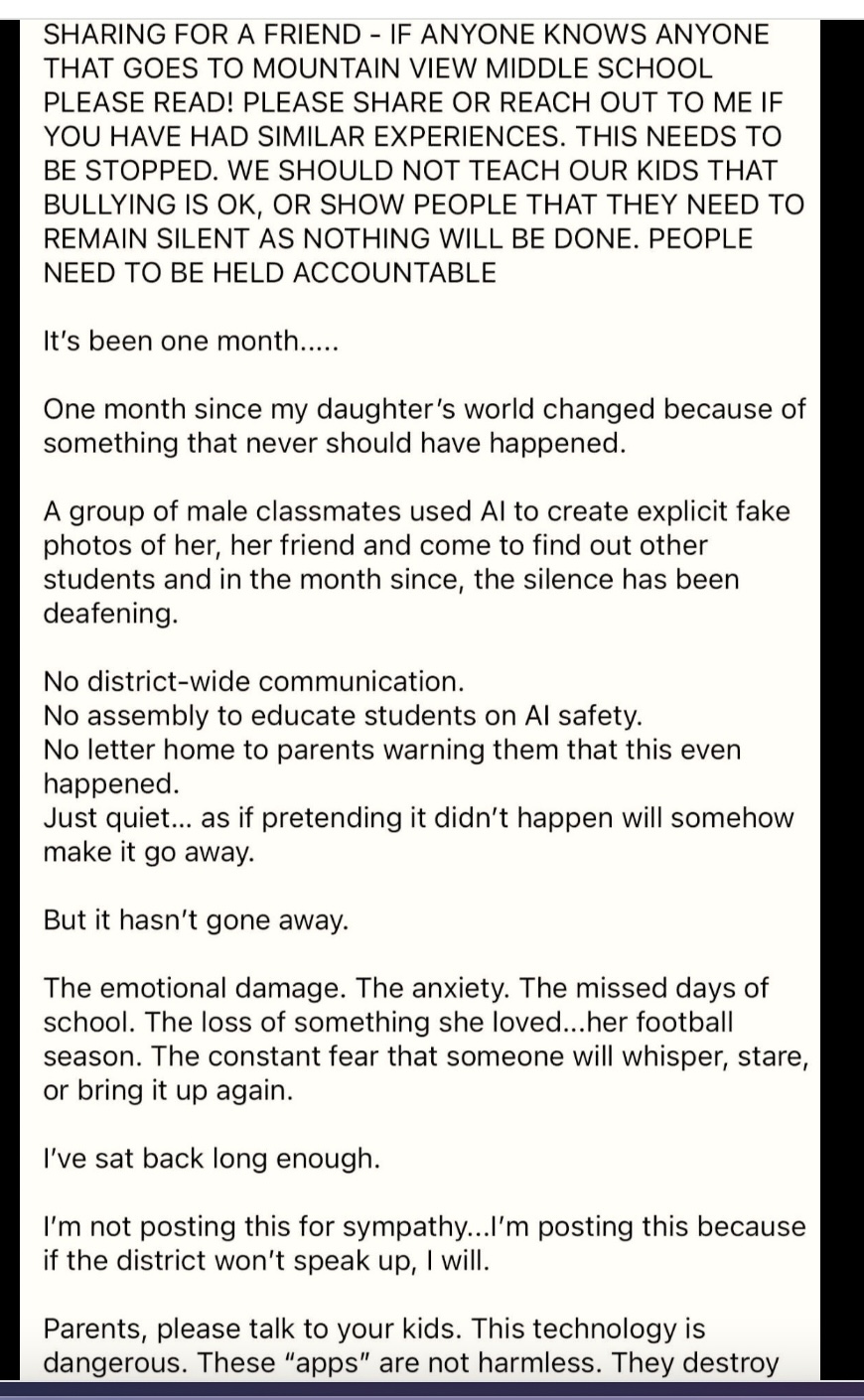
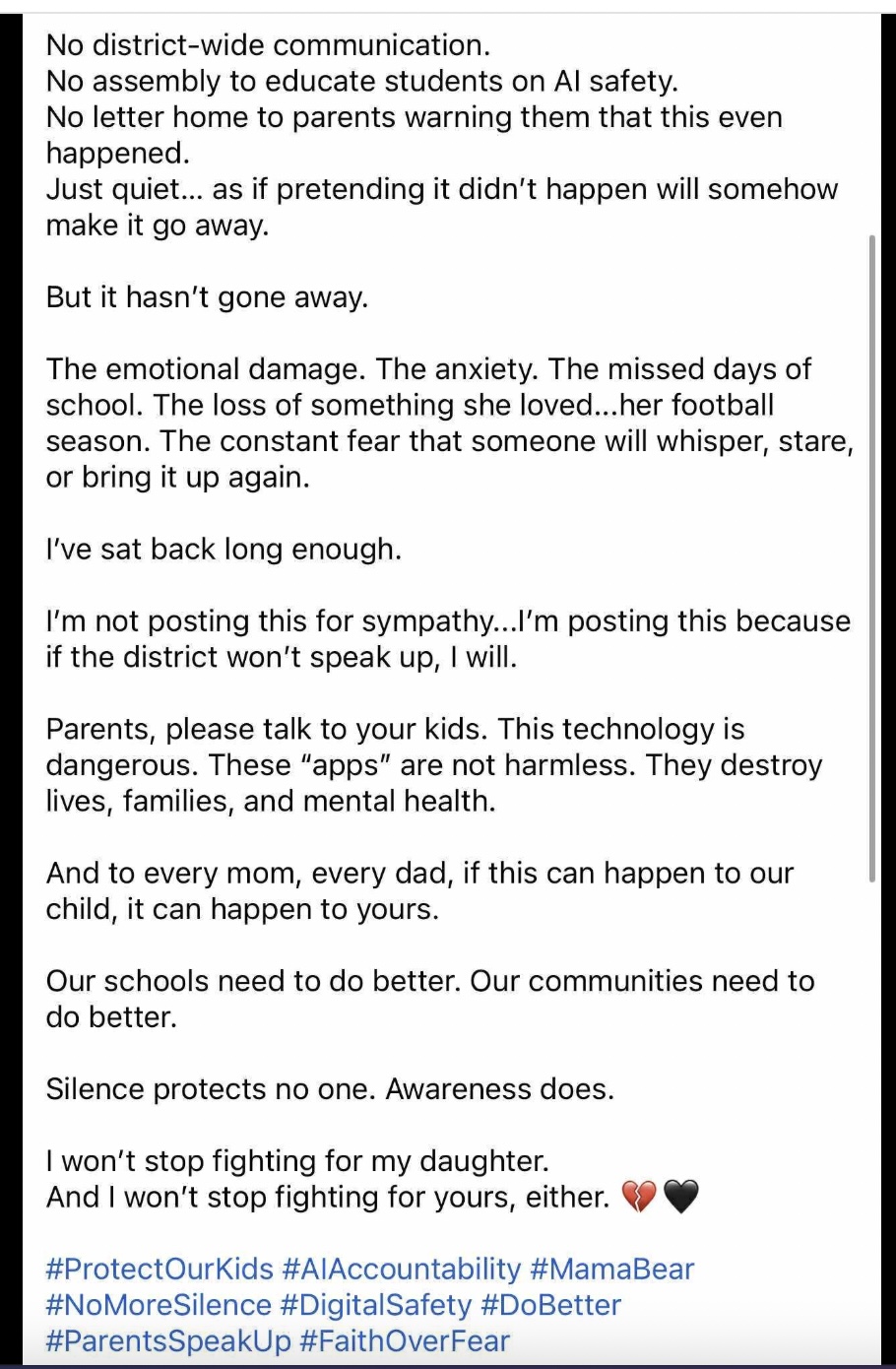
But the need for reform became even more urgent when a Goffstown parent recently reported a deeply disturbing incident: several boys used Artificial Intelligence to create sexualized images of girls at the school. One would expect swift, decisive action from administrators. Instead, parents reported inaction on the part of the administration.
I’ve taken this issue to our State Board of Education, Commissioner, and House and Senate Legislators to make sure they are aware of what is going on in some schools. If it’s not happening to your children or grandchildren, you are still impacted when the administration has to call on their taxpayer funded attorneys to defend their actions.
Here is the E-mail that I sent:
Subject: Follow-up on HB131 Amendment #2025-3000h
Honorable Chair and Members of the House Education Policy and Administration:
I wanted to follow up with you regarding the amendment to HB131 that the committee passed this week. After listening to the testimony, I felt it was important to provide additional information and context.
Frankly, I was shocked and dismayed by some of the testimony opposing this amendment. It left me questioning whether there is a growing apathy toward the children who are bullied in our public schools. Do we truly want to solve this problem—or not? It’s one thing to oppose legislation, but it’s quite another to offer no alternative legislation year after year.
During the hearings on the Education Freedom Accounts (EFA) program, we heard repeated testimony from parents who removed their children from public schools. Regardless of one’s stance on EFAs, I would hope we could all agree on the importance of addressing the root causes driving this exodus. The more families leave, the stronger the public’s support becomes for school choice programs.
As I mentioned in my previous testimony, I’ve worked with many families across the state who faced administrators unwilling or unable to stop bullying and related behavior. Most parents don’t withdraw their children after one or two isolated incidents—it’s when the problem becomes systemic, that they feel they have no other choice.
This amendment will not affect most schools, because many administrators already do an excellent job of addressing bullying promptly and effectively. However, for those who do not, their inability to find a solution is directly fueling the growth of EFAs and scholarship programs. These failures are driving families out of our public schools.
As I mentioned in my testimony, Keene teachers were so fed up with the behavior problems, many resigned. The School Board finally got the message and directed the administrators to do more. One board member called for the Superintendent to resign. When these problems persist, as they do in schools like Goffstown and Seabrook, families end up leaving. Teachers are leaving too.
To illustrate, here are two examples among many—from families in Goffstown who took to social media to warn parents about the ongoing problems. Although these posts are public, I’ve removed identifying information out of respect for their privacy.
If we truly want to keep families in our public schools, we must do better. That begins with ensuring every administrator is accountable and every child feels safe.
I want to thank those who are working hard to resolve these issues, but as one former school administrator told me after the public hearing, it takes good leadership. When the problem becomes systemic, the buck stops with the leadership in the school.
Respectfully,
Ann Marie Banfield
Parent and Education Advocate
