
People who want to buy an EV are welcome to do so, but will have to do it without taxpayers’ props up. And people who sell EVs will likewise have to push the product absent expiring rebates. That’ll make these expensive beasts more challenging to move, but my sense is that EV sellers have never been completely honest with EV buyers about the long list of downsides. Not the least of which is that they aren’t “green.”
The issues are numerous, and we’ve covered most of them here, so I won’t enumerate them again, except for this new one. Charger Help.com has just released its 2025 report on reliability, and there’s an interesting downside they’d like to see addressed.
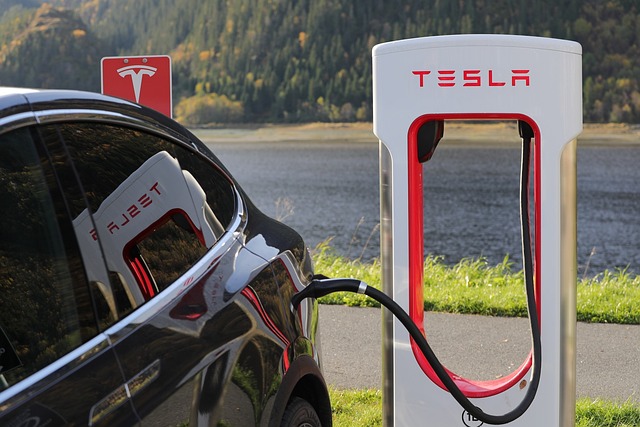
A newly released report by ChargerHelp! shows that while 64% of Americans now live within two miles of an electric vehicle charging station, nearly one-third of charging attempts fail. Despite charging infrastructure showing 98.7% to 99% uptime rates, only 71% of charging attempts actually succeed, according to the 2025 EV Charging Reliability Report.
The report analyzed more than 100,000 sessions across 2,400 chargers. The report argues that instead of focusing on site uptime statistics, the first-time charge success rate (FTCSR) provides a more accurate measure of the driver experience.
Reporting on chargers that are available to charge an EV isn’t as telling a statistic as working stations that successfully charge a vehicle when it plugs in. This seems reasonable. One of the main problems with EV ownership is the limited availability of charging stations outside of homes. But availability is not even the biggest issue it is operability.

“Uptime tells us if a charger is available, but it doesn’t tell us if a driver can actually plug in and get a charge on the first attempt,” said Kameale Terry, CEO of ChargerHelp!, in an interview with FreightWaves. “First-time charge success captures the real driver experience, and by centering on this metric, the industry can close the gap between availability and usability and build the trust needed for mass adoption.”
You bought an EV. You want to do a road trip. Triple A, Waze, or Google Maps helps you pick a route with charging stations out in the wild. You look for nearby hotels and motels because, unlike the five minutes it takes to gas up, you may need eight hours. And off you go, except that there is a nearly one-in-three chance you won’t take a charge.
“Charging stations and electric vehicles are literally computers,” Terry said. “It’s all about these handshakes and how one software understands another software. If you’ve ever been in the software space, then you probably know that sometimes software doesn’t really understand one another.”
When any of these systems sends out firmware or software updates, compatibility issues can arise. As Terry notes, “Sometimes it may create a bit of a wrinkle in that system … maybe the vehicle itself, the battery management system, doesn’t really understand what the charging station is asking of it.”
You’ll never have this issue with an internal combustion engine vehicle (ICEV). And while the maker may suggest a grade that optimizes their build, you have three grades, and your vehicle will run on all of them. You also benefit from having gas stations nearby that compete for business and offer lower prices or the same product. One you can put in a can and carry with you in case the gauge fails, or you just dummy-up and run out of gas. A container you carry to a nearby gas station (if it’s empty), for enough fuel to get you back there to fill up.
None of these options is available to an EV owner who must endure slow charging, weaker charging, and reduced range in cold weather (and as the battery ages).
And hey, if you want to buy an EV, knock yourself out. All I ask is that you not make me pay for rebates on the purchase or pay for higher electric rates because you not only unnecessarily increase demand, (EVs are not better for the environment), but you tend to insist on inferior, unreliable sources of more expensive power at the same time while objecting to fees to replace gas taxes for roads and bridges your EV will wear out faster than my ICEV.
Don’t get me started on tire and brake wear particulates.