


I wasn’t planning on writing about Charlie Kirk for a couple reasons. One, though very much aware of him, he wasn’t someone I followed closely. Not because I had anything against him, but because there are only so many hours in the day, and I, firmly entrenched as I am in middle age, wasn’t really Kirk’s target audience. More importantly, I didn’t think I’d be able to say anything that wasn’t already being said by people in a better position to say it. Maybe that’s still the case.
But a brief point in a piece by my colleague at WDEV, Kevin Ellis, changed my mind about taking up the subject. Kevin wrote:
I invited the chairs of the Vermont Democratic and Republican party on my Vermont radio show to discuss political violence. I suspected that if they saw and heard each other, they might dial down their own rhetoric. The Republican accepted. The Democrat did not.
Why am I not surprised?
While all political sides and probably every controversial movement has its fringe elements who take things too far, and nuts or zealots who get violent, only one side today has a massive cheering section for those of their members who do – and that’s the truly frightening aspect of what we’re witnessing. Years ago, someone made the comment to me that our country can survive Barack Obama (and turnabout being fair play I’m sure some today would insert Donald Trump), but not an electorate that would vote him into office. I think a similar dynamic applies here: our country can survive tragedies like this, but not a culture that applauds them.
Yes, we can play “what about” all day long. Charlie Kirk was assassinated, but what about Minnesota Speaker of the House Melissa Hortman? Brian Thompson, CEO of UnitedHealthcare was murdered, but what about the attack on Paul Pelosi? Sure, there were violent riots after George Floyd’s death, but what about January 6th? The major difference with the above examples – and I’ll add to them the attempted assassination of Donald Trump – are that those on the political Right weren’t and aren’t cheering on the perpetrators.
There are no “Is he dead yet” t-shirts referring to Chuck Schumer or Hakeem Jeffries.
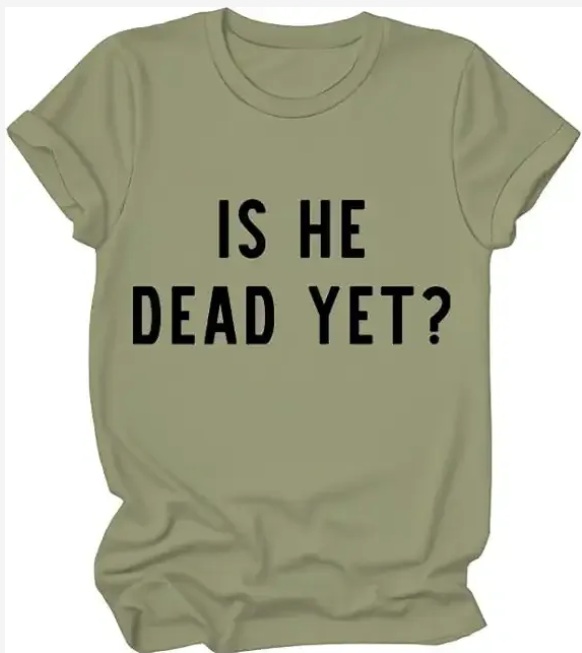
Hoards of adoring conservatives aren’t gathering outside the courthouse holding “Free David Wayne DePape” signs for Pelosi’s attacker the way those on the Left are for Luigi Mangione. And before you say those are just a handful of deranged young women who think the gunman is cute, consider that Californians are moving on a 2025 ballot initiative informally titled the “Luigi Mangione Access to Health Care Act.” This was done in the most heavily populated state in the union with the supposition that naming a piece of legislation after a politically motivated murderer would help win support for it amongst California’s deep blue voters. That’s truly sick.
When Congress approved a resolution honoring Democrat Melissa Hortman and condemning political violence, every Republican voted for it in a unanimous roll call vote. For a similar resolution honoring Charlie Kirk, fifty-eight Democrats voted No, another thirty-eight voted Present, and twenty-two more didn’t vote. Seriously, what’s driving this? Their consciences or their constituents? Neither answer is comforting.
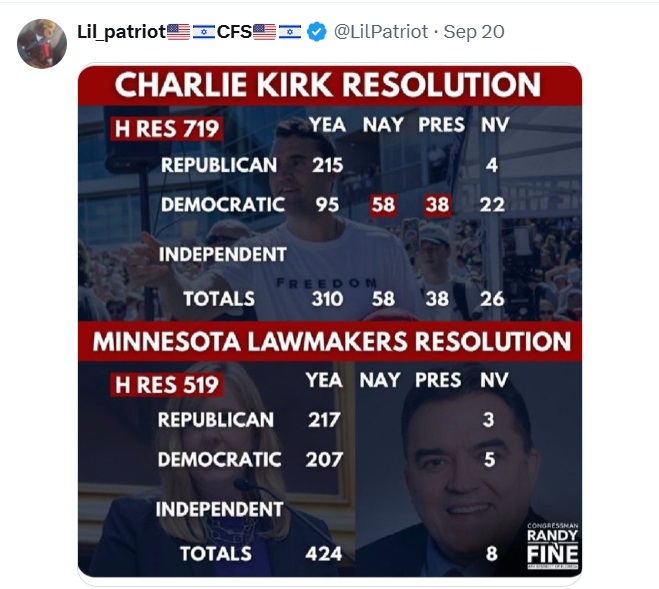
When Hortman and her husband were killed, I don’t recall any conservative influencers, politicians, professors and/or talking heads taking to the airwaves and social media with the message, “Sure we all condemn the violence, but she kinda had it coming.” The same can’t be said of the political Left following the assassination of Charlie Kirk.
A recent YouGov poll following Kirk’s deth shows that while 11 percent of all adults in the US think political violence is sometimes justified, 25 percent of “very liberal” and 17 percent of “liberal” respondents think so. Just 55 percent believe it’s never acceptable. On the other side, 88 percent of those “very conservative” believe political violence is never acceptable, with just two percent saying it’s sometimes justified. The rest didn’t know or wouldn’t say.
The numbers are particularly concerning when you look at young people. 26 percent of those 18-44 think “violence in order to achieve political goals” can be justified. And the trend seems to indicate the belief is translating into action. Tyler Robinson, Kirk’s assassin, is 22. Thomas Crooks, who nearly killed Donald Trump, was 20. Nicholas Roske was 26 when he travelled to Washington with plans to kill Brett Kavanaugh and other conservative Supreme Court justices. The killer of Melissa Hortman and Trump’s other would-be assassin are in their late 50’s, so we can’t dump all the blame Gen Z, but that generation’s increased activity and attitudes here are cause for alarm.
Where are they getting it from? A political culture that glorifies violent “resistance” to a host of “existential threats”. Those who teach or preach that words, even microaggressions, are a form of violence, justifying actual violence as a response. Institutions that reward destructive forms of protest either actively with praise and encouragement or passively by excusing and not punishing such behavior. Worst of all, those making heroes of political murderers by, I don’t know, naming California Ballot initiatives after them. THIS is what has to stop.
The response to the recent spate of violence from most of the politicians I’ve seen is along the lines of we need to tone down the rhetoric and engage in civil dialogue. Sure, but that’s what Charlie Kirk was doing – reaching out to those who disagreed with him to have a respectful conversations and either find common ground or agree to disagree. Someone shot him for it.
So, while I hope we will see more across the aisle conversations that can serve as examples to younger Americans for how to behave, what also has to happen is parents, teachers, politicians and cultural leaders need to aggressively teach the young people in their movements that political violence is never acceptable. The answer to speech you disagree with is more speech, not shouting down, chasing away, or assassinating the speaker. We need to actively pass down the values that people who disagree with you are not evil; they just have different opinions, and are entitled to them.
I think the political Right – as exemplified by Charlie Kirk — is willing and able to take up that challenge. Is the political Left? I certainly hope so, but the chairman of the VT Democrats refusal to go on Kevin Ellis’s radio program with the Republican chairman isn’t an encouraging start.
