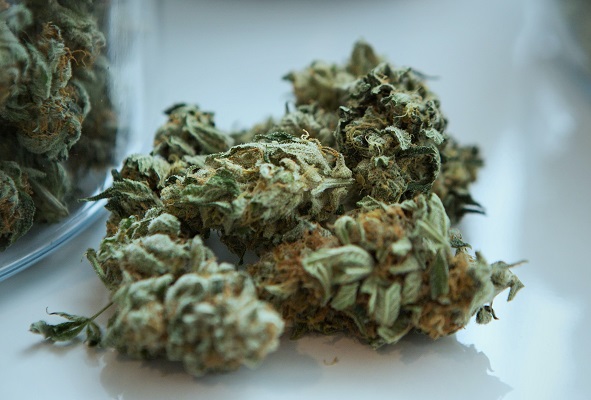
One of my principled objections to legal weed is similar to that of gambling. The interference of the regulatory state and revenue whores. Both are sin taxes. Either “activity” seems harmless enough in moderation, but both will get you into trouble quickly, and when it comes to pleasures and addictions, the line forms rapidly, no matter what the intentions of advocates. Legislators and regulators become players in a confidence scam that enriches a state, which uses the resource to expand its government reach and power.
Sure, you can open a casino, but you need to give us x dollars for the cost of nets to catch people who leap off cliffs, except for the government, whose addiction to other people’s money and abusive tendencies is never a consideration. People will make excuses to get what they want and call it a win when they do.
Legalization leads to taxation, which leads to black markets, and as places like California have shown us, more policing, not less. The current state tax is 26.25% plus any local tax. Illegal weed is now cheaper, which reduces legal consumption and the revenue it generates, which will require higher taxes and more policing to protect the state’s interest.
The massive regulatory state is enriching the illegal one with only an exponential increase in users to show for it.
Seventeen states tax marijuana as part of allowing access, whether medical or recreational.
The cannabis industry continues to grow, but so do compliance complexities. Taxation is one of the biggest financial burdens for cannabis businesses, with effective tax rates reaching up to 70% in some states due to Section 280E of the IRS code.
But it’s not just taxes. Modern weed can be dangerous, and consumption can lead to long-term mental health issues. This was always a well-known but under-advertised effect. Like alcohol, it can be enjoyed in moderation. Some people need to stay away from it, and it should be the decision of individuals, their families, and their health professionals as to what use or abstention is best for them. However, let’s not pretend it is not or cannot be destructive to the lives of individuals beyond the consumer. There is no such thing as drug use that we colloquially refer to as illicit or controlled that affects only the drug taker.
From a well, I tap often.
The idea that freedom is merely the ability to act upon one’s whims is surely very thin and hardly begins to capture the complexities of human existence; a man whose appetite is his law strikes us not as liberated but enslaved. And when such a narrowly conceived freedom is made the touchstone of public policy, a dissolution of society is bound to follow. No culture that makes publicly sanctioned self-indulgence its highest good can long survive: a radical egotism is bound to ensue, in which any limitations upon personal behavior are experienced as infringements of basic rights. Distinctions between the important and the trivial, between the freedom to criticize received ideas and the freedom to take LSD, are precisely the standards that keep societies from barbarism.
And this.
It might be argued that the freedom to choose among a variety of intoxicating substances is a much more important freedom and that millions of people have derived innocent fun from taking stimulants and narcotics. But the consumption of drugs has the effect of reducing men’s freedom by circumscribing the range of their interests. It impairs their ability to pursue more important human aims, such as raising a family and fulfilling civic obligations. Very often it impairs their ability to pursue gainful employment and promotes parasitism. Moreover, far from being expanders of consciousness, most drugs severely limit it. One of the most striking characteristics of drug takers is their intense and tedious self-absorption; and their journeys into inner space are generally forays into inner vacuums. Drug taking is a lazy man’s way of pursuing happiness and wisdom, and the shortcut turns out to be the deadest of dead ends. We lose remarkably little by not being permitted to take drugs.
For the record, I am opposed to legalization in its current context because it fails to advance absent the interference and taxation of the state.
I might be content, as with alcohol, to apply some limited resources to educate, but that policing would be limited to actions resulting from its use (just like alcohol). I don’t think children should be permitted, barring a specific and likely rare medical exception. And I object to the state being involved in any capacity outside its obligation to act when other people’s rights are infringed, just like firearms, or contracts, or anything else.
It can’t be all that difficult to manage in a state like New Hampshire. We don’t tax liquor, but the state does control its sale. This would be similar to that, with no taxes, but the state wouldn’t have a retail monopoly.
The Federal matter is a question for individuals as well. As long as it is a controlled substance whose use would make it illegal for you to own or possess a firearm (or transport across state lines) , that’s a personal problem. The state would have to decide if it felt an obligation to enforce federal law or embrace the concept of sanctuary, and that will rub different people different ways.
I have used it, but not for decades. I don’t care if adults want to use it, as long as they can be responsible about it. However, I am annoyed at the refusals on both sides to acknowledge the truths about regulation, taxation, and use. It has medicinal value, but also significant downsides, not the least of which is human nature.
The most significant barrier might be culture. We don’t have a prevailing collective consciousness as either a state or a nation as regards the responsible use of anything, including government force, but it is then fair to ask if we ever did, and when has it ever stopped us?