

To be honest, there is no real online vendor today that protects your child’s personal data that they collect. When you read their privacy statement, it will sound like your child’s personal information is secure, but they won’t tell you that their data is not secure.
Many kids in school use I-Ready. I-Ready comes with many issues listed here by one parent:
1.) Cumulatively, the time you actually focus on I-Ready, including 15 minute intermittent breaks, is about 2.5 hours everyday. It is not developmentally appropriate for a 5-6 year old to be engaged in this type of task for that long everyday, even if you do get breaks.
2.) I-Ready is not teaching. It is a continuous assessment of a child, a virtual diagnostic. It is a bombardment of quizzes to click on an answer while being timed, regardless if it has been covered in class or not. There are little to no explanations on wrong answers which can teach a child to learn from his or her mistakes and/or prevent a child from getting it wrong in the future.
3.) I-Ready creates anxiety with children when their mandatory assigned curriculum is in a timed setting. It stresses parents out as well. For example, children this age take unplanned breaks, daydream, ask questions, go to the bathroom, get distracted, etc. without pausing the screen thus resulting in an inaccurate assessment. It creates an intense learning environment while families are trying to do their best managing personal matters, such as, raising multiple children, working from home with little to no outside childcare help, etc. Learning environments for this age group should be relaxed and fluid while stimulating parts of the brain that are age appropriate.
4.) I-Ready creates an unnecessary sense of failure. Yes, my child is gifted and yes, perfectionism is a trait among gifted children but I want to be the voice for all children. This week should have been a transitional period, a time for teachers, children and families to slowly adjust to this new lifestyle, especially since the following week is Spring Break. Unfortunately, at our house, this time resulted in multiple meltdowns because my daughter failed several I-Ready assessments. Regardless if I told her to not worry and to have fun, she is fully aware that her grade and time goes to the school. School curriculum should inspire children, offer them avenues to explore their own desires and coddle their curiosities. What I witnessed this week was a little girl who loves and misses her teachers and couldn’t understand why she failed multiple times during her regular school day. It was not a time designated for testing. It was her regular daily curriculum time that was giving a pass or fail grade every few minutes. This is dangerous territory to enter into on a good day, much less during a quarantined pandemic day while withdrawing our children from society and socialization.
5.) I-Ready weakens fine motor skills and hand muscles. Young children should be writing, drawing, coloring, playing with play doh, cutting, origami and journaling. Using a mouse on a computer or touching a screen does not strengthen their fingers and hands. I worry about short term and long term use and how it will impact our children in the future.
6.) Lastly, virtual school is difficult for the younger children, although you and I both know we have no choice. (I personally am a huge advocate for self-quarantining.) We also have to understand that children have been told their entire lives to minimize screen time yet overnight we give them a heaping dose of electronics to do daily. Several children we know, my daughter included, have complained about headaches, eye aches, and feeling tired due to all the computer work. We need to keep this in mind when assigning an allotted amount of screen time to children.
Up To 70% Off Food, Survival, Generators, Water – Sale Ends Tonight

But there are even more reasons to be concerned about I-Ready:
i-Ready® Platform Data Handling and Privacy Statement Here an independent organization detailing the privacy protections in place. I-Ready received a grade of 84%.
What were some of the problems with i-Ready?
Privacy
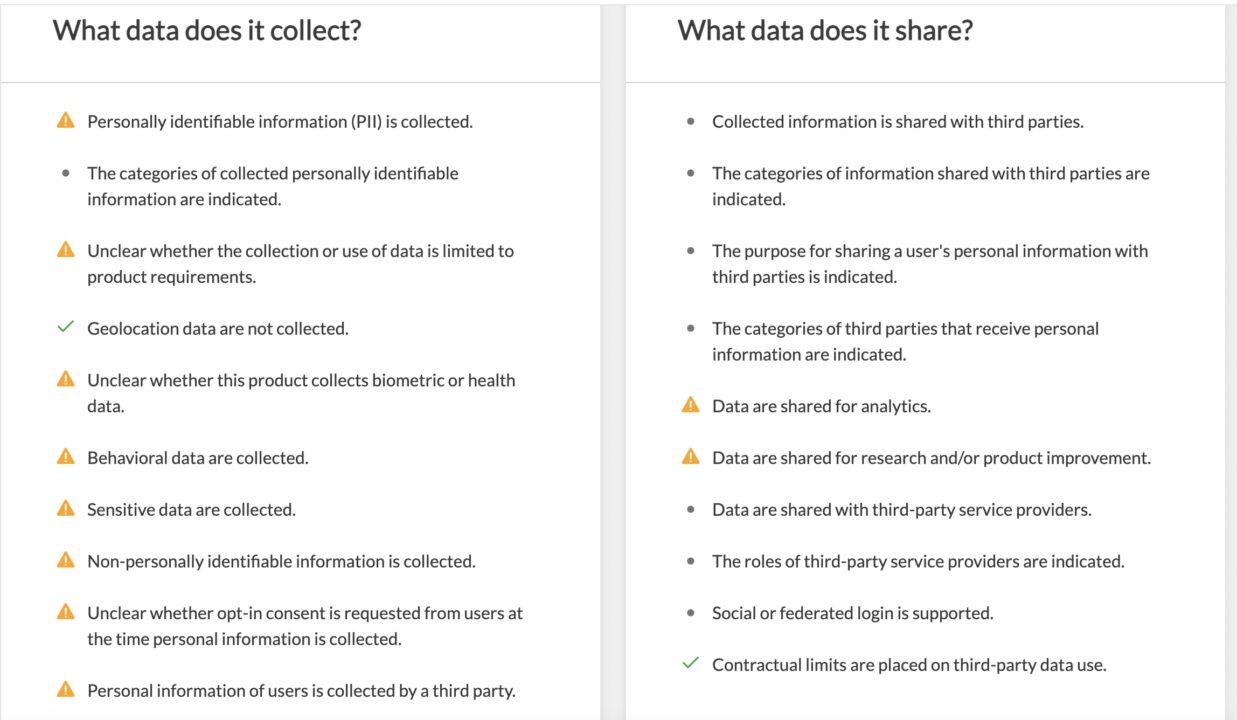
The terms state that i-Ready collects student information directly from school districts, including: student name, birth date, gender, ethnicity or race, school enrollment, grade level, teacher, English language learner status, and eligibility for free- or reduced-price lunch. User behavioral and usage data is also collected. The service has taken the Student Privacy Pledge, and the terms disclose student information is not sold, behaviorally targeted advertising is not used, and collected information is used only for authorized purposes, with student data only used for education-related purposes.The terms also state the service may share personal information with third-party service providers to support their business, and also share de-identified data for research purposes, but they will not share identifiable student data with third parties. In addition, the terms say no student data collected in connection with i-Ready is shared with third parties for any advertising, marketing, or tracking purposes.
What information is collected?
•student first and last name;
•date of birth;
•gender;
•ethnicity or race;
•student identification number;
•student school or class enrollment;
•student grade level;
•teacher name;
•English language learner status, and;
•eligibility for free- or reduced-price lunch.
Who accesses this information?
•Curriculum Associates may share data with service providers who assist in delivering their educational services
•Curriculum Associates shares student information with third parties only under specific circumstances and with proper authorization.
Where does the information go?
The information is stored on secure servers, and is shared only with authorized parties, such as service providers who assist in delivering their educational services.
Do you have any idea where your child’s personal information ends up? They don’t share this sensitive data, EXCEPT with their service providers. They share student information with third parties under specific circumstances with proper authorization. Essentially you have no idea where your child’s personal information ends up. Why do they even need to know all of this information on your child to deliver a product?
.
Like many online vendors, your child’s personal information is gathered, and shared. Parents think that just because an online vendor has a privacy policy, their child’s data is not sold or shared. That is a mistake.
Up to 70% Off This Weekend Only! – My Patriot Supply
