

The Good News: The Case for Redemption
If you read the first two pieces in this series, you, like me, are starting to feel like the deck is stacked against you. Not only are we irrevocably bad, but even if we think we’re good, we’re bad. Who the hell wants to hear this kind of message, let alone give it?
Luckily the same God who issues the sternest of warnings about our eternal fate is not the cold and distant bean counter waiting for the day He gets to make us pay for crossing Him that many of us believe Him to be. Not at all, in fact, quite the opposite.

Included among His attributes of justice and omniscience and wrath are also mercy, grace and love. We can ascertain to this because as we, made in the same likeness, know what it means to be just or wrathful, so also we know what it means to be merciful and gracious and loving. However different from God, who doesn’t need us to be merciful or gracious to Him, we understand it because we all at times have wanted mercy or grace shown to us in our moments of weakness. “Please officer I won’t do it again” or “Let me make it up to you” or “I didn’t mean to” or the like have all passed our lips when time and chance or the passions of our lusts and desires didn’t go our way.
So on the greatest stage and the most important day that awaits us our Just Judge also sits there with the same recoiling at the punishment He must inflict if we stand guilty in His courtroom. Even He says He takes no pleasure in the destruction of the wicked. Therein is the dilemma – how can God be perfectly just yet also perfectly merciful and gracious?
There is only one way.
In order for His justice to be met the penalty for the crimes committed against His eternal court must be paid in full. They only payments acceptable are those that meet the standard, which is eternal death apart from God. Somebody is going to pay the fine or God is not perfectly just. If God is not perfectly just then He is no longer God. If only there were someone who could pay the fine by dying on our behalf and that death could equal an eternal death.
Enter Jesus.

The otherwise obscure carpenter from Bronze Age Palestine has somehow become the most popular figure in the history of mankind. A carpenter, and a Jewish one at that, who lived at a time of relative illiteracy and Roman hegemony among people given to sorcery, magic and debauchery. A man described as having “no beauty or majesty to attract us to Him, nothing in His appearance that we should desire Him.”
To the People of the Book, the Jews, they awaited their messiah, whom they mistakenly believed would arrive from among them a conquering king who would overthrow the Romans and usher in a time of Israel’s redemption to take their place among the world as God’s elect chosen people, repository of His special love for them who He called His bride. Confused by the descriptions of Him as a king and mighty ruler they ignored the prophets who said the messiah, God’s servant, would be made to suffer and die at the hands of evil men. The religious Jewish leaders, the Pharisees and Sadducees, believed the evil men to be anyone but them, so it must be their oppressors the Romans – gentiles who could not call themselves God’s chosen people.

However this carpenter, who it’s said was born of a virgin by God’s Holy Spirit, was winning over the people not with dramatic plans for conquest and Israel’s redemption, but with wisdom and compassion focused on redeeming the entire world, that is, all that He created. His knowledge of God’s scriptures was that of one who understood them implicitly, as if He wrote them. His affect on people included miracles of healing the blind, lame and deaf and producing enough food from mere scraps to feed thousands. Despite his lowly stature among them He revealed again and again to have God-like power, going so far as to call the God they worshipped “His Father”, with whom He was essentially One.
Rather than be moved to abject humility and grief over their sorry state as sinners the religious leaders, overcome with blind hatred that this messiah was not what they wanted, despite His wisdom and miracles, they plotted to kill him, and even bribed one of His disciples to betray Him to them.
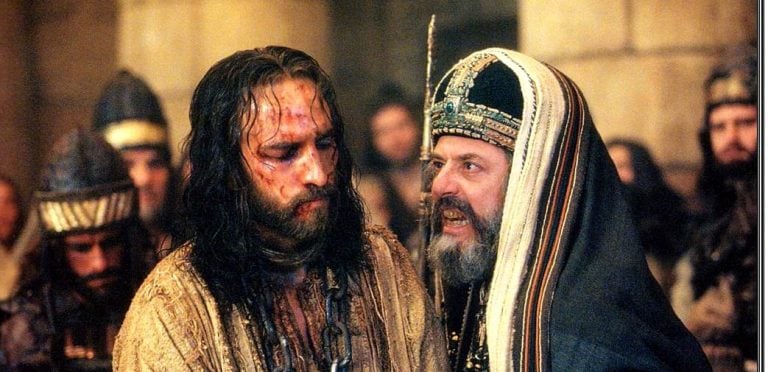
As the drama unfolded they set up a mock religious court whereby they pronounced Him guilty of blasphemy, a capitol crime, then sent Him off to be tried by the Romans who punished such criminals with the most humiliating death imaginable, crucifixion. At every step both the “good” Jewish religious leaders and bad gentile Romans brought God the Son, Jesus, into their courtroom and convicted Him of crimes He didn’t commit. The Roman in command, Pontius Pilate, even saying as much to the crowd of Jews gathered that Jesus was innocent. Yet the religious leaders, practiced at the art of manipulation, stirred the angry mob gathered to witness the great trial to call for His death anyway.
And so they, Jew and gentile both, conspired and killed God.
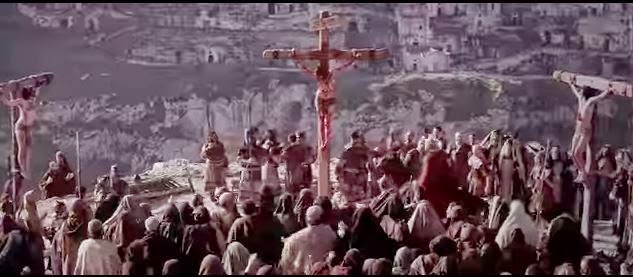
It would seem in so doing this itinerant preacher from Galilee would become a footnote at best in human history. However the story that sprang forth was not the one they wished to tell, because it was God’s story, as all stories are, and because it’s God’s it is the greatest story ever told. Because in that moment the One who they killed for claiming to be God, was in fact the eternal God, there to pay the penalty for our crimes and offer us a way of being freed from the punishment that awaits us all on the day of judgment.
This is why it is called “the good news”.
So when we stand in God’s courtroom we can have assurance that our fine has been paid, in full, by the only one who could do it – Jesus – God the Son and Savior of the world for those who put their faith in His life, death and resurrection in place of their own.

Happy Easter.