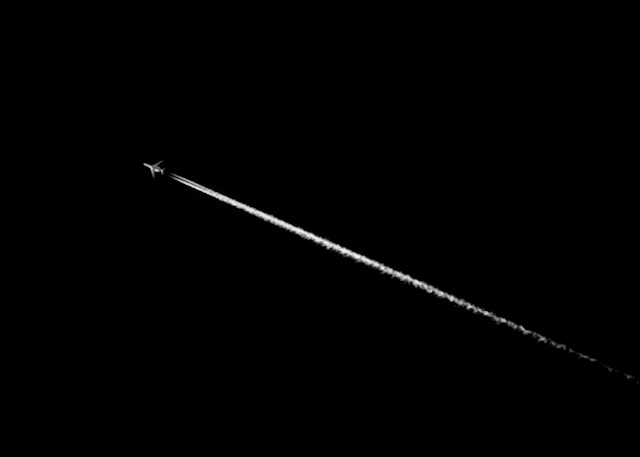
The truth is, we ARE being poisoned…in several different ways. We can all see the man-made clouds line up in the sky, even at night now. Airplanes are leaving an increased number of cloud formations. They linger and eventually turn the blue sky, a milky white or gray color. WHY?
There are many reasons our skies are changing, some innocent, some not so innocent. What we see coming from most high-altitude planes is, for the most part, pollution and water vapor. It’s pretty much just soot and water, which, together, turn into ice crystals at high altitudes. The ice crystals become visible “clouds” as the plane travels and lines them up. They aren’t “ok” as some might suggest.
Jet airplanes emit billions of tiny soot particles that allow precipitation droplets to form around them. The plane’s exhaust emits water vapor as a byproduct. The soot and precipitation form together to create man-made lines of ice “clouds”. These contrails form more easily above 26,000 feet and in certain weather conditions. Unfortunately, it’s in weather conditions that are found in highly populated areas of the United States.
Contrail clouds are accused of playing a role in global warming, global dimming, and global soot distribution, aka “pollution”. The man-made clouds aren’t innocent, and they aren’t going away. The air travel industry has plans to expand flights around the world without any real plan to address the ever-increasing contrail issue.
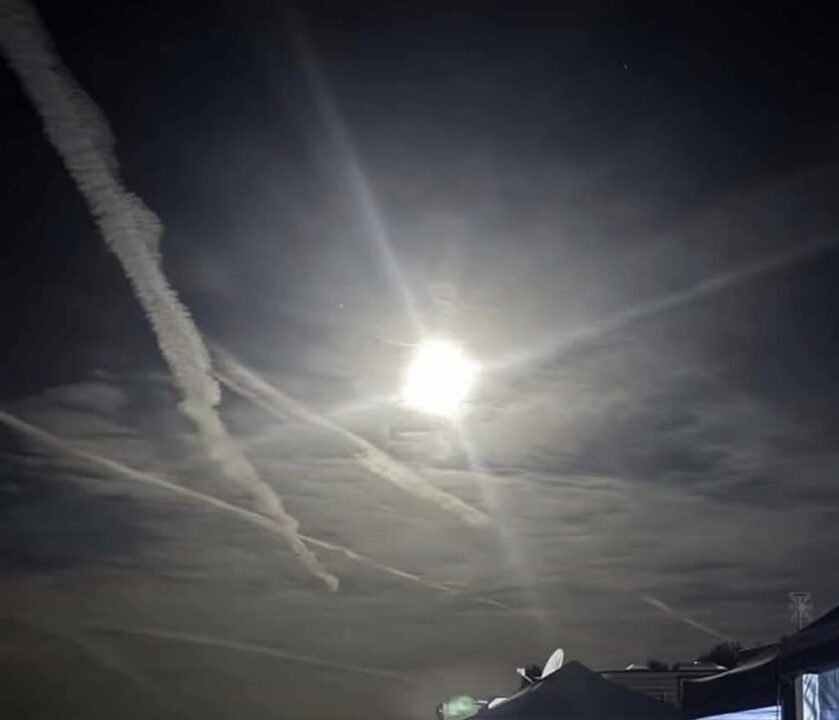
The trapping problem
Airplane-produced clouds can linger for hours, spreading into cirrus-like formations that trap outgoing heat while reflecting less sunlight back to space. Contrails capture the heat in the atmosphere, contributing to “radiative forcing”, a measure of climate impact. These man-made “clouds” legitimately increase global warming.
The most recent area of concerning research involves Sunlight Reflection Methods. This is a Stratospheric Aerosol Injection, where tiny particles are released into the stratosphere to reflect sunlight before it reaches the Earth. The intention is to cool the Earth. There are concerns about poisoning AND reflecting sunlight away from people, plants, and solar panels.
How we feel
What is the emotional toll of what we see? How are people FEELING about the clouds, the milky skies and its visual impact? This problem might be the most significant part of having man-made clouds in our skies. WE CAN SEE THEM! We can see our cheerful blue skies go gray. People are known to get depressed by a decrease in sunlight. One widespread consequence of decreased sunlight is Seasonal Affective Disorder. A decrease in light during darker seasons leads those suffering to feel an increase in depressive symptoms. Will decreasing the intensity of the light through inadvertent or purposeful means affect the quality of the light we are receiving? Will this affect people‘s health? Will seeing the lined-up clouds upset people so much that they obsess about it? We all know a few people who notice contrail formation more than others. What impact does that really have on us emotionally?
How will reflecting light away from people affect their mental health? We may see an increase in vitamin D deficiencies, and Vitamin D plays a crucial role in people’s mood and overall health. The increase in gray skies will leave many feeling hopeless and depressed. How do YOU feel when you see the skies lined up with artificially produced clouds? How do you feel when you see a man-made milky white sky from the dissipation of those clouds? Many can’t dismiss it and become angry or depressed. How many of us are being significantly affected by this?
Who is to blame for what we see?
Jet air traffic is the obvious culprit. Private jets were found to be a serious offender of contrail formation. You would think that modern technology would have improved the contrail problem, but a 2024 study found modern jets actually produce longer-lived contrails than older jets. We are clearly seeing more rather than less. Ask anyone over 40, and they are likely to proclaim how much clearer the skies used to be.
Increased jet traffic for relatively short trips has significantly contributed to the clouding of our skies. Vacationing and attending political events are common reasons for private jet air travel. 23,000 private jets are registered worldwide. The United States is the largest market. Private jet flights reached a record 5.5 million in 2022, up 10% from 2021 and 14% above 2019 pre-pandemic levels. In 2024, private flying surpassed 2019 levels by 32.1%. About 47.4% of private jet flights (2019-2023) were traveling under 310 miles, and 18.9% were under 124 miles, made often for convenience or to avoid commercial travel. Many are “empty leg” flights for return flights or repositioning. Globally, only about 240,000 people use private jets regularly. High net worth individuals drive demand. 60% of private jet flights are recorded as “for business,” with leisure flights peaking during summer months.
U.S. private jet activity has grown year over yea,r emitting ~15.6 million tons of CO₂ in 2023, 10 to 14 times more per passenger than commercial flights. Prior to the lockdowns of COVID, private jet air travel was increasing about 5% per year. Private jet travel then increased in 2020-2021 a full 30-40% globally due to a surge of passengers wanting and needing to avoid commercial flights. From 2021 to 2022, private jet travel grew another 10% globally. From 2022-2023, another 5-7% growth, and in 2024, another 6-8% global growth. These numbers are combining to turn our skies milky white. It really IS worse than when you were a kid. Decreasing unnecessary private jet travel would help curb contrail congestion. There are currently no regulations limiting private jet travel due to contrail formation.
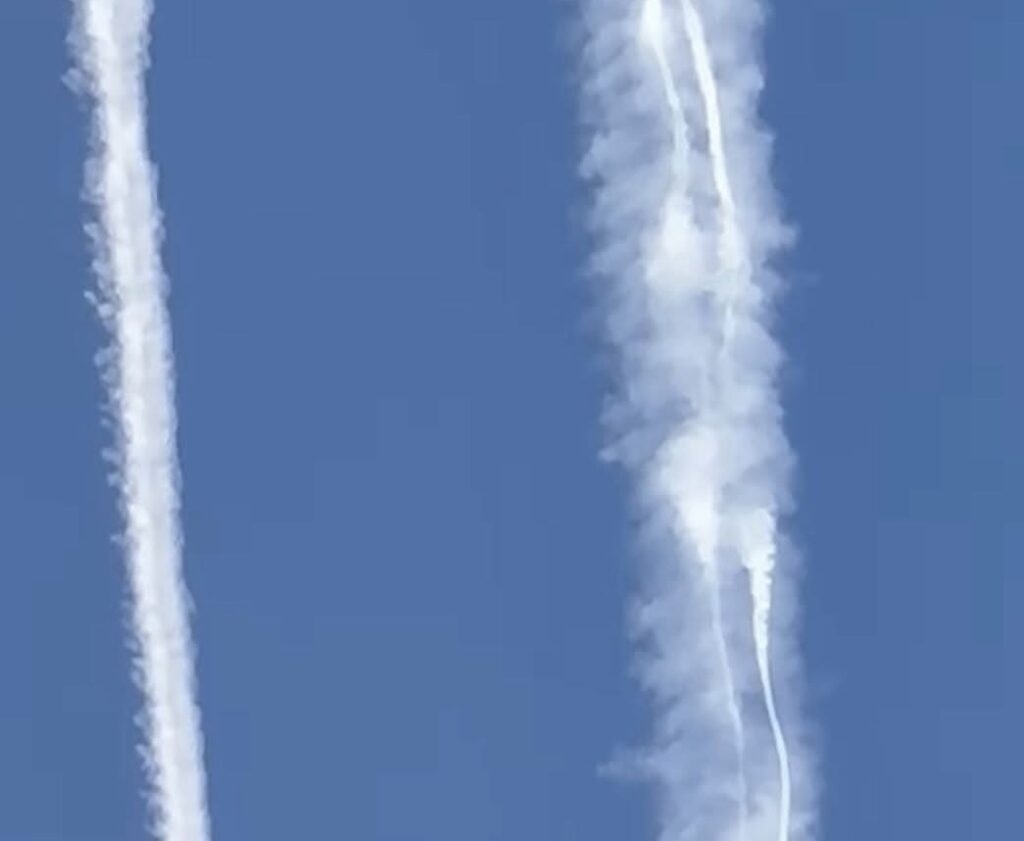
What exactly is IN jet aircraft emissions?
1. Carbon Dioxide (CO₂), which contributes about 70% of total emissions. Aviation accounts for about 2–2.5% of global CO₂ emissions (~900 million metric tons annually in 2023). CO₂ has a long atmospheric lifetime (~100 years), driving aviation’s ~3.5% share of global radiative forcing (including non-CO₂ effects). Contrails and cirrus clouds amplify this, with a warming effect potentially 1–2 times that of CO₂ alone.
2. Water Vapor (H₂O). Hydrogen in jet fuel combines with oxygen during combustion, forming water vapor. Its contribution is about 30% of emissions. At altitudes over 26,000 feet, water vapor will often form contrails, which can ultimately develop into cirrus clouds. These clouds trap heat, contributing to radiative forcing, which combines with the warming from CO₂ and exacerbates the warming problem.
3. Nitrogen Oxides (NOₓ) contribute about 1–2% of emissions by weight. NOₓ contributes to ozone formation in the troposphere (creating a warming effect) and ozone depletion in the stratosphere (where jets cruise). It also forms secondary aerosols, impacting air quality and health near airports.
4. Carbon Monoxide (CO) is released from the incomplete combustion of fuel, especially during low-thrust operations like idling or taxiing. It contributes a minimal amount of pollutants but it can affect air quality near airports. It has a more minor climate impact than the other emissions previously discussed.
5. Unburned Hydrocarbons (UHC). Incomplete combustion releases trace amounts of unburned fuel or partially combusted hydrocarbons, which contribute to ground-level air pollution and volatile organic compounds (VOCs), affecting health near airports.
6. Sulfur Oxides (SOₓ) form from sulfur impurities in jet fuel, oxidizing during combustion, forming (SO₂) and sulfate aerosols. Sulfate aerosols can act as cloud condensation nuclei, increasing contrail formation, radiative forcing, and acid rain. It decreases air quality near airports.
7. Particulate Matter (PM). Combustion produces soot (black carbon) and non-volatile particulates, while volatile particulate matter forms from sulfate and organic aerosols once emitted. This contributes a small but significant amount of pollution to the air. Particle sizes range from nanometers to micrometers. This particulate matter enhances contrail and cirrus cloud formation, amplifying warming and posing health risks (e.g., respiratory issues) near airports.
8. Trace Gases and Other Pollutants, like minor combustion byproducts, including formaldehyde, benzene, and other VOCs, are also released. This can affect local air quality near airports, but is reported to have minimal climate impact in comparison to the previously mentioned impacts.
We Should Be Tracking the Evidence
A satellite-based monitoring system could track contrail formation in real time, informing flight planning and policy. This data could feed into a global contrail management system to help curb the impact of contrails and pollution.
We should be globally adjusting flight paths and schedules to fly in ideal atmospheric conditions based on the most current weather data. Contrails form in specific atmospheric conditions, so avoiding these regions would significantly reduce their occurrence. We could simply be flying 2,000–4,000 feet lower in humid regions to prevent contrail formation. NASA and the German Aerospace Center (DLR) conducted trials in 2018, showing that small altitude adjustments cut contrail formation by up to 50%.
We should be scheduling fewer night flights. They exacerbate the problem because of the “nighttime trapping effect”. Also, jet airliners tend to fly higher at night, getting into that zone of contrail formation. Avoiding night flights at that altitude could decrease the problem.
We should create AI-driven flight planning tools to predict and avoid humid air masses conducive to contrails. Effective contrail mitigation will require global coordination, as aviation crosses borders and contrails form in international airspace.
Cleaner fuels would help decrease the soot levels that create man-made clouds. Making technological advancements in engines and airframes might also reduce contrail formation by physically altering their exhaust systems. Technological advances over the past few years have not proven helpful to contrail formation, though. Private jets are serious offenders of contrail formation. Instead of the problem decreasing with awareness, the problem has increased as shown in a recent study.
Minimizing and optimizing private jet travel would be the most effective immediate solution to this problem. Flight planning, cleaner fuels, advanced engines, and robust policies could also decrease the emissions we see. If we choose to act, we could noticeably curb the proliferation of contrails and pollution.
Redacted podcast on the topic of Chemtrails
What about Climate Engineering and Chemtrails?
Attempting to affect the weather is not a new thing. Vietnam War tactics included attempts at weather interference and the toxic dispersion of poisons from airplanes (chemtrails). Currently, in drought ridden areas around the world, scientists are actively creating precipitation, sometimes with devastating results. The flooding in 2024 in Dubai is a perfect example. Read more about that story here.
Many states do not admit to any weather modification programs, but some do. Some feel they have legitimate reasons to try. Here is a public list of locations.
Because of little to no oversight, the number of actual projects could be considerably higher. Unknown weather modification programs and other chemical dispersion programs (chemtrails) are likely happening in greater numbers, but we aren’t tracking them. The problem could be considerably worse than we know. What if aluminum, barium, strontium, or manganese really were being released into our atmosphere? These aren’t innocent additives. The aluminum content in rainfall should be almost zero. Geoengineeringwatch.org is an organization that has made attempts to test cloud ingredients by aircraft. Their initial samples suggest unwanted and unexpected chemicals in the samples taken. We know from the release of COVID-19 that bio labs around the world are creating dangerous pathogens. It’s possible that things like pathogenic mold or unwanted chemicals are being released into the stratosphere by nefarious entities. What we see might just be man-made clouds (which aren’t good), but they might be including something even more toxic. I don’t think we can really be sure until extensive chemical testing and satellite tracking is done.
Here is a geoengineering interactive map to search for KNOWN projects around the country.
In 2022, British researchers launched a geoengineering experiment: releasing sulfur into the stratosphere under a project named SATAN (Stratospheric Aerosol Transport and Nucleation). And more recently, there has been an introduction to “Sunlight Reflection Methods”, which use atmospheric aerosols, like sulfur to make an attempt at cooling the Earth. It sounds like creating a “nuclear winter”. This is a highly criticized project that could have devastating effects.
HAARP (the High Frequency Active Auroral Research Program) studies the ionosphere (above the clouds) using radio waves to understand auroral and atmospheric phenomenon, but claims it does not have the ability or interest to control the weather. HAARP, and other installations like it around the world, admit they are sending electromagnetic waves into the ionosphere above the clouds to excite charged particles to study plasma dynamics, radio wave propagation and auroral effects. What if this interference could affect world wide weather? What might be the impact of contrails, pollution, or other atmospheric chemicals on HAARP and it’s research?
Current Regulations
After a company called “Make Sunsets” began releasing helium filled balloons with sulfur dioxide in them, the Mexican government announced a ban on solar geoengineering experiments (January 2023), citing a lack of international agreements and a 2010 UN moratorium on large-scale geoengineering. They argued any unauthorized tests violated national sovereignty and posed risks to communities and the environment. The United States does not currently have a federal ban on solar geoengineering experiments like Mexico does. In contrast, the U.S. has no comprehensive national governance or outright prohibition on solar geoengineering. It may be happening as you suspect. No one is really looking.
The Weather Modification Act of 1976 requires companies to report weather modification activities. The act has been shown to be inadequate for assessing geoengineering risks, and its enforcement powers are limited. The Weather Modification Reporting Act requires only a one-page form to be submitted 10 days before (SRM) solar radiation management activities. The National Oceanic and Atmospheric Administration (NOAA), the organization that monitors compliance of The Weather Modification Reporting Act, has no approval authority, and violators face minimal fines. This has prompted numerous complaints about the potential of unknown widespread stratospheric chemical distribution. Some people are saying… “It’s MORE than contrails”. NOAA is currently researching only naturally occurring solar radiation and they do not track man made solar radiation from jet air traffic, leaving a gaping hole in the research of contrails and solar radiation management.
The military is a likely source of chemical dispersion with potential secret programs. We don’t have access to data despite having found patents that outline chemical aerosol injection inventions. The contrail/chemtrail/weather modification impact from the U.S. military is unknown yet potentially a significant contributor.
See the history of patents in this informative article.
What if the geo engineering and CO₂ reduction efforts backfire, and instead create an increase in climate change, or other unintended results? Might we expect an increase in destructive weather patterns triggered by these interventions? Will we become depressed by our skies? Will we watch evildoers take advantage of the lack of regulatory oversight in our skies? Will it become better for us, or worse?
With air travel increasing, these toxins and visual pollutants in our skies will continue to increase, heating the Earth, reflecting sun out, and keeping CO₂ in. We need to act immediately to start clearing our skies and create a cleaner, cooler, more natural looking future.
Authors’ opinions are their own and may not represent those of Grok Media, LLC, GraniteGrok.com, its sponsors, readers, authors, or advertisers. Submit Op-Eds to steve@granitegrok.com