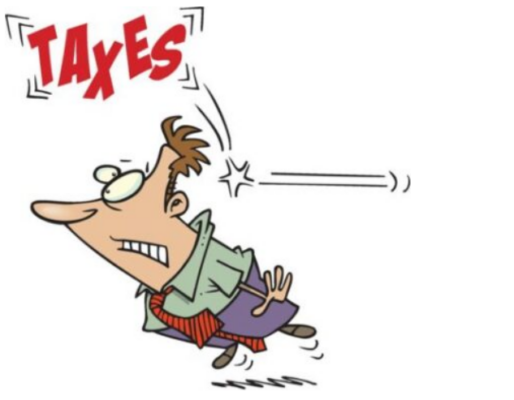
Bureaucracies don’t bloat themselves, so the more progressive locales across the increasingly fruitless plain like to spend other people’s money with such abandon that they are always looking for new things to tax, like the rain. It happens to be raining where I am, and as I write this. It is unlike what they’ve seen in the north country of New Hampshire and Vermont, and there’s no rain tax here, but it got me thinking. There are rain taxes (Dover, NH, tried to pass one this year), and wouldn’t that suck as Tropical Storm Deby heads north to add to the annual totals.
For those unfamiliar, it is a hard surface tax. The more roofs, driveways, or other surfaces redirecting water from being absorbed into the ground, the more tax you’ll pay. It is a popular scheme in places where the inability of its elected leaders to manage money without waste, fraud, and abuse coincides with the hard surface area available to be taxed. Equally confounding is their insistence that these surfaces are bad for the environment while demanding that we all pack ourselves into their urban ghettoes regardless of how much surface area needs to be hard to that.
It all got me thinking: the steady downpour, a side conversation about rain barrels (they want to tax that, too), and the burdens placed on everyone by people who have little disregard for frugality, limited government, or making ends meet. Instead of making elected officials pay a tax on their income, why not a percentage of the tax burden they place on the people they are supposed to represent?
Everyone in government—from the people who pass bills to the paper-pushers, union teachers, and the rest of them—anyone whose income used to belong to a taxpayer could be included in this class. Whatever the total tax burden is on the people, they pay a percentage of that as their tax.
I know. They would set it as low as possible regardless of the burden placed on you, and in truth, it was a passing fanciful notion with no practical function, but it would change the dynamic. What if they couldn’t change the percentage, only the people in office who decided the budget upon which it was based? Teachers unions would be pushing their membership to vote for … Republicans. And not just any elephant in the room. They’d have to be frugal tax fighters rooting out waste in every other part of the bureaucracy, which makes me smile. Public schools waste a lot of money on crap that has nothing to do with reading, writing, or ‘arithmetic.
Of course, since we’ve tossed reality to the winds of whimsy, you could adjust this in any way you choose. However, limit the taking to each respective budget. Rate factors differently for budget writers and offer discounts to legislators who oppose large spending packages. It’s a dream sequence; have fun with it, then remember why how we got here. As Dr. Paul reminded us (a few hours ago on these pages), the national debt is 35 trillion, and no one is doing anything to stop the advance or roll it back. It is pretend money that doesn’t exist, much of it spent to appease constituencies or line pockets of friends and family (donors, etc.) at the expense of future generations who never had a voice in how their yet-to-be-earned income would be spent.
Maybe we should tax the legislative and Executive Branches a percentage of the national debt until they do something about it. Not that they’d ever vote for it, but wouldn’t it be grand?