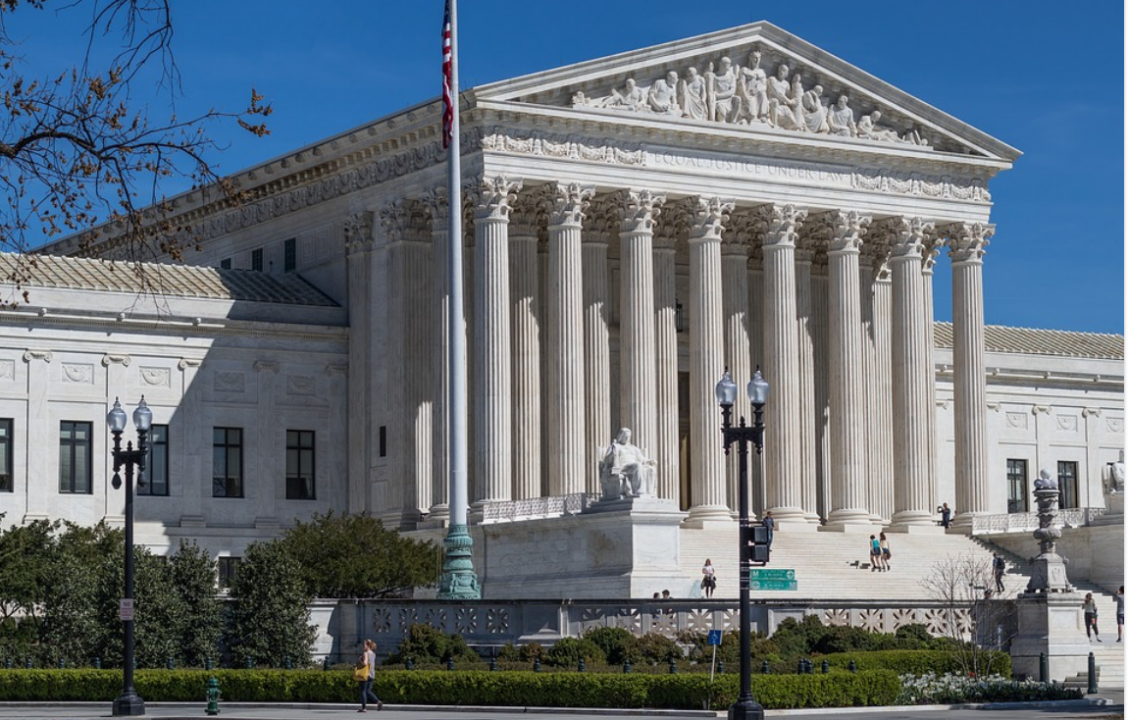
In an increasingly rare 9-0 decision, the US Supreme Court has given the Administrative Statr a little pat on the bottoms of the Federal Trade Commission and Securities and Exchange Commission, though the decision has broader implications.
In its new red tape-cutting decision that is a defeat for the Biden administration, the Supreme Court took steps to rein in the so-called administrative state and reaffirm the separation of powers doctrine that prevents any specific branch of the government from exercising the core functions of another. The idea behind the doctrine is to discourage the concentration of power and make sure there are checks and balances. …
The litigants challenging the agencies argued they should be able to contest the way the tribunals are constituted in federal courts without first having to launch a lengthy, expensive challenge within the administrative system.
At issue were two cases in which the objects of both agencies’ “affections” argued that bureaucratic “in-house adjudications carried out by agencies are unfair because the tribunals, unlike regular courts, lack fixed evidentiary rules, allowing the agencies to function as prosecutor, judge, and jury. They argue that the tribunals are unconstitutional because they are not politically accountable.”
The unanimous opinion was written by Justice Kagen, who
“noted that both Axon and Cochran [the objects of both enforcement actions] challenged the constitutional authority of federal agencies, claiming that ALJs are “insufficiently accountable to the President, in violation of separation-of-powers principles.”
The challenges are “fundamental, even existential,” as the litigants argue that “the agencies, as currently structured, are unconstitutional in much of their work.” The function of the court here is not to resolve those challenges but “to decide where they may be heard,” the justice wrote.
The result is that victims of agency action have the right to bring their complaints to federal courts to escape “extensive and expensive investigatory proceedings,… with no end in sight.” Enforcement actions that trap you in an endless bureaucratic loop until you lose simply because you no longer have the resources to fight. A well-worn and highly developed deep-state tactic.
It should send a message to every agency that – I feel certain – engages in similar skullduggery, but I can’t say if it will have the far-reaching implications it should. Other branches of government have the power to tell SCOTUS to F- off, but it is a practice never exercised until it interferes with their business as usual. And I do not expect that the Biden administration will exercise its executive power at the request of the courts to restrain agencies meant to answer to it – especially if they happen to agree with the practice or the action under scrutiny.
In other words, this is probably not a change we can believe in.