
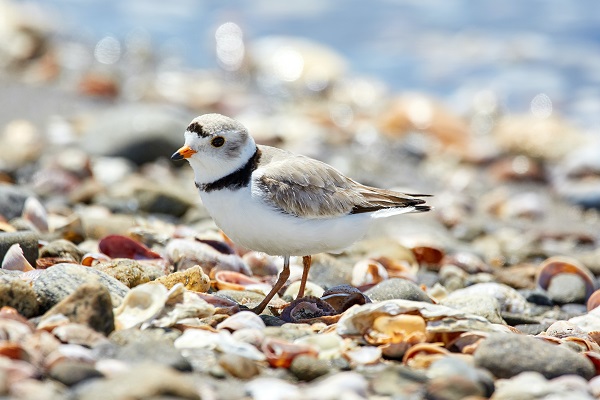
The Maine Department of Inland Fisheries and Wildlife has been “monitoring” nesting pairs of sea birds, particularly the Piping Plover, for years. That must mean that Global Warming is affecting these cute little birds. And they were right.
- 2018: 68 nesting pairs
- 2019: 89 nesting pairs – 175 fledglings
- 2020: 98 nesting pairs – 199 fledglings
- 2021: 125 nesting pairs – 213 fledglings
- 2022: 140 nesting pairs – 221 fledglings
Climate change™ in Maine has been very good to the Piping Plover. But wait, perhaps you are to blame (for what is unclear)?
“Their habitat, sandy areas near water, has been heavily developed and heavily used by beachgoers over the years, which has been a component of their population decline. Additionally, intense hurricanes are repeatedly impacting their wintering areas.
I took a quick look, and there is no trend in hurricanes. The last 60 years have seen very few storms reach landfall in the US, but the past two decades had had just as many landfall hurricanes as in the 1850s when there was no man-made abundance of CO2 (the basis for all the modern fearmongering).
There have also been fewer intense storms, so I’m not clear how “intense” hurricanes are “repeatedly” impacting wintering areas. Those areas are North Caroling south into Florida. If that were indeed the case, then the last three decades should have improved the wintering conditions for the plovers.
In other words, they said “Global Warming” would impact Piping Plovers, and it has. Despite annual exhortations about the hottest months or years, the little critters have bounced back and thrived.
Sadly, the Warmists don’t get credit for a correct prediction because they meant things would get worse.
They didn’t.
Wrong again.
HT | Q106.5 FM