

I just can’t get it out of my head, the sound of President* Biden saying
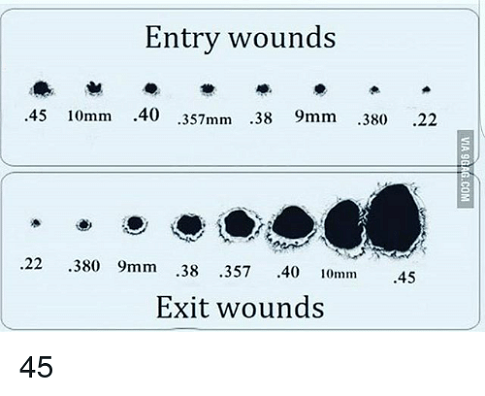
A 22 caliber bullet will lodge in a lung, and we can probably get it out, may be able to get it, and save a life. A 9mm bullet blows the lung out of the body.
And the reason I can’t get it out of my head is that this guy is the Commander in Chief of the United States Military.
Think about that for a moment. Our military forces are under the control of a guy who thinks that a ‘high caliber’ 9mm bullet fired from a handgun can ‘blow the lung out of the body’.
Seriously? It’s like having the Amish in charge of the DMV.
Anyway, it made me wonder: What percentage of major gun control legislation has been signed into law by presidents who never served in the military, who probably knew less than nothing¹ about weapons in general, and firearms in particular, and who were therefore particularly susceptible to the kind of dreamy misinformation that is routinely spouted during policy debates involving guns?
It turns out that the answer is 67 percent: The National Firearms Act of 1934 and the Federal Firearms Act of 1938 were signed into law by Franklin Roosevelt; the Omnibus Crime Control and Safe Streets Act of 1968 and the Gun Control Act of 1968 were signed into law by Richard Nixon (who served in the Navy during WWII); the Brady Handgun Violence Prevention Act of 1993 and the Federal Assault Weapons Ban of 1994 were signed into law by Bill Clinton.
It would be interesting to do a similar analysis on what percentage of military operations have been launched by presidents who never served in the military.
While I’ve long understood the importance of having a civilian in charge of the military, I’m only now starting to appreciate the value of that civilian having some kind of military experience. Even if we can’t require it, perhaps we should start demanding it.
Along the same lines, we should probably stop asking political candidates to debate each other, which just encourages them to propose ‘solutions’ that they don’t understand, to ‘problems’ that may not even be problems.
We would do better, I think, to ask them basic questions like: How does a semi-automatic firearm work? What causes inflation? How can you tell if a scientific study is valid? What is the difference between a man and a woman? Of the enumerated powers in Article 1, Section 8 of the Constitution, which authorizes the creation of Social Security? And so on.
As they say, ignorance is bliss. But it’s a terrible basis for formulating public policy.
¹ As Mark Twain said: ‘What gets us into trouble isn’t what we don’t know. It’s what we know for sure that just ain’t so.’
