As school administrators grapple with preparing budgets under the new tax caps supported by voters in the last election, the question on everyone’s mind is: What will be cut, reduced, or delayed?
But I’m also seeing something troubling at school board meetings. Rather than accepting the voters’ message and finding ways to work within the new financial constraints, some administrators appear to be preparing to challenge the very people who fund their schools. Some are already speaking with school personnel, seemingly preparing them for a fight with the taxpayers who ultimately pay their salaries.
And what are the proposed targets? Programs for children, teachers, and paraprofessionals. Notice what seems to be missing from these early discussions: meaningful reductions in administrative spending and bloated budgets.
While some homeowners are genuinely worried about whether they can afford to keep their homes, certain school administrators seem more interested in making taxpayers feel the consequences of their vote. Are we really going to punish children and classroom staff because parents had the audacity to expect a fiscally responsible school budget?
I was recently visiting a church mission group in Hampton, where we discussed volunteer opportunities. During that conversation, I was reminded that donated groceries are needed by people in our own communities. Some are living out of their cars and relying on this assistance to get by. Others depend on free, prepared meals offered throughout the week.
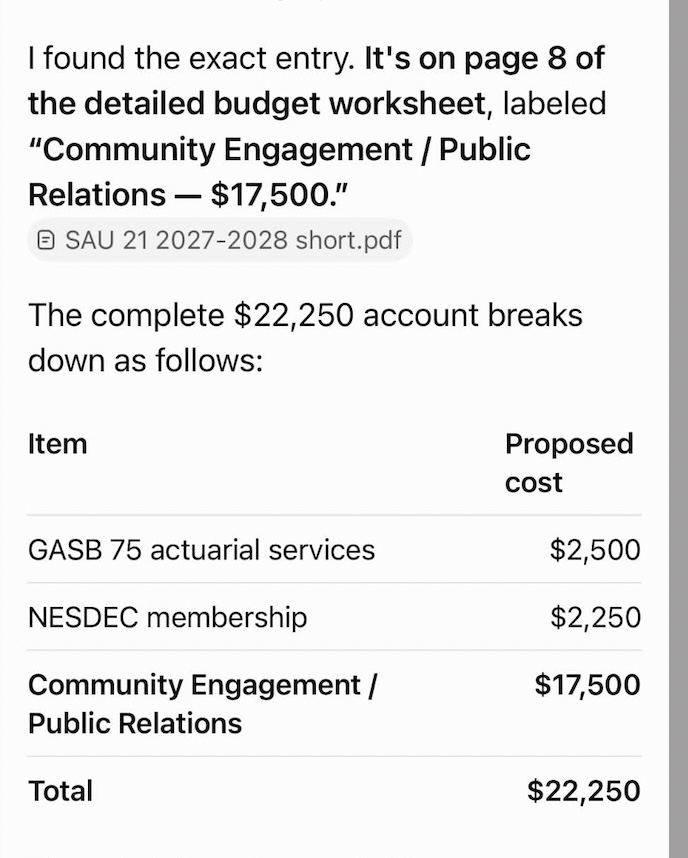
At the same time, a parent in Seabrook recently questioned a $17,000 budget item for public relations. She was astonished that the district would consider adding $17,000 for a PR firm. This is a community where some families are struggling to put food on the table and where taxpayers are being asked to shoulder increasingly unaffordable property taxes.
There is a disconnect here, and it is becoming impossible to ignore.
Too many people running our schools have lost touch with the financial realities facing the families in their communities. Much like politicians who suddenly seem to be waking up to the fact that people are struggling to afford basic necessities, some school superintendents—earning more than our state’s governor—appear to have forgotten who they work for: the taxpayers and families they are supposed to serve.
Here is my advice to voters: If your school administrators immediately target children, teachers, and paraprofessionals while refusing to seriously examine excessive administrative salaries, unnecessary positions, and discretionary spending, pay attention. Their priorities are being made very clear.
In corporate America, when an organization faces economic downturns, it doesn’t automatically start by eliminating the people who do the essential work. UPS doesn’t begin by firing the drivers who deliver packages to your door. Organizations look at management, overhead, and administrative costs. Our school districts should be willing to do the same.
Voters spoke through the democratic process. They sent a clear message: They can no longer afford escalating property taxes driven, in part, by spending they believe is excessive and unsustainable.
The question now is whether school administrators and school boards are willing to listen.
Will they do the difficult work of examining their own budgets, questioning administrative overhead, and finding responsible savings before taking resources away from classrooms?
Or will they continue to protect the status quo while asking children, teachers, and taxpayers to pay the price?
If they refuse to listen to the people they serve, voters have another opportunity to make their voices heard.
And perhaps the next budget question shouldn’t be what we need to cut from our classrooms, but who we need to replace in the administration and on the school board.