NH Residents Have Some Important Questions to Ask.
In this video, a Timberlane school district resident explains the growing frustration many homeowners feel about school spending, administrative salaries, and the lack of meaningful financial oversight.
New Hampshire taxpayers deserve to know where their education dollars are going.
Consider these numbers:
The Timberlane superintendent earns $172,425 annually. The assistant superintendent earns $157,016. For comparison, New Hampshire’s governor has a listed salary of $153,108.
These are not small salaries, particularly when homeowners are struggling to keep up with escalating property taxes.
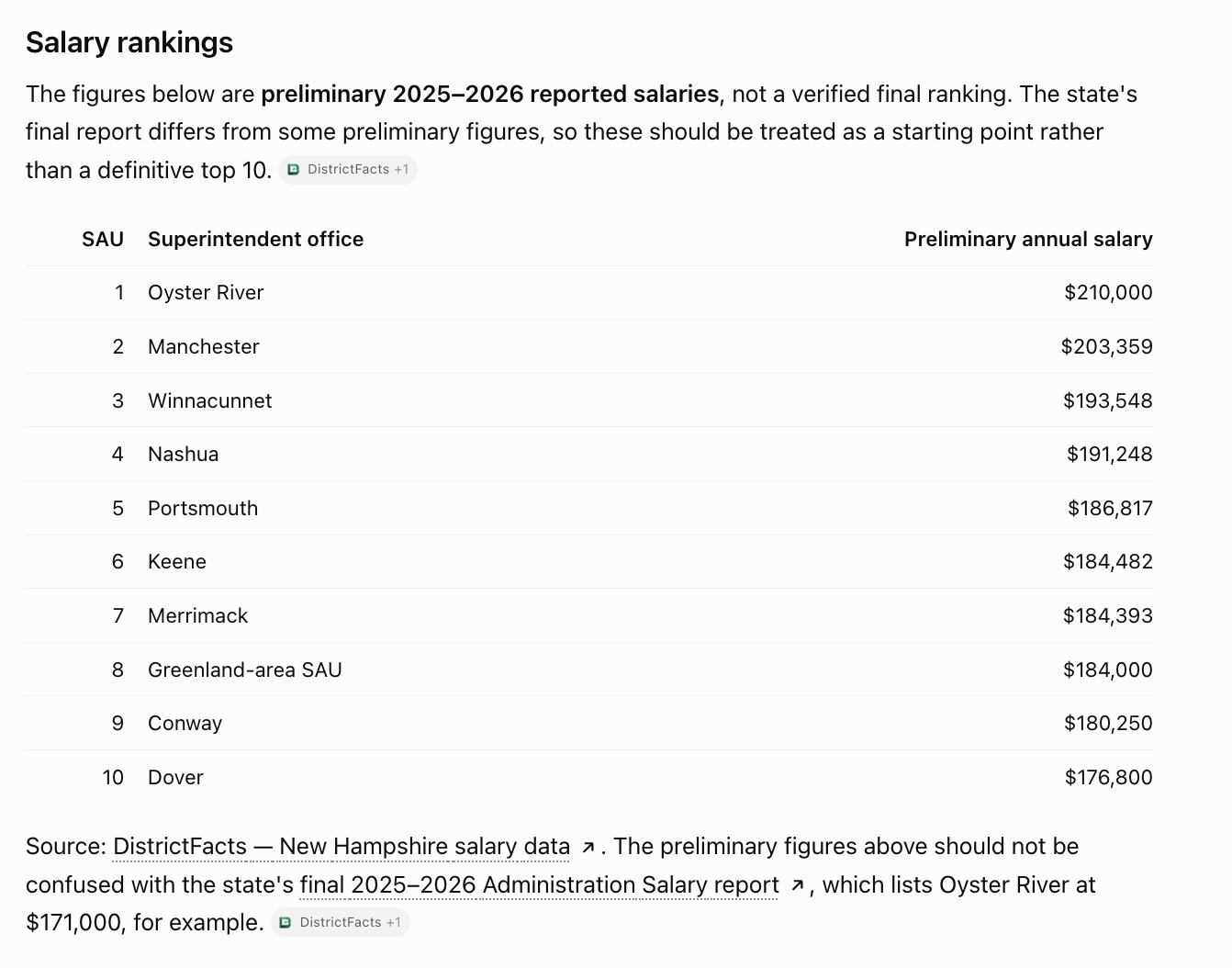
And this isn’t just about Timberlane. Across New Hampshire, superintendent salaries at numerous SAUs exceed the governor’s salary.
We also need to ask why school systems continue adding administrative positions, coordinators, and other layers of management. Who evaluates whether these positions are necessary? Who examines whether the additional spending actually improves educational outcomes?
And where are the watchdogs?
On Tuesday, November 3, voters will have an opportunity to weigh in on the new school tax-cap question.
If adopted by a community, the measure would limit annual school property-tax levy growth to inflation and new construction, while also placing a 6% limit on SAU central-office administrative spending, subject to the provisions of the law.
Will this solve every problem? Absolutely not.
A tax cap is only one part of the solution. The other part is local accountability.
School boards have tremendous influence over school budgets, administrator contracts, salaries, and spending priorities. Budget committees and voters also have important responsibilities.
We need residents who are willing to pay attention, ask difficult questions, examine the numbers, and hold elected officials accountable.
We need fiscally responsible people serving on school boards and budget committees.
These are among the most consequential local elected positions in New Hampshire, yet many residents couldn’t tell you who serves on their school board or budget committee.
Consider running for one of these positions. Attend meetings. Read the budgets. Ask questions. Support candidates who take financial oversight seriously.
We should demand excellent public schools and excellent educational opportunities for our children. But providing a quality education does not mean approving every administrative position, every salary increase, or every budget request without scrutiny.
We can demand academic excellence while also demanding fiscal responsibility.
Homeowners should not have to fear losing their homes because local government spending has become disconnected from what families can afford.
It’s time for taxpayers to have a meaningful voice in how their education dollars are spent.