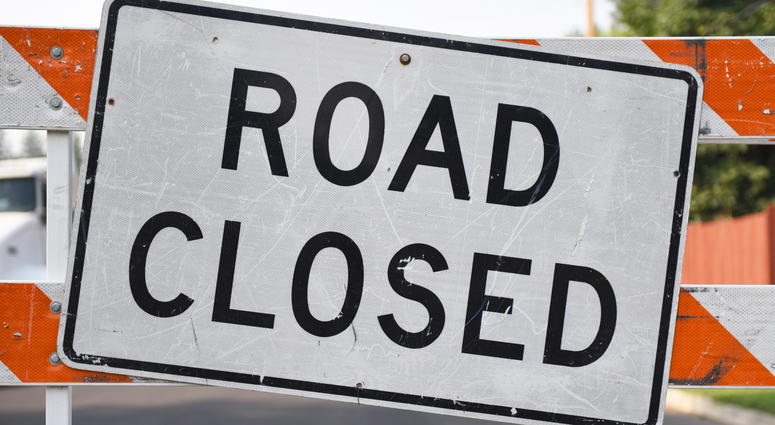
A WMUR headline story ran yesterday afternoon about the closure of the Queen City Bridge (QCB) in Manchester. Readers with no ties to Manchester might not care about the QCB because it’s “out of sight, out of mind,” so to speak, but I’ll explain why everyone should pay attention. No sound-minded person would want a bridge disaster, of course. I can think of a few in recent history that were far away from Manchester: Minneapolis in 2007 and Laval-Montreal in 2006. Those events were in the digital age, but students of Nashua history and those with paid Telegraph memberships are familiar with the 1924 fire that destroyed the previous Main Street Bridge, forcing all local traffic to the only other bridge. That was the Canal Street Bridge, which was destroyed in a 1927 flood and replaced with the one we have today.
Speaking of floods, 1927 isn’t the year that stands out most, post-Noah’s Ark. It was 1936. Though Nashua was and is a smaller city, only one bridge was lost in 1936: a pedestrian bridge from Sanders to St. Casimir, built in 1852 for mill employees.
Manchester was another story, and readers wanting to learn more about bridges destroyed by the 1936 flood are encouraged to talk to Mr. Clayton, a local subject matter expert. I met him on a walking tour of the Millyard area, and he was either the historical society president or the museum curator at the time. As a paddler, I thought, “Finally, someone who can tell me about those 2 pairs of bridge piers near Arms Park!” More on them in a moment.
Let’s consider the Manchester bridge crossings in 1936 and the ones there today, focusing on the ones designed for more than just pedestrians. Since there was no 93 in 1936, the most upstream crossing of the Merrimack River was the Amoskeag Bridge, which was destroyed in that flood and presumably replaced shortly after, though a quick internet search suggests the replacement’s replacement was built in 1970. Moving downstream, we have the Notre Dame Bridge (NDB) at the upstream end of Arms Park. It’s the replacement of the replacement of MacGregor Bridge, which was destroyed in the flood. Downstream of NDB is a pair of piers seen from the Arms Park river access area. One might argue that it wasn’t a bridge because it’s the remains of the infrastructure carrying a steam pipe to/from mill buildings on both sides of the river, another casualty of the 1936 flood.
A hundred feet or so downstream is another pair of piers in the middle of the river, all that remains of the casualty that fascinates me the most: the Foundry Street Bridge (FSB). FSB was built in the early 1880s, when the lenticular truss (“Pumpkin Seed” in slang) was popular. An extant example would be Aiken Street in Lowell. The FSB not only had that special appearance, but it was also a double-decker: the lower level was for pedestrians (mostly mill employees living in Little Canada), and the top was for cars and horses. It was destroyed and never replaced. Downstream from that is Granite Street, home to another destroyed bridge. According to an internet search, it was replaced in 1981.
Let’s look at the most downstream part of Manchester. There’s a rusty old truss bridge near Goff’s Falls that was built for a railroad, and that’s presumably the oldest extant Manchester bridge across the Merrimack River, though it was never for cars, at least to my knowledge. About a mile upstream from the railroad bridge is 101, which lists 1960 as the original construction date.
About 2 miles upstream of 101 and 1/2 mile downstream of Granite Street lies the Queen City Bridge. Built in 1923, it is the oldest extant bridge designed for regular traffic. That said, it’s the only Manchester survivor of the 1936 flood still in use today. Our largest city is certainly bigger and busier than it was 103 years ago, and considering the permanent loss of the Foundry Street Bridge and the addition of the 101 bridge, the number of crossings for traffic has not kept up with the growth. I’m sure that all kinds of traffic analysts and experts will be commenting on that in the days to come, but if you’re still reading at this point, here comes my final thought.
We know that the Pajama Boy will never let a crisis go to waste. How will he leverage this major inconvenience for squadrons of people (HIS constituents in HIS city) and personalize it to benefit his campaign for higher office? Keep an eye on him and remember that he previously refused multiple attempts by Victoria Sullivan to discuss the city’s ongoing major sewer infrastructure upgrade expenses and how Washington can help. The PappASS is all about the PappASS and never about We the People. How soon the Queen City Bridge is repaired or replaced, and how it’s paid for, will be all about how such decisions benefit the little darling.