


The first thing I began to miss after leaving the country wasn’t festive food at all. It was simply the evening news. A cliché? Perhaps. But when you live several hundred kilometres from home, such a small ritual can mean a surprising amount. And I’m not alone in this.
There are now over a dozen million of our compatriots living outside Poland, with several million each in Germany and the UK alone. Sooner or later, most of us ask ourselves the same question: how can we watch anything in Polish over here? The easiest way is via the internet, specifically through a service such as Polish TV online.
Why is it harder to find Polish TV channels abroad?
Let’s start with the most common obstacle: licences. Quite a few stations aren’t authorised to broadcast outside Poland, so you open a website that worked perfectly well at home, only to be told that the content is unavailable.
The second issue is more mundane and boils down to the equipment. A satellite dish involves installation, pointing the dish at the satellite and, usually, the landlord’s consent – and try getting that sort of consent when you’re renting a studio flat in Germany or the Netherlands. It also happens that everything is working fine, and then a proper downpour comes along and the signal drops at the worst possible moment, perhaps right in the middle of a match. No wonder people are fed up with it and, more and more often, simply want to watch their favourite channels without having to drill holes in the wall or point the dish towards the south.
What are the realistic possibilities today?
Broadly speaking, you have three options to choose from:
The first is the good old satellite. It does offer loads of channels, mind you, but it’s expensive to install and really ties you to one address.
- The second option is free streams that you can find online. They’re tempting because they’re free, but you usually only get a few channels in poor quality, and on top of that, you never know whether the source is legitimate.
- The second option is free streams that you can find online. They’re tempting because they’re free, but you usually only get a few channels in poor quality, and on top of that, you never know whether the source is legitimate.
- The third option is growing the fastest, and that’s the one we’ll look at next. It’s internet TV, which means accessing channels via a standard internet connection. No satellite dish, no set-top box. The same Wi-Fi you use to call your family is more than enough.
Before you make a decision, check a few things:
- Exactly how many channels are included in the package.
- Whether you can watch them on your TV, mobile and laptop, or just on one of them.
- Whether there’s an on-demand service so you can catch up on programmes you’ve missed.
- Whether you can try out the service before you pay.
A good point of reference is the Polish TV online service from “Orzel.TV”, because you can see all these things there straight away and easily compare them with what you need yourself. Honestly? It’s more convenient than fiddling about with Polish internet TV a few years ago, when you had to install strange plug-ins and hope they’d actually work.
Online television as a convenient alternative
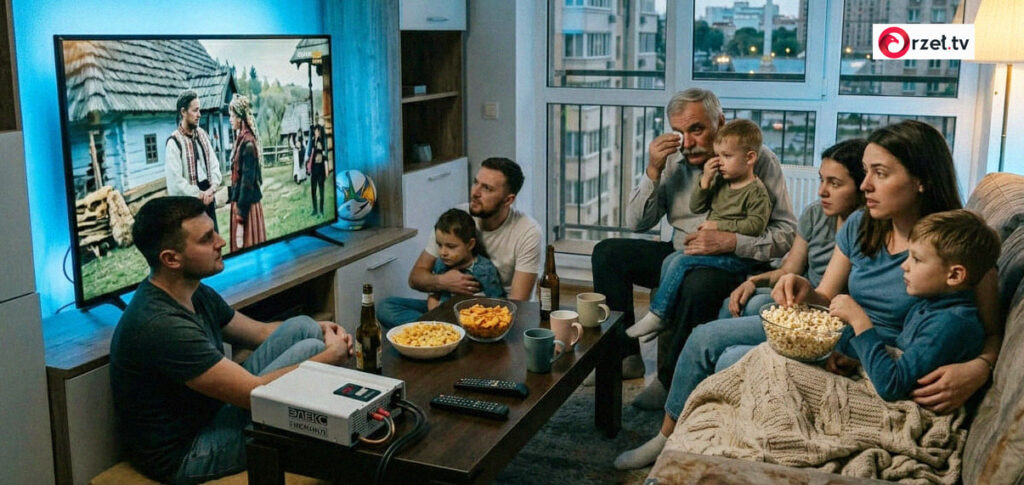
And this brings us to Orzeł. It’s a good example of how it works, one that caught my eye straight away because it shows how it should all look in practice. I’m certain the rest of the websites should follow its example.
Orzel is simple to use: you log in via your Smart TV, the app on your phone or a browser on your laptop, and within a few seconds you get exactly the picture you wanted from the start. No ridiculous faff, no technician who refuses to come when it suits you, rather than according to the phases of the moon or some mystical coincidence.
What really makes a difference on a day-to-day basis? A wide selection of channels. And when I say “wide”, I mean news, sport and children’s channels, so there’s something for everyone in the household. There’s an archive that lets you watch programmes even a few days after they’ve been broadcast. It’s a real lifesaver when you work shifts. The service also works on several devices at once, and the online TV packages themselves are varied enough that you can choose something to suit your budget and the number of channels you want.
I know from my own experience that, for many expats, this is simply the most convenient Polish television online service available today, without having to drill holes in the wall or go through lengthy negotiations with your landlord. One practical tip to finish with: start with a trial period. Switch it on, watch the evening news or Sunday’s football match, and see for yourself if it works the way you want it to. If it does, stick with it; if not, you’ve got nothing to lose.
