

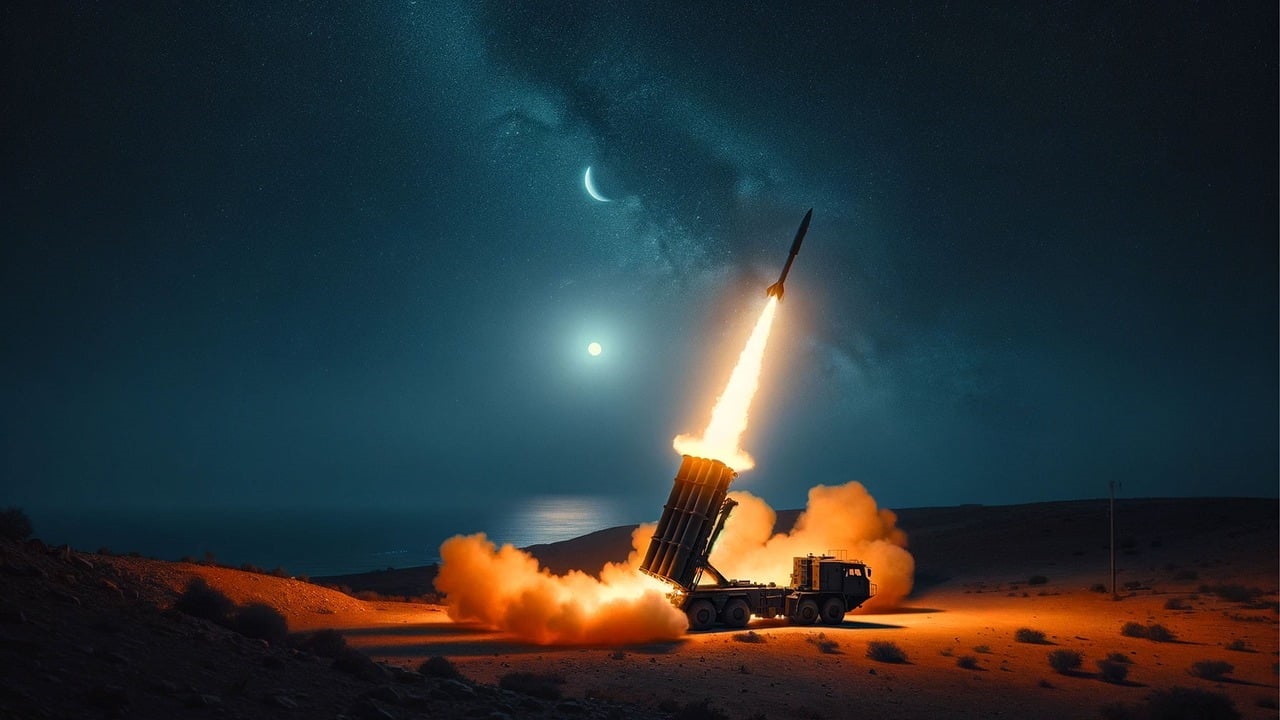
In the arid mountains of Iran, a terrifying engineering marvel has been carved into the bedrock.
In the arid mountains of Iran, a terrifying engineering marvel has been carved into the bedrock — not for the benefit of the people, but to ensure the survival of a regime. While 2026 finds the average Iranian family struggling to afford basic bread, the Islamic Revolutionary Guard Corps (IRGC) sits atop a multi-billion-dollar subterranean empire. These are the Missile Cities — a vast network of tunnels buried so deep that they are functionally immune to all but the most specialized bunker-busting munitions.
The contrast is as stark as it is tragic: Iran has spent an estimated $2 to 3 trillion over several decades on its military and nuclear infrastructure, even as parliamentary research reveals that 30 million Iranians cannot meet their daily calorie needs.
The IRGC doesn’t just have bases; it has entire metropolitan centers dedicated to destruction. Spread across all 31 provinces, these Missile Cities are carved into granite mountains at depths ranging from 100 to 1,600 feet. These facilities are designed to be autonomous, featuring their own power grids, ventilation systems, and even automated magazine rail systems that ferry ballistic missiles to launch silos like a conveyor belt of death.
Key hubs of this underground network include
- Khorramabad: Home to the largest missile city, serving as a primary storage and launch site for surface-to-surface missiles.
- Tabriz and Isfahan: Strategic complexes producing solid and liquid propellants, hidden beneath layers of rock that experts say are 100 to 1,000 feet thick, making them nearly crack-proof against standard aerial bombardment.
- Yazd: A base notoriously embedded directly beside a civilian leisure park, effectively using the local population as a human shield for a 1,600-foot-deep complex.
The financial cost of this obsession is staggering. As of early 2026, Iran’s missile inventory is estimated at roughly 2,500 active units, with a strategic goal of reaching 8,000 by 2027. The cost of a single Khorramshahr missile can reach $8 million, while even the budget Emad models cost around $250,000 each.
The technical diversity of this arsenal is as expansive as its cost. At the heavy end sits the Khorramshahr-4, a liquid-fueled beast capable of carrying a 3,300 lb warhead over 1,200 miles, effectively putting all of the Middle East and parts of Europe in its crosshairs, with speeds reaching Mach 16 outside the atmosphere. For rapid response, the IRGC relies on solid-fueled variants like the Haj Qasem and the Kheibar Shekan, which require significantly less launch preparation and utilize advanced maneuverable reentry vehicles (MaRVs) to evade missile defense systems. Most recently, the regime has touted the Fattah-2, a hypersonic glide vehicle designed to fly at speeds exceeding Mach 5 with a liquid-fuel MaRV for extreme maneuverability.
While these high-tech projectiles represent the pinnacle of Iranian aerospace engineering, they are essentially multi-million-dollar one-way assets; once fired, the capital invested in them evaporates, leaving the Iranian treasury — and the 60 percent of citizens now living below the poverty line — with nothing but the bill for the next round of production. During the recent 12-day conflict, the IRGC has been known to fire nearly 600 missiles, burning through up to $4.7 billion in a matter of days. To put that in perspective, while those billions vanish into the sky, the Iranian rial has plummeted, and food prices in Tehran have reportedly tripled for staples like rice.
The regime’s asymmetric doctrine relies on this underground world. By moving production, assembly, and launch capabilities hundreds of meters below ground, they ensure that even if the surface is scorched, the volcano (as IRGC commanders call it) can still erupt.
However, this security is for the elite. While the leadership operates from hardened bunkers and tunnel-linked shelters in Tehran, the civilian population remains largely unprotected. There are no national air-raid sirens or public bomb shelters, creating a chilling reality: The regime is safe in its granite shell, while the people are left in the line of fire.
The diversion of funds is not limited to the missiles themselves. Supporting a regional Axis of Resistance — proxies in Lebanon, Yemen, and Iraq — costs billions more. The U.S. State Department previously estimated that Iran spent over $16 billion on the Assad regime and its proxies in just an eight-year span.
By 2026, the cumulative weight of sanctions, mismanagement, and this astronomical military spending has brought the domestic economy to its knees.
- Agriculture: Cereal production is 10% below average, yet the government prioritizes military rehabilitation over irrigation infrastructure.
- Childhood Malnutrition: Reports show a significant increase in underweight and wasting among young children in rural provinces like Sistan-Baluchestan.
- Inflation: The preferential currency rate used to import food is now roughly 60% lower than the market rate, causing a 50% spike in wheat flour prices following subsidy cuts.
Iran’s missile program is an engineering triumph but a human catastrophe. The Missile Cities represent a regime that has literally buried its wealth in the dirt to protect its grip on power, while its citizens face a daily battle for survival on the surface. As the world watches the smoke rise from regional conflicts, the real tragedy is the hollowed-out nation beneath the mountains — a country where the steel of a missile is valued more than the life of a hungry child.
