

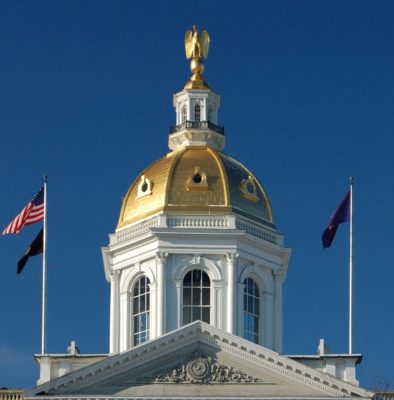
This was a very busy week, since my division of Finance met Monday and Friday, the House met Wednesday and Thursday, and Tuesday was town election day.
My division met on nine bills on Monday, all having passed the policy committee and the House, so we primarily needed to look at the financial impacts. HB 1600, access to the centralized voter database, is a codification of what the Secretary of State is doing to ensure election officials can verify the information needed for voting. The only issue that came up was that some polling places do not have internet access – or good cell coverage – so special processes are needed there. Every town clerk is connected at the office. The Secretary told us that election officials can use a landline (commonly available in places with poor cell coverage) to call his office on election day and get the data they need. Based on this, we amended the bill to require “direct or indirect” access on election day, which reinforces the fact that this won’t cost anything. This was a unanimous vote.
HB 1197, technical corrections to some insurance laws, was a thick packet (12 pages!) of tweaks to insurance regulations. The fiscal impact is an indeterminable amount of fines, penalties, and administrative assessments, most of which can be avoided by proper behavior. We voted unanimously to send it on.
HB 1130, judicial performance evaluations, was more contentious. Several people were concerned with the immediate implementation, since it will require some planning to organize, and the bill leaves the details of in-court observations and writing up performance evaluations to the courts. Other members were concerned that it seemed to decrease the information available to the governor and executive council if a judge were to be nominated to a higher position, but that’s in the details the court system will establish. Another representative was concerned that this might increase risk to judges, since the evaluations would be public. Since the names of judges deciding important cases are regularly given in newspaper articles, I’m not too worried about that issue. After some discussion, we decided to amend the bill by moving the effective date to January 1, allowing time for the judicial branch to work out their details, and removing case processing time as a performance factor, since scheduling is done by the clerk of the courts, not the judges. The amendment was adopted unanimously, the vote on the bill was partisan 5-4.
HB 1457, natural organic reduction of human remains, had been an overwhelming 301-48 vote in the House. The cost was that of developing rules for the process, but it would be recouped by selling professional licenses. We voted unanimously to recommend it.
HB 1426, requiring the department of environmental services to use certified personnel, had a few questions about how they would implement this requirement, but it seems fairly simple and highly appropriate. Unanimous.
HB 1622, requiring the state to develop additional solid waste capacity, is actually a restating of the criteria for approving solid waste sites. Expanding existing landfills before building new ones, and using brownfield sites, seem like very reasonable requirements. Since the committee amendment had focused the bill on criteria and eliminated the massive fiscal impact, we recommended it unanimously.
HB 1775, allowing electric utilities to own small gas or nuclear generators, expands on the current use of distributed power sources, typically solar or wind. This change ensures somebody worries about system reliability and new generator capacity, while having the main power sources separate from the distribution network. The fiscal note for the original bill included the public Utility Commission doing a full scale, 100 megawatt, generator regulatory docket; the amendment limits these generators to 5 megawatts so the cost impact is minimal. We discussed this and the Democrats on the committee were concerned about secondary effects on solar, possible pollution from gas generators, and the unproven nature of small nuclear generators; the vote was 6-3 with one Democrat agreeing with all the Republicans to recommend the bill.
HB 1718, authorizing energy storage in connection with net metering, had no real issues and was unanimous.
HB 1633, requiring survivors of sexual assaults to be informed of their rights, was quoted as being a million dollar cost impact. The sponsor and supporters were convinced that by rationalizing their rape kits, the actual cost would be much less. Since sexual assault is a crime, we all felt that collecting evidence was a normal part of the law enforcement effort, and recommended the bill.
Wednesday and Thursday, the House met in session to address 152 bills on the consent calendar (five were removed, to be dealt with last) and 190 bills on the regular calendar. The calendar had been divided into two parts, with the ought to pass recommendations in part 1 and interim study or inexpedient to legislate (kill) in part 2. That allowed the majority to stop and go home any time after Part 1 was completed; any bills not addressed from part 2 would essentially be dead because their deadline was passed.
The first action was to limit debate to parliamentary inquiries only. These are the short recommendations given to push the green (or red) button, properly well less than a minute but giving the most important reason or two to support the bill (or not.) This passed, 165-141. This restriction did speed things up quite a bit, but I found it limiting on the less publicized bills where it would be helpful to hear the committee’s reasoning. Headline bills, sure, everyone knows how they want to vote on those. In the following report, I voted with the majority unless otherwise stated.
HB 1376, asserting that raising a child in accordance with their biological sex is not evidence of abuse or neglect, had the committee amendment adopted on a voice vote, then the bill passed, 171-143. HB 1378, parental access to children’s electronic medical records, had deadlocked in committee over the issue of the portals used to access records remotely. It passed, 175-149. HB 1565, establishing penalties for false reports of abuse or neglect, passed, 181-141, and was not reconsidered, 18-311.
HB 1643, preventing guardians ad litem from making written recommendations, passed 182-149. HB 1771, removing the prospective repeal of recommended child care staff ratios, passed 331-2.
HB 1285, a study commission to look into an R-PACER program, was amended 328-5 and passed, 320-12. PACER is a “property assessed clean energy and resiliency” program that lends money for energy efficiency improvements, secured by a lien on the property and paid back along with their taxes. We’ve had a C-PACER for commercial property for at least a decade; this would expand it to residential property.
At this point, a member moved to print the remarks in the permanent journal (rather than the usual “Rep. Smith spoke in favor”) and after an objection, the motion failed, 117-216.
A motion was made to remove from the table HB 1108, a clarification to the statute on criminal threatening to state that the mere showing of a firearm was not criminal threatening. It had been tabled by the committee, rather than killing it, in anticipation of an amendment to fix what they saw as a grievous error. It was removed from the table, 177-158, the committee recommendation of killing it was defeated, 151-186, a floor amendment adopted, 188-149, then the bill was not indefinitely postponed, 146-191, and passed, 193-144. Personally, I’ve read the bill and don’t actually understand why the amendment was necessary, but I’m not an expert on criminal law.
HB 1554, ensuring physicians have access to peer reviews throughout the prior authorization process, was amended, 192-143, and passed, 244-92.
A member moved to take HB 1798, allowing diapers to be covered by Medicaid, off the table. This failed, 151-185.
HB 1239, amending the criminal statute on loitering to prevent registered sex offenders from loitering in places where children congregate, failed to pass, 156-178, and was killed, 201-134. HB 1240, criminalizing threatening with a fake weapon, passed 170-162. I was opposed.
A motion to take from the table CACR 22, deleting the legislative pay statement from the constitution, failed 100-230.
HB 1248, increasing the lookback period for driving under the influence sentencing, did not pass, 153-179, and was killed, 208-131. HB 1279, on the use of force in defense of a person, passed 183-144. I supported this for two reasons: it explicitly allows use of force to defend someone else, and it codifies “case law” on the subject into statute. Case law is the accumulated judicial precedents on a topic, and lawyers love it; I strongly prefer having it included in the consolidated laws of the state rather than a collection of judicial decisions.
HB 1423, expanding the crime of improper influence to explicitly cover threats made to family members, passed 174-158. HB 1464, on discrimination based on political affiliation or opinion, was not passed, 136-199, then killed, 242-97. I voted to pass it, but without any real conviction, then supported the final motion.
A motion to take from the table HB 1264, revising the education freedom account (EFA) oversight committee, failed, 151-183.
HB 1121, defining the cost of an adequate education, had the majority committee amendment passed, 181-148. The minority amendment failed, 149-187, and the bill passed, 187-152.
A motion to special order to the next item of business CACR 19, right to possess cannabis, failed, 115-220.
HB 1061, a study commission on non-prison alternatives for primary caregivers, was special ordered to the next item of business, 295-39, not tabled, 133-201, then indefinitely postponed, 188-149. After this another member attempted to special order HB 1142, creating reporting requirements for law enforcement officers assisting immigration enforcement. The attempt was ruled dilatory, or intending to waste our time; he challenged the ruling, but it was upheld, 199-134.
HB 1561, prohibiting Chinese nationals from attending state colleges, was amended on a voice vote to only prohibit faculty, graduate students, and research assistants, then not passed, 156-173, and killed, 186-145.
A motion to take off the table HB 1786, an increased property tax on second homes, failed, 100-236. A motion to special order HB 1824, a bailout for the Claremont school district, failed, 151-180.
HB 1807, on publishing tax impact data for warrant articles, had the committee amendment adopted on a voice vote. A replace all amendment from the minority failed, 153-181, then the bill passed, 185-150.
CACR 24, on the right of parents to educate their children, was amended, 184-149, then failed to pass, 181-156. Constitutional amendments need 60% of the whole body, or 240 votes (less a few if there are a lot of vacancies.)
HB 1132, defining which flags can be flown in schools, adopted the committee amendment, 184-150. A floor amendment failed on a voice vote; a second floor amendment, from the same representative, also failed on a voice vote. The bill passed, 182-156. HB 1135, repealing the home education advisory council, was amended, 183-151, then passed, 180-156.
HB 1268, revising the home education laws, was amended, 178-160, had a floor amendment, 181-158, then passed, 174-166. This bill removes most of the regulations around home schooling, and makes it clear that accepting EFA funds for home school brings you under the EFA regulations.
HB 1358, a study commission on converting public schools to public charter schools, had the committee amendment adopted on a voice vote, then passed, 169-163. HB 1374, procedure for withdrawing from a cooperative school district, passed, 179-149. HB 1529, repealing the (obsolete) reading recovery program, passed on a voice vote.
HB 1817, permitting all students to attend school in their resident district, allows home schooled or EFA students to take co-curricular programs at their local school, including such things as PSATs. The committee amendment passed 177-150, and the bill 179-156. HB 1828, requiring the department of education to audit teacher preparation courses, had a clarifying floor amendment adopted on a voice vote, then passed, 185-149. HB 1836, adding an enforcement mechanism to the input-based accountability system, adopted an amendment on a voice vote, then passed, 184-149.
CACR 21, declaring that only legal residents, at least 18, who reside where they claim their domicile, are eligible voters, had a minor amendment adopted on a voice vote, then failed, 184-149.
HB 590, on cooperative school district board elections, also was amended on a voice vote, then passed, 181-149. It’s intended to ensure that no district has an election system that allows people in one town to determine the representatives for another town. HB 686, prohibiting political surveys by municipal employees, was amended on a voice vote, then passed 178-152.
HB 1062, authorizing the secretary of state to audit citizenship of voters who used an affidavit to assert citizenship, passed 181-152. HB 1125, allowing school districts to adopt partisan elections, passed 168-156. HB 1272, providing candidates’ party affiliation be printed on town or school ballots, was amended and passed, 171-156.
Next came HB 1300, which had a total replace all committee amendment that would put a school tax cap vote every November election, in even years, to solve the issue of low turnout for the local school elections. HB 1300 was not tabled, 158-179, adopted the committee amendment on a voice vote, had a floor amendment to clarify the tax cap details adopted 182-155, and then passed, 177-160.
HB 1306, establishing a standardized report on absentee ballots, was amended and passed on voice votes. HB 1396, identifying an appointment procedure to fill vacancies in the House, rather than special elections, was tabled on a voice vote, as was HB 1418, requiring expanded spending in a SB2 town be supported by at least 15% of registered voters. HB 1601, requiring the secretary of state to create a voter education program to explain the recent changes in voting law, passed without comment, as did HB 1604, requiring suitable public places agree to be election venues.
HB 1275, granting immunity to farmers whose fields have been contaminated by PFAS chemicals in sludge, had the committee amendment adopted, 293-12, then a floor amendment from the committee chair was added, 307-11. A floor amendment totally banning the use of sludge on fields was defeated, 53-267. (Sludge on fields may sound unappetizing, but it’s a valuable source of organic material, and wastewater plants need a way to get rid of it.) The bill passed on a voice vote.
HB 1616, prohibiting the state or municipalities from advertising vaccines, was tabled, 293-18, because an opponent of the bill had prepared 24 different floor amendments for it and was prepared to move them all, for a colossal waste of time.
A motion to take from the table HB 1317, a bill on patient privacy, failed, 130-186. HB 1675, on the New Hampshire Coalition against Sexual and Domestic Violence, was tabled, 168-156. I voted against tabling because the committee amendment simply makes the organization subject to right to know requirements as if it were a public agency: appropriate since it is overwhelmingly funded by public money.
A motion to take one of the anti-ICE bills off the table was ruled dilatory, and we upheld the decision of the speaker, 223-96. A motion to special order HB 1609, another anti-ICE bill, failed, 130-190.
HB 1788, invalidating state contracts with DEI provisions, had a clarifying amendment passed, 324-1, and the bill passed 179-148.
HB 661, starting to hold federal benefits for children in foster care in escrow for the children, was amended, 321-4, then passed, 309-19. I opposed it since it came from my committee and we believed the method in the amendment was unnecessarily expensive for the benefits granted.
HB 1042, increasing the unified contingent credit limit, was amended on a voice vote and passed, 175-141. HB 151, repealing the child care grant program, was also amended on a voice vote and passed, 170-153. As amended, this bill simply repealed the requirement for putting the program in the next budget, fully funded by state money. HB 1569, repealing the directive to sell the Anna Philbrook Center, passed without comment.
CACR 15, declaring the right to hunt and fish, did not pass, 199-128.
A motion to special order HB 1760, deleting the requirement for Medicaid premiums, failed, 148-181. HB 1022, on religious exemptions from immunization requirements, was still argued that not having a form was inconvenient for school nurses! The bill was amended 319-0 and passed 179-150.
HB 1071, repealing the immunity granted health care facilities during the Covid emergency, was amended on a voice vote, not tabled, 148-171, then passed 183-146. HB 1117, encouraging health care providers to freely communicate with patients, was amended on a voice vote and passed, 176-145. HB 1219, changing the immunization requirements for foster families to the New Hampshire required suite, rather than the larger federal suite, had a clarifying amendment passed on a voice vote, then passed, 180-145.
HB 1335, requiring doctors to disclose financial incentives, had a floor amendment to add other health care providers that failed, 146-170, then the bill passed, 183-147. HB 1337, repealing the dormant council on autism spectrum disorders, was not tabled, 159-168, then passed, 178-155. HB 1449, limiting vaccine clinics at schools, was amended on a voice vote to ensure school nurses were not affected, then passed, 172-154.
HB 1562, establishing a regulatory structure for membership and direct pay medical facilities, was amended on a voice vote to add a sunset date, then passed, 181-149. HB 1706 would repeal the refugee resettlement program. It was not indefinitely postponed, 158-169, not tabled, 161-170, then passed, 170-164.
HB 1734, authorizing experimental treatment centers, had a minor amendment passed, 181-151, then the bill passed, 182-152. HB 1735, expanding and clarifying the “right to try” experimental drugs, had a minor amendment adopted on a voice vote, then passed, 181-151. HB 1772, permitting doctors to test ibogaine as a treatment for substance abuse, adopted the committee amendment, which narrowed the bill significantly, then the bill passed, 176-156.
HB 1773, exempting SNAP funds from purchasing candy or sweetened drinks, was amended to update definitions, then not passed, 161-173. It was killed on a voice vote. I voted for it, since the principle is good, but must admit the implementation would be awkward. HB 1797, strengthening verification processes for welfare benefits, passed, 172-161.
HB 1336, allowing increased security deposits for rental housing in some circumstances, was not tabled, 157-177, a floor amendment completely replacing the bill with simpler language adopted on a voice vote, then the bill passed on a voice vote. HB 1709, forbidding convicted alien felons to rent property, was amended on a voice vote, not tabled, 153-181, then passed, 181-154.
A motion to remove from the table HB 1067, establishing mental health courts, failed 145-179. HB 1681, establishing tiny houses and yurts as residences and setting up the applicable regulations, was special ordered, 299-28, amended on a voice vote to simplify the legislative language, then passed, 231-99.
CACR 9, increasing the mandatory retirement age of judges from 70 to 75, did not pass, 136-185. HB 1115, defining a citizen of New Hampshire, had a committee amendment to allow awarding the New Hampshire Medal of Honor to someone who subsequently moved out of state, which passed on a voice vote. The bill passed, 170-157.
HB 1299, permitting classification based on biological sex and establishing that this is not unlawful discrimination, was not indefinitely postponed, 156-171. The committee amendment, requiring at least some single person rest rooms if a facility decides to implement this, passed 176-156, and the bill passed 176-155. I spoke with some of the representatives pushing these multiple, similar bills and found that it’s a deliberate strategy to give the governor a spread of options so that at least one of them is not vetoed.
HB 1313, repealing the buffer zones around abortion centers, was not passed, 158-170, then killed, 171-163. I voted in favor, as I have in the past, because this section of law is an unconstitutional restriction on freedom of speech and assembly, which has never been enforced.
A motion to special order HB 1704, allowing individual public employees to negotiate conditions of employment, passed 167-164. A motion to table failed, 164-171; a floor amendment to simplify the language failed, 165-171, and the bill was indefinitely postponed, 177-159. I supported the bill as a way to allow individuals to negotiate conditions of employment that they preferred: flexible schedules and a retirement contribution rather than more pay or a fixed benefit pension, say – or more pension contributions and better health insurance. Not everybody wants the same things from a job!
This ended Wednesday’s session, almost 9 pm. Attendance had been drifting down for a while, but we had cleared much of part 1 of the calendar.
HB 1356, extending the statute of limitations for gender alterations to ten years after adulthood, was not tabled, 145-176, then passed, 180-146. HB 1384, on third party financing of lawsuits, was amended, 183-147, to simply forbid foreign entities of concern from financing lawsuits, and passed, 183-151. HB 1419, a study commission on setting up a specialized corporate court, based on Delaware’s, had the committee rewrite approved, 187-151, and passed, 189-149.
HB 1447, yet again permitting classification based on biological sex and establishing that this is not unlawful discrimination, passed 184-154. HB 1631, expanding the information in the Attorney General’s annual report on asset forfeiture, was amended to clarify the details needed, 282-54, then passed, 212-127. HB 1665, allowing both parties in administrative tribunals to issue subpoenas, had the committee amendment adopted on a voice vote, and the bill passed, 197-149.
HB 1043, allowing employers to offer something other than the standard 2 hours’ pay for being called in, had the committee amendment clarifying that any such policy must be in writing approved 341-4, and passed, 189-155. HB 1072, establishing a 30 day notice for onsite investigations by the Department of Labor, had the committee amendment expanding the exceptions for unannounced visits approved on a voice vote, and the bill passed, 181-155. HB 1245, setting up voluntary portable benefit plans for independent contractors, had the committee rewrite approved on voice vote, then passed, 188-151.
A motion to remove from the table HB 1484, state minimum wage, was ruled dilatory. The Chair’s ruling was upheld, 191-153.
HB 1066, revising the approvals for municipal lease agreements, was not tabled, 167-175, the committee amendment approved on a voice vote, and passed, 174-171. This bill ensures that significant leases – or those where the leased item cannot be returned – have a public hearing and a specific warrant article requiring a supermajority vote, similar to bond debt.
HB 1076, shifting the authorization of ballot counting devices from the governing body (selectmen) to the legislative body (voters) passed 182-151. Not sure why I supported this – it’s obviously triggered by fears of vote manipulation in the machines, and I’ve done enough recounts to believe the machine counts. Enough audits and verifications are performed every election to ensure they are programmed correctly.
HB 1113, allowing towns to choose a three year term for the moderator, had the committee amendment adopted on a voice vote and passed, 196-144. HB 1131, clarifying the procedure of adopting or rescinding the HB2 form of government, also requires the vote to be on the ballot rather than conducted at town meeting. It passed, 181-139.
HB 1137, establishing the select board, school board, and village district representatives on a municipal budget committee are ex-officio, non-voting members, passed 182-156. HB 1184, clarifying and restricting no trespass orders on municipal or school property, had the committee amendment, a floor amendment, and the bill all passed without comment. Sounds like they got it right this time!
HB 1195, zoning requirements for day care providers, had the committee amendment clarifying that home-based childcare can convert existing structures but not build new ones passed 250-94. The minority amendment, which ties local zoning to state rules on child care operations, failed 101-250. The bill passed on a voice vote, and was one of the very few that was not partisan – both sides supported and opposed the bill!
HB 1213, updating selection processes and terms of municipal highway agents, was not tabled, 163-179, then the committee amendment on hiring an “expert highway agent,” if needed, passed 190-158, and the bill passed, 183-165. HB 1224, clarifying what goes into the default budget, had the committee rewrite passed, 187-149, and passed, 186-160.
HB 1319, enabling municipalities to adopt a fiscal accountability committee, passed 187-158. Not sure why this would be needed if the budget committee is effective, but larger towns might be able to round up enough volunteers.
HB 1355, eliminating the default budget, would have the voters approve (or not) the proposed budget. If it fails, the governing body could present a new, lower, proposal, or accept a contingency budget of last year’s budget. If the second budget fails, the contingency budget applies. This is how towns in many other states operate, and it eliminates any possibility of padding the default budget. The committee rewrite was adopted on a voice vote and the bill passed, 176-160.
HB 1516, requiring municipalities to show with charts printed on tax bills where money is raised and spent, passed on voice votes with no audible opposition. HB 1526, clarifying municipal budget committee law, was amended, 186-153, and passed, 187-158.
HB 1575, minor clean up language about the default budget, had a committee amendment to assert that the budget committee, not the governing body, is responsible for the default budget. This passed on a voice vote and the bill passed, 183-163. This eliminates incentives for the governing body to manipulate the default budget, which seems to happen quite often.
HB 1581, requiring municipalities give notice to property owners when the assessed value changes more than $1,000, was amended to make it a local option and passed, 179-164. I voted against this because major changes are usually due to the town-wide reassessment, and at that point everyone gets the new assessment (along with the new tax bill!)
A motion to special order HB 1223, allowing a hand count by the moderator on election day to verify the machine count, failed, 27-319. Another motion to take HB 1484, a state minimum wage, off the table failed, 159-183. The supporters of these bills act as though many people are actually working at the minimum wage!
HB 2026, the ten year transportation plan, had the committee rewrite passed, 345-3, a floor amendment about Continental Boulevard in Merrimack failed, 46-305, and the bill passed, 338-13. This was, as usual for the capital budgets, unanimous in committee and spending as much as they could justify from tolls, gas taxes, federal funds, and other highway funds.
A motion to special order HB 1708, an increase in the business profits tax to cut the state wide education property tax, failed, 156-195. An attempt to take from the table HB 1607, on use and storage of road salt, failed, 156-194.
HB 1721, phasing out the renewable portfolio standard in electricity generation, was tabled, 198-152. HB 1723, requiring utilities and electric grid operators to assess and report on vulnerability of transformers to geomagnetic and electromagnetic disturbances, passed without comment. This is something I would have hoped they already do, since transformers are expensive and slow (years!) to replace, but vital to distributing electricity.
HCR 13, requesting Congress to call a constitutional convention on term limits, was tabled, 189-159. Later in the day, a motion to take it from the table failed, 139-193.
HR 26, supporting peace and stability in the Congo, passed without comment, as did HR 36, urging the federal government to accept cash at all points of service, and HR 39, recognizing and celebrating the relationship between New Hampshire and Canada.
A motion to special order HB 1420, a temporary tax credit for advertising in local newspapers, failed, 141-203.
HB 1178, increasing the allowed level of automobile window tinting, failed, 158-187, and was killed, 204-143. I supported the bill because this doesn’t seem like something the government should micromanage. HB 1252, requiring the tests for a commercial driver’s license be taken in English, without an interpreter, passed the clarifying committee amendment, 184-158. A floor amendment to eliminate recheck of those who had needed a different language failed, 169-177, and the bill passed, 194-156.
CACR 18, requiring a supermajority to impose a new tax or increase an existing one, did not pass, 170-163, needing 236 to pass.
HB 1068 revisits the rooms & meals tax for long term room renters. Currently the tax applies from day one, but at six months plus a day, it does not apply any more and the collected tax is refunded. The bill, as amended by the committee, would change this scheme to only collect tax on the first thirty days. That amendment passed on a voice vote, and the bill passed 179-162. HB 1174, on credits for assessments paid by insurers, had a minor amendment adopted by acclamation and the bill passed, 336-2. HB 1597, on the timing of expense deductions against the business profits tax, also passed on a voice vote.
At this point we had completed part 1 of the calendar, and were urged to accept special order motions on bills that one member or another wanted to pass. All remaining bills we voted on were special ordered to the present, or taken from the table for immediate action. Of course, we were also encourage to kill any of the remaining bills!
HB 1357, allowing manufactured homes in all residential zones, had been recommended for interim study. That was confirmed, 199-142. I voted to try to pass it, as new manufactured homes are often the cheapest and easiest way to get a house on a piece of land. All setbacks, septic, and well regulations must still be met.
HB 1760, repealing premiums and co-payments for the state Medicaid plan, was killed, 184-153. HB 1288, allowing school administrative units to adopt budget caps, went to interim study, 175-164.
HB 1171, eviction safeguards for tenants whose social security payments were disrupted, was killed, 186-155. HB 1722, attempting to define and limit large use electric facilities (data centers, aluminum smelters, and other power hungry facilities unlikely to locate in New Hampshire) was killed, 185-156.
HB 1416, protecting pregnancy resource centers, was not killed, 165-176, and the minority amendment confirming that only qualified medical professionals can give medical care passed, 179-161. The bill was then not tabled, 165-174, and passed, 176-163. This was a heated debate, in short snippets, and the opponents of the bill kept referring to “anti-abortion centers” and insisting that it wasn’t health care!
HR 44, on protection of public lands, was taken off the table, 311-23, and amended by the committee amendment, and a floor amendment, both authored by the sponsor of the resolution, and both expressing support for our public lands. The resolution passed on a voice vote.
HB 1609, limiting the use of public funds for immigration facilities, was killed, 185-154. HB 1675, oversight for the commission on sexual and domestic violence, was not taken off the table, 148-186.
CACR 25, the right to marry, was killed, 176-162. HB 1395, declaring “Big E” day in honor of the New England regional fair, was killed, 191-146. HCR 12, calling on Congress to support “Medicare for all” was killed, 180-151.
Having reached our limit, the House adjourned with dozens of bills unmentioned, dying in limbo as they had passed their deadline and would need a 2/3 vote to act.
Friday, my committee met on six more bills from other committees. HB 1458, licensing massage and bodywork establishments, had been amended by the first committee simply require the proprietor to be licensed. This concept would enable law enforcement to identify and prosecute specific individuals, either for running an illicit establishment or not being licensed. This would also identify how many legitimate establishments there are in the state. We amended this bill to include the FBI’s current language to perform the background checks and recommended it to the full committee, since there was no cost to the state and minimal cost to the legitimate businesses.
HB 1469, requiring massage establishment licenses, intertwined with the discussion of HB 1458, since they deal with the same issues. HB 1469 was amended to make establishment inspections “as required” rather than mandatory, and would require that establishments are operated in a safe and sanitary manner. It does not conflict with HB 1458 and both bills could be implemented simultaneously if desired. I was concerned about the effect of this bill on legitimate businesses, especially since we don’t know how many there are in the state. Since their license fees will have to pay for any inspections, that is also a concern. I convinced most of the division to support interim study on this bill.
HB 1576, enforcement of criminal restitution agreements, was unanimously recommended to pass. It will cost Corrections some new employees, but will ensure that more victims get restitution.
HB 1477, permitting and regulating seasonal floating platforms, instituted a new fee: $50, split between the Marine Patrol (for administration and enforcement) and the cyanobacteria cleanup fund. Cyanobacteria are a real problem in many lakes, cleanup is expensive, and the floating platforms are obvious lake users that need clean water to enjoy. We all agreed that funding cyanobacteria cleanup was a reasonable public good. Some of us were concerned that the fee, as written, would barely raise enough to pay for enforcement, so the division split on passing or killing the bill.
HB 1602, creating a battery recycling stewardship program, implements a program sponsored by the major battery manufacturers to recycle rechargeable batteries. I was concerned that it would crowd out both smaller manufacturers and private battery recycling businesses. The division voted 5-3 to recommend passing it, so the full committee will decide.
HB 1710, on procedures relative to child abduction, was quoted as being very expensive for the judicial branch to implement. I was concerned that the main cost was hiring experts to train the judges and court staff, as if this policy was totally foreign to them. We were also unable to determine how many child abductions take place in New Hampshire, and this policy is primarily to fill the gap between the start of a custody case and final determination of custody. It’s not clear that the need is enough to justify the effort, so the division agreed on interim study.
The full finance committee meets next week on all our recommendations, plus those from the other two divisions.
Authors’ and Speakers’ opinions are their own and may not represent those of Grok Media, LLC, GraniteGrok.com, its sponsors, readers, authors, or advertisers.
Disagree, agree, Got Something to Say, We Want to Hear It. Comment or submit Op-Eds to steve@granitegrok.com
